Tag

Heidi McNiff Johnson

Browsing

Episode 110: What Season 10 Taught Me about Showing Up

Seven months ago, we launched Season 10 of the Charity Matters Podcast with our 100th episode. It was an incredible milestone. After more than one hundred conversations with remarkable humans, I thought I knew exactly what this season would bring: more inspiring stories of people who saw a need, stepped forward and decided to do something about it.

What I didn’t know was what was about to happen in my own life. Even more surprising, I didn’t realize that each person sitting across from me would give me a lesson I was going to need. Looking back, it feels as if these conversations were preparing me for what was coming.

When the Helper Needs Help

Season 10 began at an unusual moment. I had badly injured my leg skiing, torn my calf and developed a blood clot. Suddenly, I went from being someone who was always moving to someone who could barely walk. For anyone who knows me, sitting still is not exactly my superpower.

At the same time, I was preparing to walk the Camino de Santiago with girlfriends to celebrate my 60th birthday. Now, I wasn’t sure I would be able to go. Meanwhile, I was interviewing extraordinary people.

Our 100th episode featured Dave Anderson of Safe Families for Children. Dave built an organization around one powerful idea: What if a parent in crisis never had to say, “I have no one to call?”

Then I spoke with Robb Pollard of Walk With Me Brother. Robb’s journey began when he finally said three words: “I need help.” Those words landed differently because suddenly, I needed help too. I’ve always been comfortable being the helper. Receiving help was another story. Yet, this season reminded me that sometimes the helper needs help. More importantly, allowing someone to help us may be an act of generosity too.

One Step at a Time

By May, I had worked incredibly hard to recover. Still, I had only started really walking again on May 1st. The farthest I had walked before leaving for the Camino was about three miles. Our first day was nine. Then came thirteen.

I was slow. My friends weren’t. Yet, they waited for me. They adjusted their pace and walked beside me. Somewhere along the Camino, my question changed. I stopped asking, Can I do this? Instead, I began realizing that I didn’t have to do it alone.
Another guest this season, Jane Veron of The Acceleration Project, talked about simply taking the first step. We don’t need to know exactly how we’ll get there. We don’t need every answer. We simply need to begin. So I kept walking. Then, while on the Camino, I learned that my beloved Aunt Sheila was very sick.

Suddenly, the walk changed.

What Is My Life For?

There are beautiful old churches and tiny chapels everywhere along the Camino. They became places for me to stop, light candles and pray for Aunt Sheila. One of this season’s guests, Jessie Fahay of Ripple Effects Artists, had asked herself a question that kept coming back to me: “What is my life actually for?”

Not, what do I do? Not, what have I accomplished? Not, how busy am I? What is my life for?

That question hits differently when you’re turning 60. It hits differently when you’re walking mile after mile. And it really hits differently when someone you love is dying. I returned home from the Camino stronger, but also changed. Then I began walking a very different road with Aunt Sheila.

Joy and Grief

As Aunt Sheila became sicker, lessons from other Season 10 guests continued to find me. Julie Coyne of Southeast Community Foundation talked about what children need most and said simply, “See them.”

Aunt Sheila did that better than almost anyone I knew. She saw people. She listened. She was present. She made people feel that they mattered. Then there was Tammy Krause of Bags of Fun, who lost her five-year-old daughter, Gabby. Tammy understands something about grief that I am still learning:

Joy and grief can exist together. There was tremendous sadness during those final weeks with Aunt Sheila. However, there was also laughter, family, stories, gratitude and so much love. Both were true.

How Do You Measure a Life?

Aunt Sheila died on August 13th at the age of 88. Then I was asked to give her eulogy. How do you take 88 years and put them into ten minutes? How do you measure a human life?

I’ve spent fifteen years asking nonprofit founders about impact. How do you know you’ve made a difference? What will your legacy be? Suddenly, those weren’t interview questions anymore. I thought about everything Aunt Sheila had done. She had been a Sister of the Holy Child Jesus for 67 years. She was an educator, principal, therapist, missionary, advocate, sister, aunt and friend. Surely, her legacy was service.

Except I had actually asked her that question before she died. I asked Aunt Sheila what she thought her legacy was. She didn’t give me a long answer. Instead, she simply put her hands together and made the shape of a heart. Love. Of course.

For fifteen years, I’ve talked about service. I’ve interviewed hundreds of people who have dedicated their lives to helping others. I even wrote a book about it. Yet, at 60 years old, Aunt Sheila gave me perhaps the simplest answer I’ve ever received.

I thought her legacy was service. I was wrong. Service was simply the vehicle she used to distribute her love to the world.

The Lessons Were There All Along

Suddenly, I saw Season 10 differently. My guests had been telling me all along: Open your door. Build the bed. Ask for help. Help someone see. Bring joy into grief. See people. Take the first step. Walk beside someone. Show up. Then our final guest, Steve Smith of Pacer Nation, brought the season full circle. Walking.

In March, I couldn’t walk. Then I learned to walk again. I walked the Camino. My friends walked beside me. I came home and walked beside Aunt Sheila as far as I could. Finally, I ended the season talking with someone who built a community around walking and running together.

Sometimes, we think we’re building communities when those communities are actually building us. Mine certainly built me.

What Season 10 Taught Me

On September 11th, I stood in church with ten minutes of words meant to represent Aunt Sheila’s 88 years. Since then, I haven’t been able to stop thinking about one question: If someone had ten minutes to tell the story of my life, what would they say?

I don’t think they would talk about how many emails I answered, how many meetings I attended or how many things I checked off my list. They would talk about who I loved. Who I helped. Whether I listened. If I saw people or whether I showed up?

When Season 10 began, I thought I was going to spend seven months bringing you extraordinary stories about people changing the world. I did. What I didn’t know was that those people were also preparing me for what was coming in my own life.

Perhaps that is what service has been all along. Love put into action. Somewhere along the Camino, I realized that we are all walking one another home. We don’t know how long anyone’s walk will be. So love the people God puts in your life. Give them your time. See them. Let them help you. Help them. Walk beside them.

And when it matters, show up. As we close Season 10, thank you for walking alongside me.

Season 11 is coming, and I cannot wait to introduce you to another group of extraordinary humans. But first, I’ll leave you with the question I’ve been asking myself: What are you doing with the time you’ve been given?

And perhaps an even simpler one: Who needs you to show up?

CHARITY MATTERS.


YOUR REFERRAL IS THE GREATEST COMPLIMENT,  IF YOU ARE SO MOVED OR INSPIRED, WE WOULD LOVE YOU TO SHARE AND INSPIRE ANOTHER. If you enjoyed today’s episode, please connect with us:

Copyright © 2026 Charity Matters. This article may not be reproduced without explicit written permission; if you are not reading this in your newsreader, the site you are viewing is illegally infringing our copyright. We would be grateful if you contact us.

Making room for What Comes Next

October is here, and with it comes a new rhythm that feels different from September’s hurried return to routines. The back-to-school chaos has settled, football is in full swing, and suddenly there are pumpkins everywhere. The days are getting shorter, the evenings cooler, and fall has officially arrived.

October has always felt like a month of change.

Perhaps it is because the change is impossible to miss. The trees turn brilliant shades of gold, red and orange before eventually letting go. There is something so beautiful about that process. Nature doesn’t fight the season or try to hold onto what was. It simply changes.

Maybe there is something in that for all of us.

What a Difference a Year Makes

Last October, I wrote about a very different season in our family. Our son had just gotten married. We were still coming down from the joy of the wedding, adjusting to this wonderful new chapter and welcoming an incredible daughter into our family. A year later, what once felt like a big transition simply feels like our family.

Isn’t that how change works?

At first, something new can feel enormous. We anticipate it, worry about it, plan for it and sometimes even resist it. Then, almost without realizing it, the unfamiliar becomes familiar. The new becomes normal. Before long, we have a hard time remembering what life looked like before.

Watching our son become a husband has been one of those beautiful reminders. Our family didn’t lose anything when he got married. Instead, love simply made room for more love.

Of course, not every change arrives wrapped in joy. Some seasons ask us to let go of people, plans, dreams or versions of ourselves we thought would always be there. Those changes are harder. They stretch us in ways we never asked to be stretched.

Still, they change us.

Two Years of Change for Good

This October also marks two years since the release of my book, Change for Good. Even writing that feels a little surreal. For so long, the book was something I was working toward. I spent years writing, rewriting and wondering if anyone would ever actually read it. Then suddenly, there it was in the world.

At the time, I thought publishing the book was the destination. Two years later, I realize it was really just another beginning. Change for Good was born from my belief that service has the power to transform us. I had spent decades watching people take their pain, loss and heartbreak and turn those experiences into something that helped someone else. Again and again, I witnessed ordinary people doing extraordinary things simply because they chose to help.

I knew helping changed the person receiving the kindness. What I came to understand was how profoundly it changes the person giving it. Since the book came out, that message has continued to grow in ways I never expected. Readers have shared stories about volunteering, reconnecting with people they love and becoming more intentional about how they show up in the world. The book has led to conversations, speaking opportunities and connections with people I never would have met otherwise.

Most surprisingly, its message continues to work on me. Two years later, I am still learning how to let go, how to trust what comes next and how to turn life’s harder moments into something useful. Perhaps that is the funny thing about writing a book called Change for Good. Life continues to make sure I practice what I preach.

The Lesson of October

This year has given me plenty of opportunities to practice.

There have been joyful beginnings, difficult goodbyes, unexpected turns and moments when life looked very different from what I had imagined. Through all of it, I keep coming back to the same truth: we cannot always choose the changes that come our way, but we can choose what we do with them.

That choice matters. We can hold tightly to what was, or we can remain open to what might be. We can see every ending only as a loss, or we can leave a little room for the possibility that something new may eventually grow in that empty space. October shows us this every single year.

The trees do not seem afraid to let go. They put on one spectacular show and then release what they no longer need. There is no panic about whether another spring will come. Somehow, nature simply trusts the process. I wish I were always that good at it.

Making Room for What Comes Next

There are so many things I love about October. I love college football weekends, crisp mornings, sweaters coming out of the closet and the first real hint that the holidays are around the corner. More than anything, though, I love the reminder this month gives us.

Life is always changing.

Our children grow up and create families of their own. Dreams become reality and then evolve into something we never expected. People we love leave us. New people arrive. Careers shift. Friendships change. Our bodies change. Even our understanding of who we are continues to grow.

Perhaps our job isn’t to resist any of it. Instead, maybe our work is to pay attention. To be grateful for what was, present to what is and hopeful about what is still ahead. So, as October arrives in all of its glorious color, I am trying to take a lesson from the trees. I am holding tightly to gratitude and a little more loosely to everything else.

Because sometimes letting go isn’t the end of the story. Sometimes it is how we make room for what comes next.

CHARITY MATTERS.


YOUR REFERRAL IS THE GREATEST COMPLIMENT,  IF YOU ARE SO MOVED OR INSPIRED, WE WOULD LOVE YOU TO SHARE AND INSPIRE ANOTHER. If you enjoyed today’s episode, please connect with us:

Copyright © 2026 Charity Matters. This article may not be reproduced without explicit written permission; if you are not reading this in your newsreader, the site you are viewing is illegally infringing our copyright. We would be grateful if you contact us.

The Gift of Showing Up

I had never had the privilege of writing a eulogy, let alone delivering one. It was one of the greatest honors of my life. It was also one of the hardest things I have ever written.

How do you take a life and condense it into ten minutes? How do you measure the impact of another human being? How do you possibly find the words to explain what one person meant to a family, a community, a school, a church, or simply to you? It is an enormous and daunting task.

What I didn’t expect was that while I was trying to measure someone else’s life, I would begin measuring my own.

How Do You Measure a Life?

My Aunt Sheila was laid to rest a little over two weeks ago. Since delivering her eulogy, I have spent a lot of time thinking about what matters. I know what you’re thinking……..Heidi, you have been talking about what matters for fifteen years.

Fair point. Yet somehow, this feels different. Writing a eulogy asks you to look at someone’s life from the outside. You search for the moments, choices, relationships and threads that defined that person. However, it is almost impossible to do that without eventually turning the mirror around and looking within your own.

The honor isn’t meant to be a measuring stick or a comparison. Still, evaluating someone else’s life from the outside has a funny way of making you evaluate your own from the inside.

What am I doing with my time? Who am I showing up for? What will the people I love remember? Those questions have stayed with me.

A Legacy of Love

For most of my life, I would have told you that Aunt Sheila’s legacy was service. She was a Sister of the Holy Child Jesus for 67 years. She was an educator, principal, therapist, pastoral minister and advocate. She served children, families, schools, survivors of sexual abuse, communities and countless people whose names I will never know. Service seemed like the obvious answer.

Near the end of her life, however, I asked her what she thought her legacy was. I told her that I thought it was service. She didn’t say a word. Instead, she lifted her hands and formed them into the shape of a heart. Love.

Of course. I had gotten it wrong. Service was simply the vehicle Aunt Sheila used to distribute her love to the world. There was another way she shared that love too. Perhaps it was even simpler. She showed up.

Again and again, she was there. She came to games, school plays, Grandparents’ Days, celebrations, difficult moments and ordinary ones. Sometimes she arrived early. Occasionally she arrived unannounced. Every once in a while, I’m not entirely sure she was actually invited. But she showed up. More importantly, she was present.

A Different Decision

About a month ago, I heard that a dear friend of mine from out of town was having a surprise 60th birthday party. Normally, my practical brain would have taken over immediately. Too far. Too expensive. Too much going on. I can’t possibly justify flying somewhere for a surprise birthday party. There would have been a dozen perfectly reasonable reasons not to go.

Then I thought about Aunt Sheila.

I had just written and delivered an entire eulogy about the importance of showing up for the people we love. How could I stand in a church and talk about her beautiful example and then not allow that example to change me? So I texted my girlfriend’s husband. “I’m coming. I’ll be there!” And I went.

The look on my friend’s face when she realized I had flown in from Los Angeles just for her party was priceless. However, the real gift wasn’t the surprise. It was the time. We have shared more than forty years of friendship. Four decades of life, laughter, change, joy, loss and memories. We were in each others weddings and have been dear friends since high school. Suddenly, spending the money and making the trip didn’t feel extravagant. Not going would have.

Showing up was a privilege and a gift, not for her but for me. In some small way, it felt like I was honoring my friend, our friendship and Aunt Sheila all at once.

The Gift of Our Time

We make hundreds of decisions every day about how to spend our time. Most of them feel small and inconsequential. Yet perhaps they aren’t. Time is one of the most precious things we have because we cannot earn more of it, save it for later or get it back once it is gone.

Where we go matters. Who we spend it with matters. Most importantly, showing up matters. When we intentionally align the gift of our time with the gift of the people we love, something changes. We become more present. Our relationships deepen. The people we love feel valued, and somehow, we do too.

Aunt Sheila understood that. Her life wasn’t extraordinary because of a résumé filled with accomplishments. It was extraordinary because of the countless people who knew she was there for them.

In the End

Someday, someone may stand up and try to condense each of our lives into ten minutes. But in the end, it really isn’t about the eulogy. It isn’t even about how many people show up at our funeral. It is about how we showed up for the people we loved while we were here. Did we make the call? Take the trip? Sit beside someone who was hurting? Celebrate the birthday? Listen when someone needed to be heard? Were we present?

Aunt Sheila taught me that service is love in action. Now I understand that showing up is too. Perhaps that is the real measure of a life. Not how much we accomplished, how busy we were or how many things we checked off our lists.

Maybe it is much simpler than that. Love the people God puts in your life. Give them your time. And when it matters, show up.

Because in the end, love is the only measure that matters.

CHARITY MATTERS.


YOUR REFERRAL IS THE GREATEST COMPLIMENT,  IF YOU ARE SO MOVED OR INSPIRED, WE WOULD LOVE YOU TO SHARE AND INSPIRE ANOTHER. If you enjoyed today’s episode, please connect with us:

Copyright © 2026 Charity Matters. This article may not be reproduced without explicit written permission; if you are not reading this in your newsreader, the site you are viewing is illegally infringing our copyright. We would be grateful if you contact us.

The Space between

Labor Day is behind us, and it is that bittersweet time of year. Summer is officially over. Pumpkin spice and Halloween candy are filling the store shelves, but it isn’t quite fall.

Everyone is officially back to school. Of course, the lucky ones started this week and not in August like so many California schools. College football is back, cozy sweaters are beginning to call our names, and yet September somehow has one foot in summer and another reaching toward fall.

September is the space between. It is that little pause between where we have been and where we are going. Perhaps that is exactly why I love it.

The Space Between

Transitions give us time to adapt and ease into change. As I have written many times before, change is often best served slowly, if possible. Most of us are not exactly wired to embrace the one thing, besides death and taxes, that we know to be true. The reality is that everything changes.

I often talk about this when I speak. Why is it that we love change in the rearview mirror but are terrified of change in front of us?

Think about it. A new haircut can feel terrifying until everyone tells you how fabulous you look. Starting a new job can keep you awake for weeks. Then, six months later, you tell everyone, “I love my new job!” A knee replacement sounds absolutely dreadful until you hear someone say, “I can’t believe I waited so long. I feel like a kid again!”

Change is scary until it isn’t. Perhaps that is why September feels like such a gift. The month gives us a minute to shift gears. Our routines return, school begins, football is back, and life starts to find its rhythm again.

Back to School

For children, however, this transition can be enormous. Do you remember the night before the first day of school? There was excitement, nerves, wondering who your teacher would be, which friends would be in your class and, of course, what you were going to wear.

As parents, we experienced the other side of that transition. New shoes, uniforms, backpacks, lunch boxes, pencils, notebooks and endless lists of school supplies somehow signaled that summer was officially over.

Yet, for millions of children, back to school brings another kind of worry. Will I have what I need? That question changes everything. A pencil seems like such a little thing until you are the only child who doesn’t have one. A backpack is just a backpack until yours is the reason you feel different from everyone else.


Supplies for Success

Last year, I had the privilege of interviewing Mindy Richenstein, founder of Supplies for Success, for the Charity Matters Podcast. Our conversation completely changed the way I thought about school supplies.

Mindy began Supplies for Success in 2002 after learning that children were starting school without the basic supplies they needed. That first year, she provided backpacks for just 68 children. Today, the organization has served more than 300,000 children nationwide.

However, what stayed with me wasn’t the number of backpacks. It was what those backpacks represented.

Mindy explained that when children arrive at school with fresh notebooks, sharpened pencils and a new backpack like their classmates, something happens. They feel included. They feel prepared. Most importantly, they walk through the school doors with dignity and confidence instead of shame or embarrassment.

A backpack isn’t simply carrying school supplies. That backpack is carrying confidence, possibility and hope.

Mindy’s story is also one of incredible resilience. After the devastating loss of her 37-year-old son, Eric, in 2020, she found a way to channel her grief into helping even more children. Eric’s Care Kits were created during the pandemic to provide art supplies and activities for children stuck at home. Once again, Mindy turned pain into purpose and found another way to serve.

You can read and listen to our full Charity Matters conversation with Mindy here: Season 9 Premiere, Episode 91: Supplies for Success.

Helpers Are Everywhere

Of course, Supplies for Success isn’t alone in this important work. Across the country, nonprofits are helping children begin school ready to learn. The Kids In Need Foundation provides essential school supplies to students and teachers in under-resourced schools. Meanwhile, Operation Homefront’s Back-to-School Brigade provides backpacks and school supplies to military children.

Each organization reminds us that helping doesn’t have to be complicated. Sometimes changing a life begins with a box of crayons. Perhaps it’s a backpack, a notebook or a package of pencils. Maybe it’s volunteering at a packing event or simply making a donation. Small acts add up.

The Space Between

Maybe that is the lesson September has for all of us. Life is full of spaces between. We stand between childhood and adulthood, one job and the next, sickness and health, loss and healing, summer and fall. Sometimes we know exactly where we are headed. Other times, we simply have to trust that the next season will come.

More importantly, back to school reminds us that not everyone enters a new season with the same tools.  Sometimes the smallest act of kindness can make someone else’s transition a little easier. A backpack, a notebook, a new pair of shoes or a box of crayons might seem insignificant to us. However, to a child walking nervously through those school doors, those simple things can mean everything. They say: You are ready. You belong. We believe in you.

Perhaps that is what all of us need to hear when we find ourselves in the space between. So, here’s to September. Here’s to back to school, new beginnings and this beautiful pause between seasons. Most of all, here’s to the people who help us move from where we have been toward wherever we are meant to go next. Because none of us gets through life’s transitions alone.

How lucky we are when someone helps us carry the backpack.


CHARITY MATTERS.


YOUR REFERRAL IS THE GREATEST COMPLIMENT,  IF YOU ARE SO MOVED OR INSPIRED, WE WOULD LOVE YOU TO SHARE AND INSPIRE ANOTHER. If you enjoyed today’s episode, please connect with us:

Copyright © 2026 Charity Matters. This article may not be reproduced without explicit written permission; if you are not reading this in your newsreader, the site you are viewing is illegally infringing our copyright. We would be grateful if you contact us.

Episode 109: Pacer Nation

Sometimes making a difference begins with something as simple as putting one foot in front of the other. More than three decades ago, chiropractor Steve Smith invited a group of patients to meet him at the Rose Bowl. His goal was simply to help people feel better through movement. However, something unexpected happened along the way. A running program became a community, strangers became friends, and the Pasadena Pacers grew into Pacer Nation.

What I love most about Steve’s story is that it really isn’t about running. Instead, it is about connection, kindness, service and the power of showing up for one another. His message is also beautifully simple: You don’t need to know every step before you begin. You simply need to take the first one. I think you will love this joyful and inspiring conversation.

CHARITY MATTERS: TELL US A LITTLE ABOUT WHAT THE PASADENA PACERS DOES?

Steve Smith:  The Pasadena Pacers started out as the Pasadena Pacers, now Pacer Nation. Our goal is to raise the health and spirits of communities by getting people together with social exercise programs.

It started as a program from my office as a chiropractor. We thought it was a marathon training program. It turned out to be a social program. People come for the training, and they stay for the social benefits. The programs are all free and volunteer-led. We have a team of probably 35 people that helps run the organization. We’re always looking for people to volunteer with coaching, putting out water stations and doing websites.

We did a great job with diabetes, cardiovascular disease, obesity, depression and the big one, loneliness.

CHARITY MATTERS: WHAT EXPERIENCES DID YOU HAVE AS A CHILD THAT INFLUENCED YOUR WORK?

Steve Smith:  Service started for me as a child. My mom was always the den mother, the person who helped out in the classroom. She did the Cub Scouts. She volunteered at Rancho Los Amigos, where we went as kids and saw people in iron lungs who had polio.

We would always help out the neighbors. We’d take out the old people’s trash cans or put the weeds away at Mrs. Irwin’s house up the street because she got too old to bend over. As a child, I think that was great training because it made me feel good.

Later, it became apparent to me that helping others is really its own reward. In some ways, I discovered early on that giving help is probably the reward in and of itself. The receiving of it is probably even less powerful than the giving of it.

My dad was a World War II vet. In those days, we considered it kind of our duty to serve in the military. So I joined the Army, served a couple of years and went to Vietnam.

It was eye-opening to go to a different country and see the kinds of hardships people have. However, in all that struggle and strife, they could still have family meals together. When a marriage happened in a village in Vietnam, the entire community would come to celebrate.

What you have, who you know or what your station in life is didn’t matter. What mattered was the community was a single thriving unit. In the middle of a war, people could find a way to be happy by getting together and supporting each other.

CHARITY MATTERS: WHAT WAS THE MOMENT YOU KNEW YOU NEEDED TO ACT AND START PACER NATION?

Steve Smith: The Pacers started out of my chiropractic office. In the ’90s, people went into offices, sat down in chairs and started looking at their computer stations. Neck and back problems were insolvable, which was great for business. However, it wasn’t great for my feeling that I was making a difference.

I had been a pretty fast runner when I was younger and had a terrible back injury. I was involved in an aviation incident where I broke my back. I didn’t run for almost a year and a half after that, and the back pain just wouldn’t go away.

I thought, “Well, I’ve settled into chronic back pain that’s not going to resolve. I’m going to start running again.” I started back slowly. Within just a few weeks, my back pain went away. I thought, “Wow, what is going on here?” Nobody ever said this could happen. In fact, the predominant wisdom of the day said that if you have any problem at all, don’t run. That turned out not to be true for me.

At the same time, I had all these patients with neck and back problems. I thought, “Well, it might work for them too.” So I invited people to meet my wife and me at the Rose Bowl. Most people said, “I’m not a runner. I’m not an athlete.” I said, “If I can get you to run very slowly for one minute, way below your ability level, could you do that?”

We had about 30 or 40 people show up. We ran for one minute and walked for five. Each week, we progressed. After ten weeks, people were starting to get fit. They were starting to have results, and they were looking forward to their Sunday morning workout.

CHARITY MATTERS: WHAT ARE YOUR BIGGEST CHALLENGES?

Steve Smith:  Probably 15 years passed before we became a nonprofit. By then, money started exchanging hands, and there were advantages you could get from having a nonprofit. We decided it was time. At that point, maybe three or four hundred people were meeting each week. Five or six run clubs had also started to sprout here and there.

Interestingly, fundraising wasn’t one of our big challenges because run clubs don’t need much money. We needed a little for a website and insurance, but not much else. For fundraising, we used a simple green can where people put money. Those donations bought bagels and water. At the end of the year, if there was money left over, we threw a party.

What fascinated me about the green can was that you got to be a philanthropist if you put three dollars into it. That’s a very different experience than having to spend two or three hundred dollars a year to participate and having an expectation of exchange.

Instead, the person making that contribution gets to be generous. With one dollar in a green can, they buy generosity, kindness and giving. I thought that was the most powerful thing.

CHARITY MATTERS: WHAT FUELS YOU TO KEEP DOING THIS WORK?

Steve Smith: Eventually, nonprofit founders discover that you don’t create the community as much as the community creates you. During a run, people share their stories. They talk about challenges, victories, families and how it is at work. It’s great to get all that stuff out and have a rapid exchange of ideas and real conversation.

On Saturday morning, you’re simply dressed in a way that you’re not identifiable by what you have, what you do, where you go or what your car is. All that social veneer dissolves through the experience of running. Because of that, people connect in a way they ordinarily wouldn’t be able to. Sometimes, just sharing the same space with a person for a few miles, even without words, can make you feel very connected.

Some of the best relationships we have are the ones where you can be together in silence. It’s great to be that way with your community too.

CHARITY MATTERS: WHEN DO YOU KNOW YOU HAVE MADE A DIFFERENCE?

Steve Smith:  For me, impact happens in two ways. The first is on a personal level. Completing a program, especially a marathon, is a long-term goal. You may train for a year, and there are obstacles. Your body doesn’t want to do a marathon. Mentally and emotionally, you feel like, “Wow, that’s a lot to confront.” Physically, you have to change.

At the finish line, something really quite extraordinary happens. People who finish their first marathon shatter barriers. After overcoming those extreme obstacles, they begin to look around and ask, “What else did I think was probably not achievable that I should reexamine? What more could I do?”

Suddenly, horizons open. A future becomes possible that, at least in their own minds, wouldn’t have been possible before.

CHARITY MATTERS: TELL US WHAT SUCCESS YOU HAVE HAD AND WHAT YOUR IMPACT HAS BEEN?

Steve Smith: The second kind of impact is a little more subtle. I think the Pacers has an impact on the community. When we talk to people about putting on that red shirt, we tell them to give somebody a smile, wave hello and say something positive. For goodness’ sake, get all dogs to greet you. If you can’t get a baby to smile, you need to work on your spirit.

Running through a community can be a little bit of a disruption. You’re going through neighborhoods early in the morning, and sometimes you impact traffic a little bit. Because of that, we try to get people to say hello, wave and smile.

Then, take that show on the road. Bring it into your daily workplace, your family and your friendships. Smile and create a reaction. Go out and raise the spirits of your community in some subtle way. Get a smile, give a smile and say something positive.

CHARITY MATTERS: IF YOU COULD DREAM ANY DREAM FOR YOUR ORGANIZATION, WHAT WOULD THAT BE?

Steve Smith:  Probably 20 years ago, I had a dream to see a Pacers Club in every community in the world.

I’d like to see Pacers in Palestine and Israel and have races together. Ultimately, I want to cause world peace to break out and people to love each other in a way that expands the consciousness of humankind and creates a glorious human race. I know that’s probably a little high-minded.

For a long time, I was a little disheartened by our progress. We only started maybe 12 clubs. Then, in the last five years, something happened. The era of run clubs emerged. Now, it’s a place where young people go to meet each other. Run clubs are replacing things like online dating apps. Instead of going to places, consuming alcohol and being drowned by loud music, people go out and run together.

They’re having real conversations and doing something meaningful. I’ve seen it happen in Pasadena, and it’s gone worldwide. It’s the emergence and birth of the run club. Who knew it?

CHARITY MATTERS: WHAT LIFE LESSONS HAVE YOU LEARNED FROM THIS EXPERIENCE?

Steve Smith:  Sometimes, when you have a concept or an idea, you won’t know what step two is until you do step one. For me, step one is to raise your hand, step forward and say three words: “I’ll do it.”

I can’t stress that enough because you have no idea what your future is going to be. The minute you start moving forward, a wind comes to your back. Doors begin to open, and a future opens before you that you couldn’t have thought of until you got started.

Once you know the first thing, do that one thing. Now you’re in motion. From there, the universe is going to help you go to a place where you probably couldn’t even have dreamt of.

Bring the skills you have to the table. They’re probably not going to be sufficient to do every job. However, people will line up behind you. They’ll start supporting you, they’ll help, and you’ll learn.

CHARITY MATTERS: HOW HAS THIS JOURNEY CHANGED YOU?

Steve Smith:  I’ve remained the same, and I didn’t know who I was. More than anything, this experience has taught me a lot about leadership. No two leaders are the same. They all do it differently.

Over the years, we’ve had, I think, 22 presidents of the Pasadena Pacers. As the founder, I’ve worked with all of them and learned from all of them. Watching these leaders has made me a much more successful businessman. I’ve also been more successful with my family and learned things about myself by watching others.

You should be happy with yourself, but I can also stand to be a little bit more like you. If I were to pick the best traits of each person and have that be a composite, wow, you’d be much better.

As a leader, you get to watch, observe and take the best pieces. Sometimes advice doesn’t equal watching somebody do something and seeing some amazing exchange that makes you think, “Wow, if I were to behave like that, look at what I could do.”

That’s why I think community service is so valuable. You learn from others. You discover pieces of yourself that are underdeveloped, and those pieces can expand and make you a better person.

CHARITY MATTERS.


YOUR REFERRAL IS THE GREATEST COMPLIMENT,  IF YOU ARE SO MOVED OR INSPIRED, WE WOULD LOVE YOU TO SHARE AND INSPIRE ANOTHER. If you enjoyed today’s episode, please connect with us:

Copyright © 2026 Charity Matters. This article may not be reproduced without explicit written permission; if you are not reading this in your newsreader, the site you are viewing is illegally infringing our copyright. We would be grateful if you contact us.

Smiling through my tears

I’m really sad.

It is a feeling that, thankfully, has been at bay for a while. But like so many things in life, sadness eventually finds its way back. A little like a lost dog returning home, except when this one returns home you are not excited to see it.

There is a heaviness that comes with sadness. It makes life feel like you are walking through cement. There is an ache in your chest that hurts so darn badly you just want it to stop.

I know this feeling. My long-lost friend grief has arrived once again.

When Grief Comes Back

You really want to believe that once you have lived through loss, the next time won’t be as bad. Somehow, you think you have built up some sort of grief muscle or immunity.

It is a little like that second pregnancy. Miraculously, you forget all of the “discomfort” until suddenly it comes reeling back. Then you remember every bit of it.

I think grief works the same way.

You forget how much it hurts until the floodgates open. Suddenly, all that pain comes rushing back. The truth is, it hurts every single time you say goodbye to someone you love. The bigger the love, the bigger the pain.

That is simply the way it works.

We Had Time

I really thought it would be different this time because we had time. We had time to say all of the things. And I said them. Every last one. We held hands. We talked about life, legacy, love and what comes next. Most importantly, my aunt didn’t suffer.

At 88, after an extraordinary life well lived, she was completely at peace with “going home.” She was ready. In many ways, the peace she had about dying was one final beautiful gift she gave all of us. One day, as we sat together, I asked her, “Do you think you have more friends waiting for you there than you have here?”

Her face lit up like a Christmas tree. With almost childlike wonder, she replied, “I don’t know, but that makes me happy to think about.”

“I think you should think about everyone who will be there to welcome you,” I told her. She squeezed my hand, smiled and closed her eyes. That smile said everything.

A Promise

Before I left, I had one more request. “Please send me a sign to let me know you are okay and that you got there safely.” Again, she nodded and squeezed my hand.

“Promise me,” I said. “I promise,” she whispered.

This morning, almost a week after she died, I was getting ready for a meeting. I looked up and said, “I haven’t gotten that sign yet, Aunt Sheesh, and it’s almost been a week.” Then something happened.

I reached for a purse on the top shelf of my closet, one I haven’t used in a minute. As I pulled it down, an envelope fell out. There was my aunt’s perfect nun penmanship. My name was written across the front.

It was the birthday card she had given me in June, just days before her diagnosis. Inside she had written: “Look how fun 60’s are. Enjoy the adventure! You are a true treasure of joy, creativity and good.”

Well, she was speedy on the request for a sign. I have to give her that. I asked, and boom. There it was.

The Gift and the Ache

Of course, the sign didn’t arrive alone. It came with tears. It brought sadness. It brought that familiar ache. Most of all, it brought my old friend grief right along with it.

Don’t get me wrong. That card was a gift straight from heaven, and I am so grateful. Honestly, I hope there are more signs. The sadness, however, I could do without.

Unfortunately, I know it doesn’t work that way.

Grief is the price we pay for loving someone deeply. Right now, we are trying to plan a celebration for an extraordinary life well lived. At the same time, regular life keeps moving.

Meetings still happen. Emails still arrive. People still need things. Running a nonprofit is tricky enough on a good day. Trying to be high functioning while grieving is an entirely different challenge.

This morning, when that giant wave of grief hit, I worried for a moment that it might take me down. Yet, here I am. Back up. Writing. Working. Trying to process the reality that she is really gone. And realizing that this will be the last birthday card I ever receive from her.

That one really hurts.

The Yin to My Yang

I loved my aunt so darn much. She was the yin to my yang. I chat nonstop. She quietly listened. I am a spaz. She was the strong, steady presence who made everyone around her feel calm.

Our personalities could not have been more different. Yet somehow, we always had this connection, an innate understanding of each other that didn’t need words. She got me.

To grow up knowing that at least one human being truly gets you is one of life’s greatest gifts.

More than that, my aunt showed me the way to serve. If I am being totally honest, I have tried to emulate her my entire life. Of course, I skipped the religious life part, but so much of who I am and what I believe about helping others came from watching her.

She never needed attention or applause.  She simply showed up and loved people.

Her Legacy Was Love

My aunt was kindness. She was joy. She was purpose and peace. More than anything, she was love.

A few weeks ago, I asked her what she thought her legacy would be. She smiled, held her two hands together and quietly whispered one word. “Love.”

Of course it was. That was her life.

I truly believe my aunt is home now. I believe she is smiling down, watching over and guiding all of the people she loved. By the way, that is a heck of a lot of people.

She is at peace.

I know the waves of grief will continue to come. Some will be small, while others may knock me down for a minute. Eventually, they will come less often. I know that because I have been here before. Still, knowing that doesn’t make today’s wave hurt any less.

There is a quote often attributed to Dr. Seuss: “Don’t cry because it’s over. Smile because it happened.” Today, I understand those words in an entirely new way. I am smiling. I am grateful. I am heartbroken.

And through all of it, I am reminded that this much grief can only exist because there was first this much love. So, for now, I’ll keep smiling through my tears.


CHARITY MATTERS.


YOUR REFERRAL IS THE GREATEST COMPLIMENT,  IF YOU ARE SO MOVED OR INSPIRED, WE WOULD LOVE YOU TO SHARE AND INSPIRE ANOTHER. If you enjoyed today’s episode, please connect with us:

Copyright © 2026 Charity Matters. This article may not be reproduced without explicit written permission; if you are not reading this in your newsreader, the site you are viewing is illegally infringing our copyright. We would be grateful if you contact us.


Episode 108: The Acceleration Project

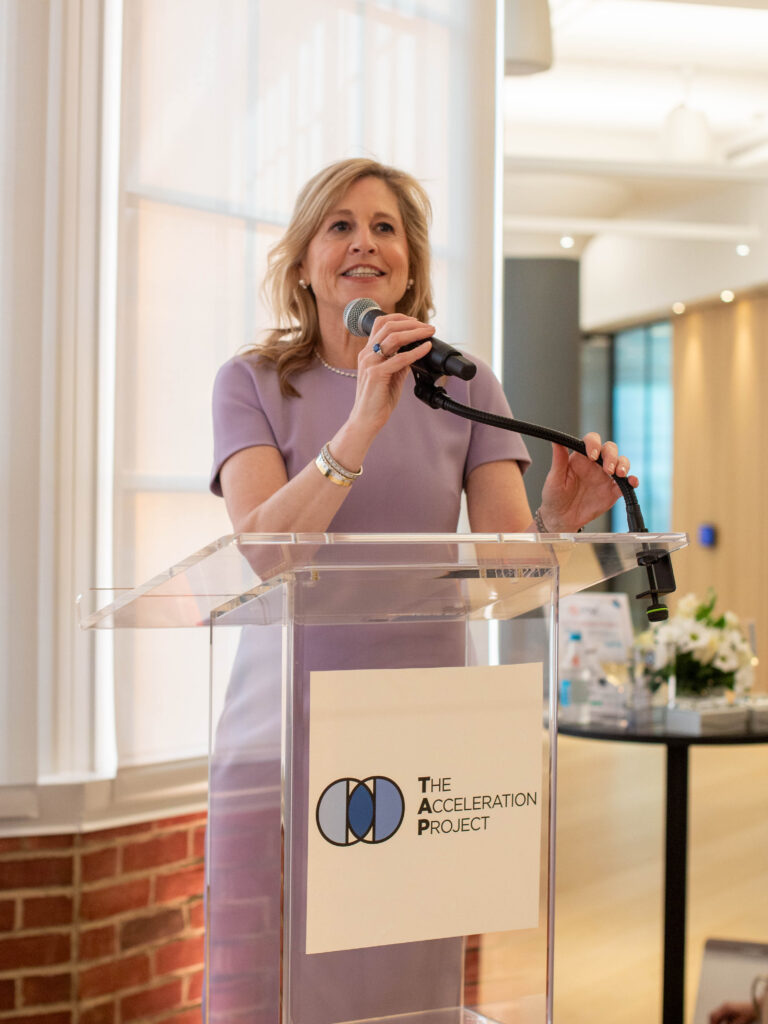
Most of us think of small businesses as the coffee shop on the corner, the neighborhood contractor, or the family-owned boutique we love to support. Yet behind every small business is a dream, a family, employees who depend on a paycheck, and a community that grows stronger when that business succeeds. What happens when those entrepreneurs have the passion to build something meaningful but don’t have access to the expertise they need to survive? That’s where Jane Veron and The Acceleration Project (TAP) step in. By connecting experienced business leaders with small business owners, Jane has created a remarkable nonprofit that is strengthening local economies one business at a time and proving that a little guidance can create an extraordinary ripple effect.

In this inspiring conversation, Jane shares how a successful corporate career, a decade spent raising her children, and a passion for solving problems led her to build a national movement that has already helped thousands of entrepreneurs thrive. Along the way, she reminds us that we don’t have to have all the answers before we begin, that asking for help is a sign of strength, and that our greatest gifts are meant to be shared. Whether you’re a nonprofit leader, business owner, volunteer, or simply someone looking for more purpose in your own life, Jane’s story is a powerful reminder that when we invest in people, we don’t just change one life…..we strengthen entire communities.


Here are a few highlights from our conversation:

Charity Matters: Tell us a little about what The Acceleration Project does?

Jane Veron:  I built The Acceleration Project (TAP) fourteen years ago. TAP is all about harnessing untapped potential to accelerate growth. We are grounded in building economic independence and wealth for small business owners because they are vital to the fabric of our economy, our communities, and our country.

We provide customized, hands-on support that enables small business owners to grow and flourish. Fortune 500 companies have access to world-class consulting, and I kept asking myself, “Why can’t the businesses on our Main Streets have that too?” So we built a nonprofit that delivers that expertise for free.

We don’t just hand people a strategy deck. We walk beside them. We help them understand their finances, marketing, operations, access to capital, and long-term growth. We are the scaffolding that helps businesses survive and thrive.

Charity Matters: What experiences did you have as a child that influenced your work?

Jane Veron:  Looking back, I realize I was always wired to solve problems. There is always a lot of discussion about what’s wrong, but fixing problems is much harder. You don’t have to solve everything perfectly—you just have to start making it better.

Even in college, I saw that inner-city children went home after school without supervision. So I worked with the Girl Scouts to create a troop that brought first through sixth graders together. The older girls mentored the younger ones, and we created experiences they otherwise wouldn’t have had.

I’ve always loved mobilizing people. I’d see a problem and immediately want to bring people together to fix it.

Later, I began my career at Bain & Company, helping Fortune 500 companies solve business challenges. Years later, when I saw small businesses struggling, I realized they deserved the same level of strategic support. That became the seed for everything we do today.

Charity Matters: What was the moment you knew you needed to act and start The ACCELERATION Project?

Jane Veron: It wasn’t one single moment….it was a series of building blocks.

I had a demanding corporate career, two young children, and was offered a promotion that required me to be physically present five days a week with a long commute. I realized I couldn’t sustain that life, so I took a leave of absence.

When we moved to the suburbs, I couldn’t sit still. There wasn’t a playground for my children, so we built one. Then I became involved in civic leadership, chaired the planning board, and led the League of Women Voters. Every experience taught me how important strong local economies are.

The real turning point came when my oldest daughter was leaving for college. I had spent years preparing her to go out into the world, and I thought, “I’ve spent my life building these skills. It’s time to use them to fix something bigger.”

I began talking with small business owners about what they were experiencing. At the same time, I saw incredibly talented women who had stepped away from careers in consulting, finance, and marketing and couldn’t find meaningful ways back.

Suddenly it all came together. I realized I could solve two problems at once by connecting experienced professionals with small business owners who desperately needed their expertise.

Charity Matters: What are your biggest challenges?

Jane Veron: There were always naysayers. So many people told me this would never work.

In the beginning, we were literally sitting around a kitchen table. Everything was volunteer-driven. When you leave corporate America, you suddenly realize you’re responsible for everything……from opening the bank account to building the website and creating the brand.

I also had to educate our board that being a nonprofit is simply a tax status. It shouldn’t dictate how you operate. Organizations need reserves. They need systems. They need to invest in the future.

Today, one of the biggest challenges is funding. Nonprofits can’t build for the future if they’re constantly surviving on one-year grants. I work hard to secure multi-year funding because our clients depend on us being there tomorrow, not just today.

Charity Matters: What fuels you to keep doing this work?

Jane Veron: I see the difference we make every day. When we help one small business owner, we help everyone connected to that business—the employees, their families, the community, even relatives living abroad who depend on that income. The ripple effect is extraordinary.

The hugs I receive from business owners who tell me, “You saved us,” are unforgettable. Seventy-five percent of our clients come to us without financial clarity. Most only have about one month of cash on hand. One unexpected event can destroy everything they built.

We become their wraparound support. We are there no matter what challenge they face, and that’s what keeps me going.

Charity Matters: When do you know you have made a difference?

Jane Veron: You measure success with both numbers and stories. Independent research showed that every dollar invested in TAP creates ten dollars of economic impact. Ninety-two percent of the businesses we serve remain open one year later. Eighty-six percent maintain or grow revenue, and ninety percent maintain or grow jobs.

But beyond the numbers are the people. One business owner we helped was a nurse who started a medical spa because she wanted to bring positivity into people’s lives. When she suddenly lost her building, we helped relocate her business, increase revenue by forty percent, and expand her capacity.

Today her daughter wants to follow in her footsteps. Those are the moments when you realize the impact extends far beyond one business.

Charity Matters: Tell us what success you have had and what your impact has been? 

Jane Veron: Our goal this year is to serve 4,000 small business owners across America.

We’ve expanded far beyond the stay-at-home moms who first volunteered with us. Today, consultants from Fortune 500 companies, Wall Street firms, entrepreneurs, and business leaders all donate their expertise because they want to use their skills for impact.

Our model works because we don’t simply advise….we walk alongside business owners until they gain confidence and the skills to continue on their own. Watching businesses grow, create jobs, and strengthen local economies is the impact we set out to create.

Charity Matters: If you could dream any dream for your organization, what would that be?

Jane Veron: Go big or go home. When we first started around my kitchen table with almost no money, I said we were going to become national. People laughed. They aren’t laughing anymore.

My dream is to create TAP for America, just like Teach For America. We already serve businesses across nearly every state, and there is absolutely no reason we can’t reach every community. We simply need more funding so we can continue growing.

Charity Matters: What life lessons have you learned from this experience?

Jane Veron: Take the first step. Don’t let perfection keep you from getting started. The business plan we originally wrote looks nothing like what we do today because you learn by doing.

Surround yourself with positive people who challenge you constructively. No one accomplishes anything important alone. Ask for help, and be specific when you ask. People genuinely want to help, but they need to know how.

Service also creates something incredibly powerful…..it builds relationships. When you help others, you form deep connections with people you might never have met otherwise. The more we understand one another and work together, the stronger our communities become.

Charity Matters: How has this journey changed you?

Jane Veron: I wish I had dreamed even bigger. I was always a rule follower…..a good student who listened to authority. Today I’d tell my younger self, Why not you? You don’t have to know everything before you raise your hand.

I’ve learned that wherever you are, you should contribute. Bring your unique gifts to your community and use them to make a difference. Purpose creates connection, and connection creates joy.

The more we listen to one another, the more we can solve problems together. Service makes that possible, and I truly believe it creates the kind of future we all want to live in.

CHARITY MATTERS.


YOUR REFERRAL IS THE GREATEST COMPLIMENT,  IF YOU ARE SO MOVED OR INSPIRED, WE WOULD LOVE YOU TO SHARE AND INSPIRE ANOTHER. If you enjoyed today’s episode, please connect with us:

Copyright © 2026 Charity Matters. This article may not be reproduced without explicit written permission; if you are not reading this in your newsreader, the site you are viewing is illegally infringing our copyright. We would be grateful if you contact us.

The Magic of Camp

I never went to camp.

According to the American Camp Association, nearly 30 million children in the United States go to camp each year. Somehow, I wasn’t one of them. Life had other plans.

Ironically, I’ve now spent the past thirteen years leading an organization that sends children to camp every summer. While I may have missed out as a kid, I have been given something even better…..the chance to witness thousands of young people discover strengths they never knew they had.

After all these years, I can honestly say that what happens at camp isn’t just fun. It’s transformation.

My Guinea Pig

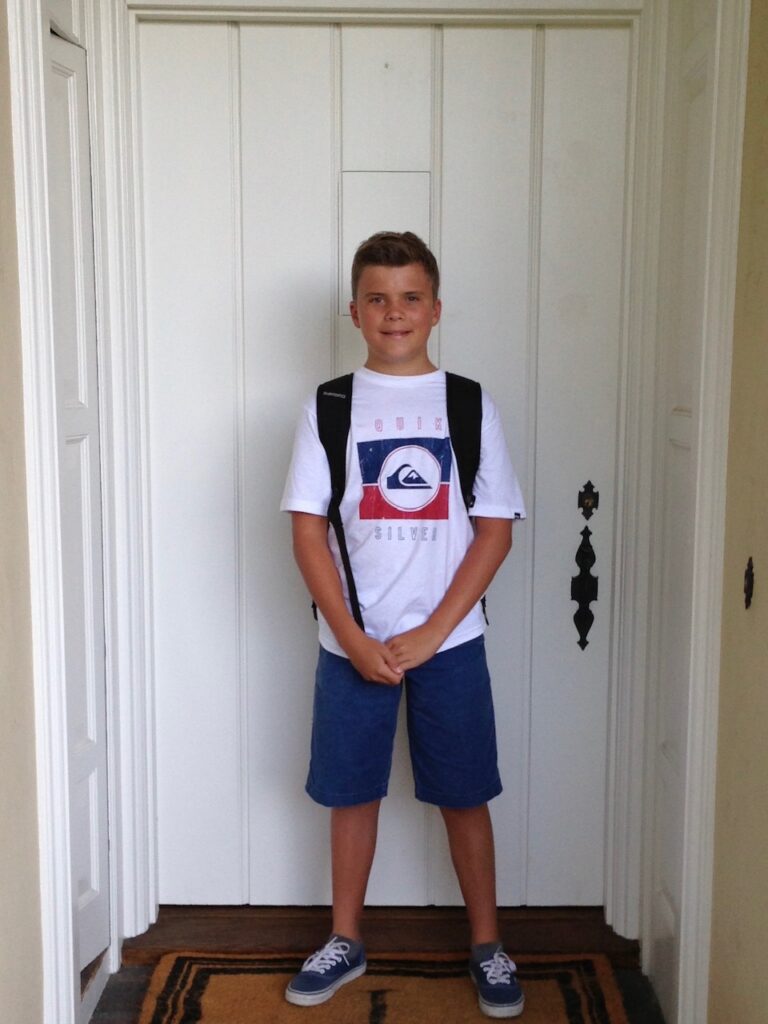
When I became Executive Director of TACSC in 2013, I wasn’t entirely sure what I had signed up for. Everyone kept telling me stories about lives being changed at our Summer Conference, but I wanted proof. So I did what any curious mom would do. I sent my own son.

He was an incoming seventh grader, and to say he wasn’t thrilled would be an understatement. My son informed me, quite passionately, that he was not going to some “crazy Catholic council camp.” He was supposed to be at surf camp or lacrosse camp. Unfortunately for him, I was the boss, and he became my very reluctant guinea pig.

Today, I still smile thinking about that conversation.

The Magic Starts With Goodbye

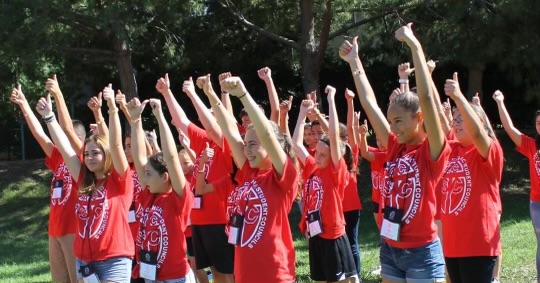
Our Summer Conference welcomes middle school students to live in college dorms for a week. Yes, middle schoolers. For many delegates, it’s the very first time they’ve ever been away from home. That first goodbye can be emotional. Ironically, I’ve noticed it has become much harder for parents than for their children.

Thirteen years ago, families would pull up, unload the luggage, give one last hug, and head out for a long weekend. Today, it’s a different story. Parents linger. We announce it’s time to say goodbye, and someone inevitably asks for “just one more picture.” Then another. And maybe one more after that.

I understand completely. I probably would have done the same thing. Still, there comes a moment when we have to let go.

Confidence Doesn’t Grow at Home

We love our children deeply. Because we love them, we often do everything for them. I know I did. Without realizing it, however, we sometimes send an unintended message: I don’t think you’re capable.

Camp quietly changes that story. Students wake themselves up. They find their way to breakfast. They make their own beds, solve little problems, manage friendships, and learn how to be responsible without Mom or Dad stepping in every few minutes. Those may seem like small victories. They aren’t.

Each one whispers the same powerful message: You can do this. And confidence grows one small success at a time.

Where Leaders Are Made

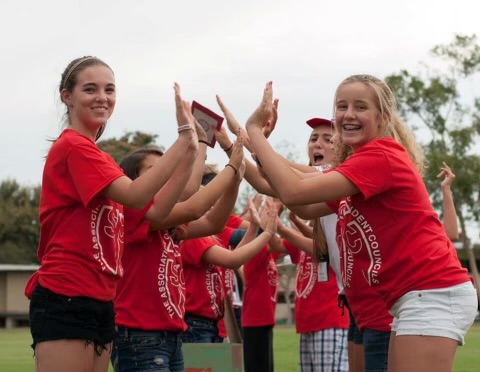
By the second day, something shifts. The homesickness fades. Friendships begin. Laughter gets louder. Students cheer each other on, play ridiculous games, reflect on life, discover their faith, and slowly begin to see themselves differently. By the end of the week, something remarkable happens.

The same students who cried because they didn’t want to stay are suddenly crying because they don’t want to leave. Standing before hundreds of parents at closing ceremonies, they tell us they found confidence. They discovered they are leaders. Most importantly, many say they want to come back one day as counselors so they can give another student the same gift they received.

There is no greater compliment.

My Son’s Biggest Lesson

My reluctant camper eventually stood on that same stage. I’ll never forget what he said. “I was born the third son, and I thought I was born to follow. I never knew I was a leader until I came to TACSC.” Those words still bring tears to my eyes.

Camp didn’t simply give him a fun week. It changed the way he saw himself. He returned as a counselor. Later, he helped launch the nonprofit Once Upon a Room with his friends. Ever since, he has continued leading and serving others. What began as one very reluctant week became part of the foundation for the man he would become.

The Real Gift of Camp

This story isn’t really about my son. It’s about thousands of young people. Over the past forty-four years, more than 40,000 students have experienced TACSC programs. While every story is different, the outcome is remarkably similar.

Children discover courage. They build resilience, learn independence and they become leaders. Most importantly, they realize they are capable of far more than they ever imagined.

As adults, we spend so much of life trying to protect our children from discomfort. Yet growth almost always begins on the other side of it. Sometimes the greatest gift we can give a child isn’t another lesson, another activity, or another opportunity. I think that the greatest gift is simply believing they can do hard things and stepping back long enough to let them prove it.

Perhaps that’s the real magic of camp. It isn’t found in the songs, the games, or even the friendships, wonderful as those are. The real magic is discovering that courage grows when confidence is tested, kindness grows in community, and leaders are often born the moment someone believes in them before they believe in themselves. That’s why camp matters.

And after watching thousands of young people walk a little taller at the end of the week than they did at the beginning, I can honestly say it has been one of the greatest privileges of my life.

CHARITY MATTERS.


YOUR REFERRAL IS THE GREATEST COMPLIMENT,  IF YOU ARE SO MOVED OR INSPIRED, WE WOULD LOVE YOU TO SHARE AND INSPIRE ANOTHER. If you enjoyed today’s episode, please connect with us:

Copyright © 2026 Charity Matters. This article may not be reproduced without explicit written permission; if you are not reading this in your newsreader, the site you are viewing is illegally infringing our copyright. We would be grateful if you contact us.

What The Camino Taught Me

Two years ago, my dear friend and I were doing what we have done for decades…..we were walking. Our walks have always been our therapy. Together, we have walked through raising young children, celebrated life’s biggest moments, cried through heartbreak, solved countless problems, and dreamed about what might come next. Somehow, putting one foot in front of the other always helped us move forward.

During one of those walks, we stopped and laughed. “How can we possibly be only two years away from turning sixty?” Where had the time gone? That simple question led to another. How should we celebrate this milestone? Without much hesitation, one of us suggested walking the Camino de Santiago. Within minutes, we had the beginning of a plan.

Preparing for the Journey

Over the next two years, we spent hours learning about the Camino. I joined Facebook groups, talked with friends who had already made the journey, and read everything I could find. Along the way, I discovered that more than 500,000 pilgrims travel to Santiago de Compostela each year to visit the tomb of the Apostle James.

One piece of advice came up again and again. “Don’t compare your Camino to anyone else’s. Every journey is unique.” Those words stayed with me.

With more than 400 different routes through France, Spain, Portugal, and Italy, every pilgrim truly does have a different experience. We chose the Portuguese Coastal Route from Porto because it covered the required 100 kilometers, or about 65 miles. While many people dream of the famous French Route that stretches nearly 500 miles over five weeks, this route felt right for us. Looking back, it was exactly the right choice.

Life Had Other Plans

In late February, I had an accident and tore my calf. Suddenly, walking disappeared from my life. For weeks, I wondered if our dream trip would even happen. Then I slowly began physical therapy and finally started walking again on May 1, only thirty days before leaving for Portugal. Before our trip, the longest walk I managed was just three miles. Needless to say, I had doubts. Could I really walk sixty-five miles? Even so, I never considered canceling.

What began as two friends celebrating a birthday soon became seven women walking together. Three came from Los Angeles and four came from New Jersey. We were all Catholic, and several of us were celebrating our sixtieth birthdays. Many pilgrims begin the Camino carrying grief, loss, or heavy burdens. They hope the journey will bring healing. That wasn’t my Camino.

Instead, my hardest journey had already happened. The months of pain, uncertainty, and recovery came before Portugal. By the time I arrived, I wasn’t searching for answers. Rather, I felt grateful for a blank slate. My only goal was to be open to whatever God wanted to show me. That alone felt like a gift.

A Beautiful Beginning

Our first morning of the Camino happened to be the Feast of Corpus Christi. As we stepped onto the streets of Portugal, church bells rang across the city. Mass played through loudspeakers while schoolchildren sang in Portuguese. Meanwhile, beautiful flower petals covered the streets for the procession.

It felt as if God was sending us on our way with a blessing. Of course, the magic quickly met reality. My longest training walk had been three miles. Our first Camino day covered nine. Fortunately, my friends became my biggest cheerleaders. They slowed down when I needed them to, celebrated every mile, and never once made me feel like I was holding anyone back.

Each evening followed a familiar routine. First, I searched for ice, which was surprisingly difficult to find in Portugal and Spain. Next, I elevated my leg and rested before another day on the trail. Thankfully, pain never became the center of the story. Instead, every evening ended with laughter, wonderful dinners, and conversations with people from everywhere.

The Gift of Slowing Down

Every day brought new scenery. Sometimes we walked beside the Atlantic Ocean. Other times we wandered through forests, vineyards, tiny villages, and quiet farms. Before long, we would arrive in charming beach towns where fresh bread, seafood, and paella reminded us to slow down and enjoy the moment.

However, the greatest gift wasn’t the scenery. It was the walking itself. Walking gave me time to think. Soon, I noticed things I normally rushed past. Most importantly, I found time to simply be. Along the route, we stopped in small churches that had welcomed pilgrims for hundreds of years. Inside each one, I lit a candle, sat quietly, and prayed.

While we were away, I learned that my beloved aunt, a Holy Child Sister, had become seriously ill. Because of that news, every church became another chance to place her in God’s hands. Each prayer brought a little more peace. At the same time, I felt my mom’s presence in a way I hadn’t expected. She has been gone for more than twenty years, yet I knew she was walking beside me. Although I cannot explain it, I never questioned it either.

The Hardest Day

Day Four tested me. Thirteen miles stretched before us, and my calf reminded me of every step. I remember thinking, What have I done? Can I really do this for four more days? Then something beautiful happened. My friends stayed beside me. No one rushed ahead. No one complained. Instead, they walked with me.

In that moment, I realized the Camino was never about how fast we walked. It was about never having to walk alone. After that day, everything felt different. The finish line finally seemed possible.

What the Camino Taught Me

We arrived in Santiago around four o’clock in the afternoon. After taking pictures and cleaning up, we returned to the cathedral for the Pilgrim Mass. We arrived an hour early. I’m so glad we did. Pilgrims from every corner of the world filled the church. Different languages echoed through the cathedral. Different stories had brought people there. Yet we were united by one shared journey.

The joy was impossible to miss. The gratitude filled the room. Most of all, God’s presence surrounded us. People often ask what I learned from my Camino. My answer is simple. It wasn’t the destination. It was the journey. More importantly, it was who I shared that journey with. Friendship carried me. My faith strengthened me. The encouragement of others kept me moving. Along the way, God’s grace met me every single day.

Life isn’t much different.

Every one of us is walking our own Camino. Some people carry grief. Others carry hope. Many carry both. We rarely know what someone beside us is carrying. However, we can always choose to walk with them. After all, that may be the greatest lesson of all.

We are all walking one another home.

CHARITY MATTERS.


This piece was originally written and published for The Angelus Magazine.

YOUR REFERRAL IS THE GREATEST COMPLIMENT,  IF YOU ARE SO MOVED OR INSPIRED, WE WOULD LOVE YOU TO SHARE AND INSPIRE ANOTHER. If you enjoyed today’s episode, please connect with us:

Copyright © 2026 Charity Matters. This article may not be reproduced without explicit written permission; if you are not reading this in your newsreader, the site you are viewing is illegally infringing our copyright. We would be grateful if you contact us.

The Child I Never Planned

Fifteen. How did that happen?

It feels like only yesterday you were a tiny spark of an idea. Now, somehow, you are a teenager. Like every parent, I find myself wondering where the time went while marveling at how much you’ve grown….Charity Matters.

When a child is born, we quietly write a script for their life. We dream about who they will become. As we cradle that newborn, we see training wheels, the first day of kindergarten, middle school graduation, driver’s licenses, prom, college, careers, and families. In our minds, the story unfolds before the first chapter is even written.

Then we do something a little crazy.

We tuck that script away. We don’t share it with anyone not our spouse, not our child, sometimes not even ourselves. Instead, we simply hope life follows the plan. I can’t explain why parents do this, but I know I wasn’t the only one.

When Life Goes Off Script

Sooner or later, the script begins to unravel. Maybe the baby doesn’t crawl “on time.” Perhaps a milestone comes later than expected. Suddenly, panic sets in because something has gone off script.

Susie doesn’t love piano, even though we were sure she would become a concert pianist. Joey quits baseball, and somehow our entire future seems to collapse with his Little League uniform.

Looking back after raising three incredible sons, I finally realized something important. Each one arrived with a script of his own. Eventually, they handed me a copy, smiled, and essentially said, “Buckle up, Mom.”

Thankfully, I listened. So when this fourth child entered my life  (Charity Matters) I decided to do something different. I would try and let the story unfold.

A Child With No Script

Fifteen years ago, the only vision I had was to find people who started nonprofits and tell their stories. Remember, Google wasn’t what it is today. Finding those remarkable people wasn’t easy, and neither was learning how to build a website or start a blog.

Those few simple ideas were the only pages I had written. Everything else came one small step at a time.

First came a logo. Then a brand built around the simple belief that helping others matters. After that came the first website, a first post, then another. A Facebook page followed, and eventually social media, newsletters, interviews, and countless new adventures.

Like a toddler taking uncertain first steps, Charity Matters kept growing. Meanwhile, every New Year’s Day, my old habits would return. I’d make plans, create goals, promise growth, and try to control the future. Thankfully, this child had other ideas.


The Greatest Gifts Were Never Planned

You see, Charity Matters has always been much more than a blog. You are my diary, my creative outlet, my classroom, and the place where I get to imagine the kind of world I hope we can create together.

That’s a lot of pressure for a fifteen-year-old. Yet, just like my children, you carved out your own path.

Because of you, I’ve met extraordinary people. Better yet, many of those remarkable nonprofit founders have become real friends. They have filled my life with joy, purpose, compassion, and hope. None of that was in my script.

Did I ever imagine you would become a podcast? Not for a second. Honestly, I didn’t even know what a podcast was. Then one day, there it was.

Not only did Charity Matters become a podcast, but it grew into one of the top-rated nonprofit podcasts in it’s category the country. Watching that happen felt like sitting in the stands as your child scored the winning touchdown. No one was more surprised, more grateful, or more proud than I was.

Once again, life reminded me that the best moments almost always happen off script.

More Than I Ever Imagined

Along the way came a monthly column for FORCE Magazine. Then came a bestselling book, Change for Good, on Amazon.

After that arrived opportunities to speak on stages, interview hundreds of nonprofit founders, and build a community of people who believe kindness, generosity, and service truly can change the world. Those accomplishments are wonderful and still a bit of a mystery. However, they aren’t the greatest gifts.

The greatest gifts have been learning how love grows through service. They have shown me that compassion is contagious. Most importantly, they have revealed that a life lived for others becomes a life filled with purpose.

Those are the treasures Charity Matters has given me and, I hope, all of us.

Happy Birthday, My Fourth Child

As we celebrate fifteen incredible years, part of me still wants to pull out that old script. I could fill its pages with dreams of creating a Substack, speaking on more stages, writing more books, and finding even more ways to spread the message of kindness and service.

Then I remember the greatest lesson this remarkable child has taught me. Put the script away. Trust the journey. Enjoy the ride. Allow the magic of life and the power of giving to unfold exactly as it’s meant to.

I could not be more proud of this fourth child or more grateful for all the good Charity Matters has brought into the world over the past fifteen years. The truth is, I have no idea where this journey will lead next. And for the first time, I wouldn’t want to know.

Thank you for walking alongside me. Thank you for reading, listening, encouraging, and believing that small acts of kindness really do matter. You have helped raise this child every step of the way.

Happy 15th Birthday, Charity Matters.

Because after fifteen years, Charity Matters has taught me that the best stories are never the ones we write they’re the ones we have the courage to live.

CHARITY MATTERS.


YOUR REFERRAL IS THE GREATEST COMPLIMENT,  IF YOU ARE SO MOVED OR INSPIRED, WE WOULD LOVE YOU TO SHARE AND INSPIRE ANOTHER. If you enjoyed today’s episode, please connect with us:

Copyright © 2026 Charity Matters. This article may not be reproduced without explicit written permission; if you are not reading this in your newsreader, the site you are viewing is illegally infringing our copyright. We would be grateful if you contact us.

How to live

My aunt is dying.

Then again, I suppose we all are, depending on your perspective. The difference is that my Aunt Sheila knows her time is short. She has Stage 4 liver cancer, and the doctors have told her she has only a few months left. The news has settled over our family like a heavy blanket. Each of us is trying to make sense of it in our own way. Most of all, she is.

Death has always arrived suddenly in my family. My grandfather was gone in an instant. So was my mom. There were no long conversations. No final questions. No chance to say everything that was left unsaid.

This time is different.

As heartbreaking as it is, there is also an unexpected gift. We have time. Time to say thank you. Time to laugh. Time to remember. Most importantly, time to tell someone what they have meant to your life while they can still hear the words.

There really is more than words can say….I will try.

A Life Unlike Any Other

I knew my Aunt Sheila was super special when I was five years old. On my very first day of kindergarten, she walked into my classroom wearing her Holy Child habit. Instantly, every child stood, bowed or curtsied, and together they said, “Good morning, Sister Sheila.”

I remember thinking, Wait…everyone knows my aunt? She wasn’t like anyone else’s aunt. Although she is a Holy Child Sister, that isn’t what makes her extraordinary. Plenty of women become nuns. Very few become Aunt Sheila.

She is the fourth of seven children, right in the middle, and she has always been filled with energy, joy, and a smile that could brighten any room. She has always loved sports, especially tennis, and later, as my school principal, she could often be found outside shooting baskets with the boys instead of sitting behind a desk.

People have always mattered more to her than titles.

Actions, Not Words

The Holy Child motto is simple: “Actions, not words.” No one has lived those words more completely.

After becoming a school principal before the age of thirty, Aunt Sheila left everything familiar to become a missionary in Nigeria. She fell in love with Africa and never wanted to leave. Malaria eventually forced her home, but not before the people there had forever changed her heart.

Later, as a psychologist at St. Luke’s Institute in Washington, D.C., she found herself walking beside clergy and victims during one of the darkest chapters in the Catholic Church. She saw unimaginable pain. She carried stories that most of us could never bear. I still remember the day she accepted a position helping survivors of clergy abuse.

With tears streaming down her face, she looked at me and asked, “How will I be the keeper of such pain?” Only someone whose heart was built for healing would even ask that question. She never sought recognition for that work. She simply showed up, listened, prayed, and loved. Thousands of people found healing because she chose compassion over comfort.

The Quiet Teacher

I have never heard my aunt raise her voice. She almost whispers. Yet somehow everyone leans in to listen.

She has a remarkable gift that feels almost impossible today. She is completely present. When you speak, she isn’t thinking about what she will say next. She simply listens. Then she pauses. She reflects. Finally, she offers a few thoughtful words that somehow become exactly what you needed.

After my mom died, Aunt Sheila quietly stepped into our lives in ways neither of us ever discussed. She became another grandmother to my boys. She celebrated birthdays, attended school events, and simply showed up. One afternoon I came home upset over some ridiculous mom drama at preschool.

She listened patiently before softly saying, “Heidi, people who are hurting, hurt.” That was it. One sentence. One lesson I have carried for decades.

What Really Matters

Watching Aunt Sheila live has taught me far more than listening to anyone preach. She knows exactly what matters. Faith. Family. Friends. Everything else waits its turn.

If someone is suffering, she is there. Not just for the first visit, but for the next one…and the one after that. Sometimes her care lasts twenty years. She has met Popes. She has appeared on Oprah. She has led schools, hospitals, ministries, and organizations. She has also cleaned bathrooms, washed dishes, and quietly done countless unseen acts of kindness.

To her, none of those accomplishments carry much weight. Serving people does. That is her life’s work. That is her joy.

Her Greatest Lesson

Today, cards arrive every single day. Scholarships are being created in her honor. Buildings bear her name. People from every season of her life are writing to tell her how she changed theirs. While she appreciates every note, she isn’t interested in the recognition. What fills her with joy is hearing that someone is helping another person.

That matters. Love in action has always mattered.

The other day I asked her, “Aunt Sheila, I know what I think your legacy is. What do you think it is?” She didn’t answer right away. Instead, she looked at me with those beautiful blue eyes, lifted her hands, and formed the shape of a heart.

“Love.” Just one word. No long speech. No list of accomplishments. No résumé. Simply love.

As I watch someone I deeply love prepare to leave this world, I realize she is giving us one final gift. She is still teaching us. Not how to die. How to live. Perhaps that has been her lesson all along.

A life isn’t measured by titles, awards, or recognition. Instead, it is measured by the people we love, the burdens we help carry, and the kindness we leave behind. If that is true, then Aunt Sheila has lived one of the most beautiful lives I have ever known.

What a blessing to tell her that while she is still here to hear it.

CHARITY MATTERS.


YOUR REFERRAL IS THE GREATEST COMPLIMENT,  IF YOU ARE SO MOVED OR INSPIRED, WE WOULD LOVE YOU TO SHARE AND INSPIRE ANOTHER. If you enjoyed today’s episode, please connect with us:

Copyright © 2026 Charity Matters. This article may not be reproduced without explicit written permission; if you are not reading this in your newsreader, the site you are viewing is illegally infringing our copyright. We would be grateful if you contact us.

Episode 107:Southeast Community Foundation

Sometimes the experiences that shape us begin long before we understand their meaning. For Julie Coyne, that journey started at just two years old when polio paralyzed her from the neck down. Her parents were only 21 years old, and the March of Dimes helped pay Julie’s medical bills. Decades later, Julie can clearly connect the dots between receiving help and becoming a helper. After a successful 45-year career, she also discovered that success and passion are not always the same. Her passion is helping children and making sure that where a child is born does not determine where that child is going.

Today, Julie leads the Southeast Community Foundation and helps children build critical math and reading skills. However, her work goes far beyond academics. As Julie says, “We’re changing futures, not just test scores.” Her students run to tutoring, raise their hands in class, and slowly begin to believe in themselves. Through this work, Julie has learned the power of truly seeing another person. Her story reminds us that changing a life does not always require a grand gesture. Instead, it can begin with one child, one book, or one person simply saying, “I see you.”


Here are a few highlights from our conversation:


Charity Matters: Tell us a little about what SouthEast Community Foundation does?

Julie Coyne:  Southeast Community Foundation is a nonprofit 501(c)(3) located in Los Angeles, and we focus on the Southeast community. Our mission is to work with underserved children and help them get the academic skills they need to move forward in life.

We focus on math and English and partner with local communities and LA Unified. The teachers assign us students who are falling behind, and we work with them one-on-one and in very small groups to get their skill set up. What we have is something very special. It’s almost a boutique way of educating these kids because I feel strongly that they have to have quality tutoring. It’s not just putting 15 kids in a room. It’s one-to-one and small group interaction.

We’re changing futures, not just test scores. It’s where they’re going in the future. When you feel good about yourself and you have self-respect, it changes everything.

Charity Matters: What experiences did you have as a child that influenced your work?

Julie Coyne:   I have an unusual circumstance. I first found out about nonprofits when I was two years old and I had polio. My parents were 21 years old, and I was paralyzed from the neck down. If it had not been for the March of Dimes, my bills would not have been paid, and I would not be sitting here now.

Most people don’t know I had polio, and there are not very many people like us left, but I learned about nonprofits very quickly. My mother always served and did things in schools. I am also 100% publicly educated, all through my graduate degree in the state of California.

I got involved with the startup of Leadership America, a national organization to develop women leaders. I was one of the founding people for Women in Philanthropy at UCLA, an organization to teach women of means how to feel comfortable donating to causes they have passion for. I was on the board of the American Diabetes Association in Los Angeles and served as Chair of the Board of Trustees for Ultimate Health Organization.

Through all of those experiences, I realized that my focus was going to be underserved children in either education or health.

Charity Matters: What was the moment you knew you needed to act and start The SouthEast Community Foundation?

Julie Coyne:  There were many small moments, but one moment became very clear. I started a business with other partners 35 years ago in an underserved community. As a result, I got to know that community well. Then, around 2011, the Los Angeles Times ran a front-page article comparing that community to Manhattan Beach.

The article compared education, income, and health. Manhattan Beach ranked near the top in income and education. Meanwhile, my community ranked near the bottom. Imagine being a child and seeing that story on the front page. Kids came up to me and said, “We’re the fattest, stupidest, poorest kids in the state of California.”

I was devastated. I felt I had to do something.

First, I created a scholarship program. We sent 49 kids to colleges such as MIT, UCLA, and Berkeley. They graduated, but I learned something important. Even our top students weren’t academically ready for college. These students had 4.4 grade point averages, yet they struggled with English scores on the SAT. Consequently, getting them through college took a tremendous amount of work.

I finally realized we needed to address the problem much earlier. Southeast Community Foundation grew from that lesson. Since 2015, teachers have sent us students who are falling behind. We work with those children to build the skills they need to move forward.

Charity Matters: What are your biggest challenges?

Julie Coyne: The biggest challenge is funding. Children do not pay for our tutoring. Although we partner with LA Unified and other districts, that funding does not cover the cost of quality tutoring. Our program focuses on one-on-one and small group support. Therefore, providing this level of education costs money.

We go directly to the community for help. That’s why we’re a community foundation. This isn’t my foundation. I want the community to own this work and feel the joy of helping its children move forward. Still, funding stays on my mind. I wake up thinking, “How can I get the word out? How can I help people feel connected to this work?”

People are generous and want to help. Yet, many also wonder if an organization is real. We are real, and what we do matters.

Charity Matters: What fuels you to keep doing this work?

Julie Coyne: I’m doing something I love. I spent 45 or 50 years working, and I was good at what I did. However, being good at something doesn’t mean you love it or feel passionate about it.

Now, I see a child’s face when they finally start reading. I watch a student learn how to solve a math problem and see the light in their eyes. These kids run to our tutoring sessions. They aren’t dragged. I’ve watched children run off a bus because they thought they might be late for tutoring.

That happiness gives me joy. I know I’m doing something I love and something that makes a difference. Teachers constantly tell us how we’re helping their students. Parents are grateful too.

However, the truth is that I’m the grateful one. I’m grateful for the opportunity to make a difference in so many children’s lives.

Charity Matters: When do you know you have made a difference?

Julie Coyne: I know when a child finally reads or solves a math problem. You see the light in their eyes. Sometimes, children run to tutoring because they don’t want to be late. Later, those same students begin raising their hands in the classroom.

Our tutors come from the children’s communities. They speak their language, and the students can imagine becoming like them. Because of that connection, trust grows. Children also begin to understand that teachers aren’t scary. They learn that teachers want to help them.

Watching a child finally raise a hand in class is fabulous. Let them see that you see them. That’s a big thing. Children want to be seen. See them.

Charity Matters: Tell us what success you have had and what your impact has been? 

Julie Coyne: You have to look at both the numbers and the feelings. We have tutored hundreds of children and provided thousands of tutoring hours. In addition, our students show dramatic improvement. We see improvement levels in the 85% to 89% range.

However, I also measure success through teachers, parents, and students. We never leave these relationships. For example, one of my former scholarship students now serves on my board. She earned her master’s degree in public administration and works in civil service. Now, she’s giving back and believes in what we do.

The scores matter because they help us receive grants and reach more students. Still, our work is about something much bigger. We’re changing futures, not just test scores.

Charity Matters: If you could dream any dream for your organization, what would that be?

Julie Coyne:  First, I want to keep the quality very high. I don’t want to deliver something that doesn’t benefit these children.

The big dream is to create a model. We want to reach 1,000 students in Southeast Los Angeles. Then, we want to take this model into other underserved communities. I started in Southeast Los Angeles because I knew the community. However, I also want to reach South Los Angeles and the San Fernando Valley.

My vision is local people helping their own communities. I call these locations hubs. Each hub could help about 1,000 students. Local teachers become immediate role models. They speak like the students and understand their communities. Therefore, children can imagine themselves becoming like their teachers. Trust grows, and strong bonds form.

That’s the dream. We want to bring this model to underserved communities throughout Los Angeles while keeping the quality of our work high.

Charity Matters: What life lessons have you learned from this experience?

Julie Coyne:  One lesson is patience, which I have none of. This journey has forced me to become more patient, even when I don’t want to be.

More importantly, I’ve had the privilege of seeing life through other people’s eyes. I’ve been in families’ homes and attended many college graduations. As a result, I’ve seen life from a different perspective. You become humble.

I recognize the advantages many of us have had. At the same time, I see how hard other people work and how many obstacles they face. I have great admiration for them. I’ve also learned that people don’t always value their own skills. Someone may know how to use a computer, tell a story, entertain people, plan a party, or create something beautiful.

Nonprofits need all of those skills. You don’t have to give 100% of your time. Instead, get involved in a small way. Don’t be shy. The gift is being able to start something and then give it away. You give it away so it can continue to grow. That’s a hard lesson to learn.

Charity Matters: How has this journey changed you?

Julie Coyne: It has definitely changed me. I’m much happier. I encourage people to figure out what they are passionate about because most of us aren’t lucky enough to work at our passion.

When I realized how much children, education, and health mattered to me, it lit a fire in me. I’ve become more patient and humble. In addition, I’ve had the privilege of seeing life through other people’s eyes. The truth is that I’m the grateful one.

I also believe in giving children books. A small book doesn’t cost much, but it can become something precious. Give children some joy. Talk to them about the world, the sky, the ground, growing, and what’s out there. Most importantly, let them see that you see them. They want to be seen.

See them.

CHARITY MATTERS.


YOUR REFERRAL IS THE GREATEST COMPLIMENT,  IF YOU ARE SO MOVED OR INSPIRED, WE WOULD LOVE YOU TO SHARE AND INSPIRE ANOTHER. If you enjoyed today’s episode, please connect with us:

Copyright © 2026 Charity Matters. This article may not be reproduced without explicit written permission; if you are not reading this in your newsreader, the site you are viewing is illegally infringing our copyright. We would be grateful if you contact us.

At 250 America is just getting started!

We really are babies.

A few weeks ago, I was walking through Portugal and Spain, surrounded by history that stretches back hundreds and even thousands of years. In Lisbon, I learned about the devastating earthquake and tsunami that leveled the city in 1755. As I listened to stories of destruction and rebuilding, one thought kept coming to mind: all of this happened before America was even born.

Our nation is only 250 years old. By comparison, we are still in our infancy….a mere babie to many parts of the world.

Our Shared Story

My mom’s family came over on the Mayflower, and she loved being a member of the Daughters of the American Revolution. She was proud of our family’s lineage and often talked about the history and struggles that her ancestors endured to come to this country.

Her pride was never really about genealogy. Instead, it was rooted in courage, sacrifice, and the determination of people who left everything they knew in the hope of building something better.

The more I thought about it, the more I realized that this is our shared story as Americans. Every one of us came from somewhere. Whether our families arrived on the Mayflower, crossed an ocean generations later, came through Ellis Island, (like my husband’s grandfather) journeyed from neighboring countries, or arrived only recently, we all share a common thread.

A mother or father made a difficult choice. A family sacrificed for the next generation. Somewhere along the way, someone held onto hope despite uncertainty. Today we call it resilience. In the late 1700s, it was simply survival.

Built by Resilient People

There is much discussion these days about cellular memory and whether we carry the experiences of our ancestors in our genes. I am certainly no scientist. However, I do believe there is something uniquely American that has been passed down from generation to generation.

Part of our national character is toughness. Another piece is our willingness to work hard. Add a little grit and an unwillingness to accept “no,” and you have something that feels distinctly American.

Maybe that spirit comes from generations of people who had to adapt, rebuild, persevere, and begin again.

After all, this country was built by people who believed tomorrow could be better than today. They worked the land, started businesses, raised families, fought wars, and built communities. Through every challenge, Americans somehow found ways to keep moving forward. That determination still lives within us. I love that about being American.

The American Spirit

People around the world may see us as less refined or even a little rude. Yet I think they sometimes misunderstand us. Americans simply expect things to get done.

When we see a problem, we look for solutions. Faced with obstacles, we usually ask, “How can we make this work?” Presented with an impossible idea, many of us instinctively wonder if it might actually be possible.

That attitude has shaped our nation and, in many ways, the world. We have become known for our creativity, our entrepreneurial spirit, our willingness to innovate, and our belief that impossible things can become reality.

This is the country that put a man on the moon. It is also the nation that created countless inventions, built extraordinary businesses, and inspired movements that changed lives around the globe. Of course, we don’t always get it right. No family does, and no country does either. Nevertheless, we keep trying, learning, and moving forward.

That, too, is part of our story.

We Are Just Getting Started

This Fourth of July is about more than fireworks, barbecues, and birthday cake. It is an opportunity to pause and celebrate what we have built together over these last 250 years.  Even more important, it is a chance to remember who we are.

At our core, we are descendants of dreamers and doers. Behind us stand generations of people who sacrificed tremendously. Ahead of us lies endless possibility if we are willing to work together. Perhaps the most exciting part is that we are still young.

At 250 years old, America is just getting started.

The next chapter of our story is still being written, and it belongs to all of us. Therefore, our task is to keep coming together, remember where we came from, and decide where we want to go.

If our first 250 years have taught us anything, it is this: Americans are resilient. We are builders, problem-solvers, and people who believe tomorrow can be better than today. Most of all, when we come together with a common purpose, there is very little we cannot accomplish.

After all, if we can put a man on the moon, imagine what we can do next?

Happy 250th Birthday, America. The best is yet to come.

CHARITY MATTERS.


YOUR REFERRAL IS THE GREATEST COMPLIMENT,  IF YOU ARE SO MOVED OR INSPIRED, WE WOULD LOVE YOU TO SHARE AND INSPIRE ANOTHER. If you enjoyed today’s episode, please connect with us:

Copyright © 2026 Charity Matters. This article may not be reproduced without explicit written permission; if you are not reading this in your newsreader, the site you are viewing is illegally infringing our copyright. We would be grateful if you contact us.

Episode 106: Bags of Fun

There are moments in life when joy feels out of reach…..especially for children facing illness, fear, and the unknown. And yet, what if something as simple as a bag filled with imagination, play, and possibility could transform that moment? In this heartfelt episode of the Charity Matters Podcast, we explore the powerful story behind Bags of Fun.…..an organization built on the belief that every child deserves joy, even in the midst of life’s hardest battles. This is a story about showing up, about seeing a need others might overlook, and about choosing to bring light into dark places.

What makes this episode so compelling is not just the mission, but the heart behind it. It reminds us that service doesn’t have to be complicated to be life-changing. Sometimes, the greatest impact comes from meeting people exactly where they are with compassion, creativity, and care. This conversation will inspire you to think differently about what it means to make a difference and will leave you asking yourself a simple but powerful question: What can I do, right where I am, to bring joy to someone else?


Here are a few highlights from our conversation:


Charity Matters: Tell us a little about what Bags of Fun does?

Tammy Krause: Bags of Fun are big backpacks full of toys that are very intentional for kids with long-term and life-threatening illnesses. That’s the simple explanation, but really they are custom-created for each child. We started with kids with cancer and quickly expanded to children in the hospital with other medical conditions from kidney dialysis to major organ transplants to chronic illnesses.

Every bag is made specifically for that child. We get lists directly from hospitals, so each bag is age, gender, and diagnosis specific. They aren’t sitting in a warehouse. Each one includes about 17 to 18 items things that are fun, educational, manipulative, something a child can do alone and something they can do with others.

More recently, we’ve expanded into adolescent mental health. In 2021, Colorado declared a state of emergency for youth mental health, and we stepped in to serve that population as well. Those bags are designed differently, but with the same intention…..to bring comfort, engagement, and ultimately, joy.

Charity Matters: What experiences did you have as a child that influenced your work?

Tammy Krause: I was very blessed growing up. I was surrounded by amazing women…..teachers, nurses, people who gave back constantly. Giving was just part of our life. When we went school supply shopping, we always bought extra for other kids. At Christmas, we would go caroling at public hospitals.

My mom actually ran a nonprofit, and she was heavily involved with CASA, advocating for abused children. So I learned very early how important it was to give back.

I used to make fun of her because she signed every single donor letter personally. And now I find myself encouraging the exact same thing. Those early role models shaped everything.

Charity Matters: What was the moment you knew you needed to act and start Bags of Fun?

Tammy Krause: My daughter Gabby was diagnosed with a brain tumor the day before her fifth birthday. She was the middle of four kids. Because of my background in special education, we created a bag for her to take back and forth to the hospital filled with things to keep her engaged and connected to her siblings.

She called it her “bag of fun.” We were very blessed during her treatment with incredible community support. But Gabby noticed something she asked why the other kids didn’t have a bag like hers. So we told her that when she finished treatment, we would make Bags of Fun for other kids.

Unfortunately, she never finished treatment. She was sent home on hospice and passed away about a month later. Three weeks after she passed, I had my first meeting. I didn’t know exactly how to do it, but I knew I had to. We started with volunteers, and the organization was run entirely by volunteers for the first two years.

This was her idea. I was just following through on what she wanted.

Charity Matters: What are your biggest challenges?

Tammy Krause: In the early days, the challenges were everything grief, raising my kids, and starting a nonprofit all at once. My youngest was four, my oldest was ten. But there was also so much healing and community around it.

Our community stepped up in incredible ways. Friends, neighbors, volunteers everyone wanted to help. Our first fundraiser, which we still do 21 years later, was a big family event where everyone came together. Like any nonprofit, the challenges were figuring out events, fundraising, logistics…..but we were very clear about our mission. We were doing one thing: creating custom bags for sick children. That clarity helped.

As we’ve grown, the challenge has shifted. Now it’s about staying focused, being intentional, and not losing sight of our core mission while we expand.

Charity Matters: What fuels you to keep doing this work?

Tammy Krause: The very first bag we delivered told us everything. It was for a little boy named Garrison. He was so excited he could hardly stand it. That moment we knew we were making a difference.

And honestly, it’s the joy. Joy has become a tool. We used to say play is the best medicine, but it’s bigger than that. Joy can exist alongside heartbreak and grief. You can walk into a hospital room with a terrible diagnosis, and joy can still be there.

When you can bring that joy into those spaces, that’s what fuels you. And it’s not just for the kids it’s for families, volunteers, everyone involved. Joy connects all of us.
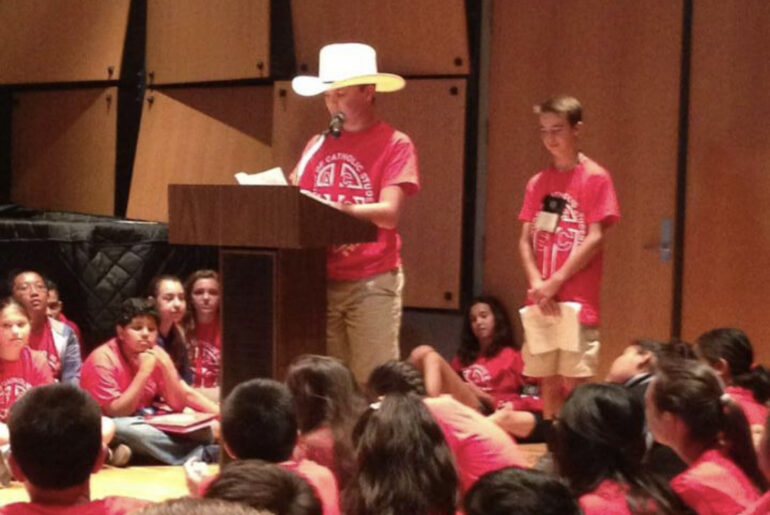
Charity Matters: When do you know you have made a difference?

Tammy Krause: You see it in the smiles. You see it in the relief on a parent’s face. Stories like Garrison’s……he came back years later asking for a new backpack because his had finally worn out and that’s impact you can’t measure.

We’ve given out over 17,000 bags, but numbers only tell part of the story. The real difference is in those moments of connection and joy. And honestly, it’s also in our volunteers. Watching people come in and build bags kids, grandparents, entire families and seeing their excitement, that’s impact too. It’s creating a community around service.

Charity Matters: Tell us what success you have had and what your impact has been? 

Tammy Krause: We can measure success in numbers…17,000 bags, how many we deliver weekly, the cost of each bag but the true impact is much deeper. We’ve expanded into multiple cities, Kansas City and Omaha, and we’ve grown into mental health services, which now actually exceed our medical bags in demand.

Our impact is also in the communities we’ve built. Volunteers of all ages come together, and they leave feeling connected and inspired. All the pieces fundraising, volunteers, hospitals come together to make it work. That’s what success looks like.

CHARITY MATTERS: IF YOU COULD DREAM ANY DREAM FOR YOUR ORGANIZATION, WHAT WOULD THAT BE?

Tammy Krause: There are always dreams. We want to expand to serve more hospitals, more children, more communities. But at the same time, we have to protect the integrity of what we do. Every bag has to remain intentional and impactful.

One of my bigger dreams is actually creating a nonprofit space a place where organizations can host events and gather. There’s a real need for that, especially in Colorado. And beyond that, I believe in collaboration. There’s enough to go around. We need to “play nice in the sandbox” with other nonprofits and support each other.

That’s a big part of the dream too ….building community across organizations.

CHARITY MATTERS: WHAT LIFE LESSONS HAVE YOU LEARNED FROM THIS EXPERIENCE?

Tammy Krause: One of the biggest lessons is staying focused and intentional. As you grow, it’s easy to get pulled in different directions, but you have to remember why you started. Another is that we’re here to support each other. That’s really what leadership is about.

I’ve also learned the importance of celebrating. We’re always looking ahead, but it’s important to pause and recognize what we’ve accomplished. And especially with our work in mental health, I’ve learned how critical it is to adapt while staying true to your mission. The need is real, and it’s growing.

CHARITY MATTERS: HOW HAS THIS JOURNEY CHANGED YOU?

Tammy Krause: I think I’ve learned that everyone has a story. Every person who comes into our organization donor, volunteer, or family brings their own experience with them.

I hope I’ve become more patient. I’ve learned to trust the community more and to trust that things will work out. In the beginning, it felt like everything had to happen right away. Now I trust that Bags of Fun will continue. We’ve been here for over 20 years it’s not going anywhere.

Letting go and trusting the process has been a big change for me. And understanding that things will change but that’s okay. Because at the end of the day, we’re here to serve. And that’s what matters most.

CHARITY MATTERS.


YOUR REFERRAL IS THE GREATEST COMPLIMENT,  IF YOU ARE SO MOVED OR INSPIRED, WE WOULD LOVE YOU TO SHARE AND INSPIRE ANOTHER. If you enjoyed today’s episode, please connect with us:

Copyright © 2026 Charity Matters. This article may not be reproduced without explicit written permission; if you are not reading this in your newsreader, the site you are viewing is illegally infringing our copyright. We would be grateful if you contact us.