Tag

Helping the helpers

Browsing

Episode 103: Walk with Me Brother

Some stories ask you to listen. Others ask you to feel. And then there are the rare ones, like this one, that ask you to walk alongside them. This week on the Charity Matters Podcast, you’ll meet Robb Pollard, a husband, father, entrepreneur, and now the founder of Walk With Me Brother, who is about to do something extraordinary. On Monday, Robb began a 2,500-mile run across America…..not because he’s a runner, not because it’s easy, but because he knows what it feels like to be at the very bottom and wonders if his journey might help someone else choose to stay. This isn’t about miles. It’s about meaning. It’s about one man’s decision to turn pain into purpose and to remind us all that asking for help might be the bravest step we ever take.

By the time this episode airs on Thursday, Robb will already be on the road one step at a time, inviting all of us to come with him. His story is raw, honest, and deeply human. It’s about mental health, about breaking the silence so many men carry, and about the power of simply showing up for one another. If you’ve ever wondered how one person can make a difference, this conversation will stay with you. Because sometimes, changing the world doesn’t start with a grand plan …it starts with one step… and the courage to take it.


Here are a few highlights from our conversation:

Charity Matters: Tell us a little about what Walk With Me Brother does?

Robb Pollard:  Walk With Me Brother is a mental health nonprofit, but I try not to overcomplicate it. At its core, it started with one simple goal: help one person. If I could save one person from taking their own life (most likely a man) then everything I’m doing is worth it.

That’s really it. That’s the mission.

People talk a lot about mental health awareness, but the truth is, we’re already aware. We know what mental health is. What we’re trying to do is take action…real action to prevent suicide. For me, that means creating connection. It means building a brotherhood where people feel safe enough to talk, to open up, to not feel alone.

The run across America is part of that. It’s a way to get attention without destroying myself. It’s a way to show people, especially men, that there is another option. That you can ask for help. That you can choose a different path.

If I have to run 2,500 miles to reach one person, then it’s worth every step.

Charity Matters: What experiences did you have as a child that influenced your work?

Robb Pollard:   I grew up in a small town in England, and it was very community-driven. Everyone knew each other. Neighbors looked out for one another. It wasn’t nonprofit work in the formal sense, but it was people helping people.My grandmother, my Nan, had a big influence on me. She always used to say, “No matter what you’re going through, there’s always someone worse off than you.” That stuck with me. It gave me perspective early on.

As I got older, I naturally gravitated toward helping where I could. When I lived in Shanghai, I worked with an animal rescue and ended up fostering over 100 dogs. I also spent time with an orphanage, which was pretty eye-opening.

But even then, I never thought I’d start a nonprofit. I just thought I’d support causes, donate money, do my bit. Looking back now, all those experiences were shaping me. They were laying the groundwork for something bigger….I just didn’t know it at the time.

Charity Matters: What was the moment you knew you needed to act and start Walk With Me Brother?

Robb Pollard: The moment everything changed was when I said three words: I need help.I couldn’t even say it out loud at first. I had to write it in an email to my family. But that was the turning point. I knew that nothing was going to change unless I did something different.

I’d been struggling for a long time with my mental health, with addiction, with feeling like I was never enough. And even when I got sober, there was still that voice in my head. I knew eventually I’d crack if I didn’t do something drastic.

Then I went through ketamine infusion therapy, and during one of the sessions, I had this vision of myself running across America. It wasn’t about ego. It wasn’t about proving anything to anyone else. It was about doing something so big that people would notice and in noticing, maybe they’d realize there’s another way. That idea stuck with me. I couldn’t ignore it.

And once it was there, I knew I had to follow through. That’s when it shifted from just a personal challenge to something bigger….a mission. That’s when Walk With Me Brother really began.

Charity Matters: What are your biggest challenges?

Robb Pollard: I definitely underestimated how hard this would be. Starting a nonprofit is no joke. There’s no clear roadmap, and everything takes more time, more effort, and more consistency than you think. Fundraising alone is a massive challenge we’re trying to raise around $80,000 just to support the run.

Then there’s building the right team. The people around you have to believe in the mission. A lot of the people helping right now have personal stories of loss, struggles, experiences with mental health and that’s what drives them. On a personal level, the biggest challenge is balancing everything. I have a business, a wife, kids, a life. And I’m about to step away from that for a long time to do something that’s physically and mentally demanding.

There are moments where I think, “What am I doing?” But once you commit to something like this, there’s no backing out. You just have to keep going.

Charity Matters: What fuels you to keep doing this work?

Robb Pollard: What keeps me going is the thought that someone might still be here because of this. Maybe a kid still has his dad. Maybe a parent still has their son. That’s what I hold onto.

And then there’s my own family. My kids might not understand this right now, but one day they will. I want them to see that you can push yourself beyond what you think is possible. That you can do hard things.

There’s also something personal in this for me. I’ve never really felt proud of myself. This is about changing that. It’s about proving to myself more than anyone that I can do something meaningful.

Charity Matters: When do you know you have made a difference?

Robb Pollard:  If one person chooses to stay because of this, then I’ve made a difference.

That’s success to me. It’s not about numbers, followers, or how much money we raise. It’s about impact. One life is enough.

Charity Matters: Tell us what success you have had and what your impact has been? 

Robb Pollard:  We’re still early in the journey, but already I’m seeing the impact. People are reaching out. They’re sharing their stories. They’re opening up in ways they haven’t before. That alone tells me this is needed.

The real impact will come over time. We’re building something bigger than just the run it is a community, a brotherhood, a place where people can talk without judgment. We’re also working on future initiatives things like providing access to support for people who can’t afford it, creating local walking communities, and bringing in ideas that have worked in other countries.

This isn’t a one-time event. This is the start of something much bigger.

Charity Matters: If you could dream any dream for your organization, what would that be?

Robb Pollard: The dream is to create a system where no one feels like they have nowhere to turn. I want Walk With Me Brother to become a community….something people can plug into anywhere. Walks, conversations, meetups. Real connection.

I’d love to see it grow across the country and beyond. I want to go into schools, especially high schools, and talk to young men. If we can reach them early and show them it’s okay to ask for help, we can change outcomes.

Long term, I’d like to create access to real support whether that’s therapy, resources, or just someone to talk to. Something practical, not just awareness.

Charity Matters: What life lessons have you learned from this experience?

Robb Pollard: The biggest lesson is that asking for help isn’t weakness it’s strength. There is always someone out there who will help you. You just have to ask.

I’ve also learned that nothing changes unless you change something. You can’t stay stuck and expect things to get better. And I’ve learned how important it is to have the right people around you. This isn’t something you do alone. The people involved in this all have a connection to the mission. That matters.

Charity Matters: How has this journey changed you?

Robb Pollard: It’s already changing me, and I know the biggest changes are still to come.

I’m someone who’s always been very family-oriented, very comfortable at home. This is pushing me way outside of that. Being away from my family is going to be one of the hardest parts. Physically, it’s going to be tough. But mentally, it’s going to be even tougher.

At the same time, I know that if I can do this, I’ll come out stronger. I’ll know what I’m capable of. And more than anything, I’ll know that I tried to make a difference. Even if it’s just for one person.

Because at the end of the day, that’s all this has ever been about.

CHARITY MATTERS.


YOUR REFERRAL IS THE GREATEST COMPLIMENT,  IF YOU ARE SO MOVED OR INSPIRED, WE WOULD LOVE YOU TO SHARE AND INSPIRE ANOTHER. If you enjoyed today’s episode, please connect with us:

Copyright © 2026 Charity Matters. This article may not be reproduced without explicit written permission; if you are not reading this in your newsreader, the site you are viewing is illegally infringing our copyright. We would be grateful if you contact us.

Episode 101: Sleep in Heavenly Peace

Most of us tuck our children into bed each night without giving it a second thought. A warm blanket, a pillow, a place to rest….these simple comforts feel like basic parts of life. But what if you discovered that thousands of children in communities just like yours don’t have a bed at all? That realization changed everything for Luke Mickelson. What began as a small Christmas project in his garage with a few teenage boys and a power drill has grown into a global movement dedicated to making sure no child sleeps on the floor.

In this powerful episode of the Charity Matters Podcast, Luke shares the unforgettable moment that opened his eyes to the hidden crisis of child bedlessness and the little girl named Haley whose first bed changed the trajectory of his life. From one bunk bed to more than 425,000 beds delivered to children around the world, Luke’s story is a beautiful reminder that sometimes the simplest acts of kindness create the biggest ripple effects. This conversation will inspire you to look at the world a little differently and maybe even pick up a hammer and help change a child’s life.


Here are a few highlights from our conversation:


Charity Matters: Tell us a little about what Sleep in Heavenly Peace does?

Luke Mickelson:  Sleep in Heavenly Peace started as a family Christmas project in a garage, and now it’s a 501(c)(3) nonprofit that’s been around since 2012. Our main and only mission is to see that no kid sleeps on the floor in our town. Of course, we want “our town” to be everybody’s town. So what we do is build and deliver twin beds and bunk beds for kids ages three to seventeen.

The name came around Christmas time, and it really fulfilled two things. It’s what we wanted those kids to feel like when we left, and it had a little tie to the one person we know who didn’t have a bed when He was born. It’s simple, but that’s the whole idea: no kid should be sleeping on the floor.

Charity Matters: What experiences did you have as a child that influenced your work?

Luke Mickelson: The answer is absolutely and not really. What I mean by that is I grew up in a very small town—about 4,000 people. The beauty of growing up in a small town is you know everybody. The crappy thing is, you know everybody. But because you rub shoulders with people everywhere you go, you learn to support each other. I didn’t know any different. That built a desire in me to want to help people. That’s just what you did.

I also grew up most of my school years with my mom as a single parent. There were five of us kids. We didn’t have much. I remember one Christmas, right after my parents divorced, I was pretty sure we weren’t going to have much at all. I went out to the mailbox for my mom, and there was an envelope with $1,500 in it. We knew where it came from. We knew it was our community, people who had donated. Those are the things that happen in your community that change you.

So I didn’t grow up thinking, “I’m going to be philanthropic.” I just grew up in a place where helping each other was normal. I played sports, was team captain, student body president, and I loved being involved. I loved big groups, loved people, loved serving. It was ingrained in me.

I’ve always felt that if there’s one common denominator among all of us, it’s that we’re human. We’re all just humans. Deep down, I think all of us have some desire to help our own. I had a mission president tell me once: if you want to enjoy your career, look at it as a way of service. That stuck with me. If you show up looking at your work as service, it changes everything.

Charity Matters: What was the moment you knew you needed to act and start Sleep in Heavenly Peace?

Luke Mickelson: I was about thirty-five, and on paper my life looked great. I had a good job, had moved into the corporate office as executive vice president of sales and marketing, was coaching my kids, serving in church, and even planning to buy the business. Everything looked awesome. But internally, there was a hole being developed in my heart. It was a slow erosion over a couple of years, and even though I’m a happy, service-oriented guy, I could feel myself slipping.

Then one night at church, a family was mentioned, and in passing someone said, “The kids don’t have beds.” I stopped her. “Wait a minute, what?” She said they were sleeping on the floor. It hit me like a two-by-four. I went home, drew up a simple bunk bed plan off my daughter’s bed, got the boys together, and we built one. Delivering that bed filled something in me instantly. A few days later, when my own kids were asking for another Xbox, I walked straight to the garage and said, “I’ve got leftover wood. I’m going to build another bunk bed, and you’re going to come help me.”

We didn’t know who to give that second bed to, so I posted it online. What stunned me was how many people responded and how many knew children sleeping on floors, couches, pallets, anywhere but a bed. Then I met Haley, a six-year-old girl who had never slept in a bed, only in the backseat of her mom’s car. When I saw the pile of clothes in the corner where she slept, I almost lost it. But when we put her bed together, she hugged it, kissed it, and her mom stood there crying. That’s when I knew this was way more than a bed.

On the drive home, I told my buddy, “No kid can sleep on the floor in my town if I have anything to do with it.” That Christmas we built and delivered 21 beds. There was no going back.

Charity Matters: What are your biggest challenges?

Luke Mickelson: When you’re passionate about something, passion can be contagious, but it can also act like a bulldozer. You gain friends and you lose friends. Some people wanted to keep it local, and I was thinking, “No, I need to do this.” That’s hard.

Another challenge was my job. Every vacation, every spare minute I had, went to helping the charity grow. My employer saw that this wasn’t slowing down. Eventually my boss sat me down and basically said, “I know you. This isn’t going to stop. You either quit the charity and go to work, or quit work and go do your charity.” At the time it was hard, but it was a gift.

And then as we grew, the challenge became scale. We could build beds fast, but delivering them, organizing volunteers, funding chapters, building a structure that’s real work. Even now, the need is huge. There are 155,000 kids on our waiting list, and we only geographically cover 27% of the United States. That means most of the country still doesn’t know child bedlessness is even a thing.

Charity Matters: What fuels you to keep doing this work?

Luke Mickelson: I live by this mantra: if you want true joy, stop looking at yourself and see how you can help someone else out. Your problems won’t go away, but they won’t seem nearly as heavy.

That’s what this work did for me. It filled something in me that nothing else had. I didn’t care about the paycheck anymore. I didn’t care about the zeros behind it. What fueled me was knowing this mattered. I also had support at home. My wife at the time supported me, and not everybody would support someone saying, “Hey, I’m quitting my job and we’re going to sacrifice for a while.” But she knew this was what made me happy.

Then the mission got a megaphone. Mike Rowe’s Returning the Favor aired our story to 10 million people. We went from seven chapters to 125 in a year. CNN Heroes, Good Morning America, People Magazine….all of it furthered the mission. But at the center of it, what fuels me is still the same thing: helping one kid at a time.

Charity Matters: When do you know you have made a difference?

Luke Mickelson: I knew right there in Haley’s room. When a little girl hugs and kisses a bed, and her mom is crying because for six years she hasn’t been able to give her daughter that, you realize this is way more than furniture.

A bed means physical rest, mental peace, dignity, security, and a sanctuary. These kids sleep better, go to school better prepared, and feel like they matter. They can have friends over. They’re not hiding their lives. So when I see a child’s face, or a parent’s tears, I know we’ve made a difference.

And honestly, I also know it every time a volunteer delivers a bed and comes back changed. The mission helps the child, but it changes the person serving too.

Charity Matters: Tell us what success you have had and what your impact has been? 

Luke Mickelson: We started in 2012 with one family Christmas project. We made it a charity in 2014 because we couldn’t finance it ourselves anymore. By the end of 2017, we had seven active chapters in five states. Then after Mike Rowe’s show aired, it exploded.

Now we’ve trained over 440 chapters in four countries. We’re in almost every state, and this year we’ll pass 425,000 beds built and delivered. We’re the largest bed-building charity in the world. That’s remarkable, especially when you realize I found only one other charity in the country doing this when I first looked.

The success is huge, but the impact is still one child at a time.

Charity Matters: If you could dream any dream for your organization, what would that be?

Luke Mickelson: The dream is simple: that no kid sleeps on the floor. Right now 70% of the country still doesn’t know who we are. I want every family, every teacher, every counselor, every foster agency, every church, every volunteer to know there is a solution.

If someone’s sister in Miami has a child sleeping on the floor, I want them to know exactly where to go. I want chapters everywhere. I want awareness everywhere. I want this epidemic to stop being invisible.

Charity Matters: What life lessons have you learned from this experience?

Luke Mickelson: I’ve learned a lot about people, about passion, and about myself. Skill set matters, but passion matters more. I’ve learned the value of people’s hearts.

I’ve also learned that founders have to grow. Your role has to shift if you want the mission to outlive you. That’s hard, because your mission and your identity get fused together. But growth isn’t loss. Growth is legacy.

And I’ve learned that tiny moments matter. We dismiss them too easily. We think, “I don’t have time,” or “Someone else will do it.” But those little moments of inspiration can become something massive if you act.

Charity Matters: How has this journey changed you?

Luke Mickelson: A million percent it changed me. I value success differently now. I used to think success was the stuff you had and the zeros behind your paycheck. I don’t believe that anymore.

I believe more deeply than ever in humans helping humans. I wish everybody would adopt that. We’re all human first. If we could put differences aside or even celebrate differences….we’d be so much better off.

And maybe the biggest thing is this: I can now step back and see that if I died tomorrow, the mission would keep going. As a founder, that’s one of the greatest gifts you can ever have.  It means what started in a garage as one family Christmas project became something bigger than me.

CHARITY MATTERS.


YOUR REFERRAL IS THE GREATEST COMPLIMENT,  IF YOU ARE SO MOVED OR INSPIRED, WE WOULD LOVE YOU TO SHARE AND INSPIRE ANOTHER. If you enjoyed today’s episode, please connect with us:

Copyright © 2026 Charity Matters. This article may not be reproduced without explicit written permission; if you are not reading this in your newsreader, the site you are viewing is illegally infringing our copyright. We would be grateful if you contact us.

March Madness 2026

March Madness means different things to different people. For some, it’s brackets, buzzer beaters, and the annual belief that this is finally the year their alma mater goes all the way. For others, it’s an Irish-infused celebration of green everything and wondering if corned beef is actually delicious or we’ve just convinced ourselves it is.

In our house? March is a full-contact sport of a different kind.

For 31 years, March has meant three sons, three birthdays, three cakes and enough candles to trigger the smoke alarm. It means springtime peeking around the corner, daffodils doing their thing, and the sacred family ritual of our March Madness  celebration. It’s a month of joy, fun, and often spring skiing because nothing says “let’s celebrate life” like strapping skis to your feet and launching yourself down a frozen mountain.

Speaking of launching oneself down a mountain.

Last week, my husband and I were lucky enough to spend three magical days skiing in one of our favorite places. A dear friend generously loaned us her home, and for a few blissful days, we skied and skied and skied. Blue skies. Crisp air. That satisfying crunch of snow under your skis. It was the kind of weekend that makes you feel 25 again.

Until it wasn’t.

You know how the last run of the day is always “just one more”? The victory lap. The grand finale. The triumphant glide into après-ski glory? Yes. That run.

I was following my husband who, as usual, was far ahead of me when I noticed that the center of the trail was filling with little ones zig-zagging their way down the mountain. It was icy and crowded. So, I confidently decided to move to the left side of the run into the shadier part of the slope.

It seemed like a brilliant plan…..Until I skied off a three-foot drop I didn’t see because of the shade and that charming phenomenon known as flat light. One moment I was upright and composed. The next, I was airborne……unintentionally.

To say I missed my landing would be generous.

There was a brief, cinematic pause in midair where I had time to think, “This is the end.”  Then came the yard sale. Skis here. Poles there. Dignity somewhere further down the mountain. Enter Todd. A kind young stranger who skied over and said, “Wow. I can’t believe you’re okay. That was incredible.”

Incredible. That’s one word for it.

It turns out, I was not, in fact, okay. I tore my calf muscle and did some soft tissue damage in what I will now refer to as my Non-Olympic Landing of 2026. The good news? It could have been so much worse. No surgery, no head injury and no dramatic helicopter rescue. Yes, there was ski patrol and a snowmobile but thankfully no toboggan.

The bad news? I can’t walk or drive for about a month. My curent transportation consist of my crutches, and a very humbling scooter. I’m one week in and still in total denial. Surely tomorrow I will spring up like a gazelle? This scooter can’t belong to me? How is it possible that I am now the woman who now calculates how far it is from the couch to the refrigerator?

And yet…here we are.

March Madness has taken on a whole new meaning.

It has literally forced me to slow down. I am not a slow-down kind of girl but more like a “just one more run,” “just one more meeting,” “just one more project” kind of girl. But when you can’t physically get from point A to point B without wheels, crutches, or assistance, you start to listen a little more carefully.

God is whispering (or possibly shouting), “Pause.” And as much as I don’t love the method, I’m starting to appreciate the message.

Because here’s the beautiful twist in this tale of ice and ego: this forced slowing down has given me space. Space to think and to reflect. And space to pour my heart into something that fills me with joy….our 100th episode and Season 10 premiere of the Charity Matters Podcast.

Can you believe it? One hundred episodes. Ten seasons. Hundreds of modern-day heroes who have opened up to share their stories of courage, compassion, and service.

My calf may be in a brace, but my dimples are working overtime. Our team is putting the finishing touches on conversations that are inspiring, grounding, and deeply hopeful. And I cannot wait to share them with you.

Our first guest this season is one of the most compassionate, kind men I have ever met. His work for children and families is beyond beautiful. It is the kind of story that reminds you that while the world may sometimes feel like it has gone mad, there are extraordinary humans quietly stitching it back together.

And perhaps that is the real March Madness.

Not the brackets, not the birthdays and not even the three-foot drop I didn’t see coming. The real madness is how much goodness is out there how strangers like Todd who stop to help. How founders give their lives to serve others and even how an unexpected fall can become an invitation to grow.

So however you celebrate the madness this March…..whether it’s basketball, birthdays, green cupcakes, or cautiously navigating icy slopes. I hope you celebrate the helpers, that you cheer for the modern-day heroes. And I hope you let their stories steady you.

If you happen to find yourself unexpectedly airborne this season, figuratively or otherwise…….may you land in grace, surrounded by kindness, and maybe with a good story to tell.

Just preferably without the crutches.

CHARITY MATTERS.


YOUR REFERRAL IS THE GREATEST COMPLIMENT,  IF YOU ARE SO MOVED OR INSPIRED, WE WOULD LOVE YOU TO SHARE AND INSPIRE ANOTHER. If you enjoyed today’s episode, please connect with us:

Copyright © 2026 Charity Matters. This article may not be reproduced without explicit written permission; if you are not reading this in your newsreader, the site you are viewing is illegally infringing our copyright. We would be grateful if you contact us.

February is all about heart

January gets all the attention. New calendars. Fresh planners. Big resolutions written in bold ink. We step into the New Year fueled by hope, energy, and the belief that this will be the year everything changes.

And then February arrives quietly.

The decorations come down, the confetti is swept away, and real life settles back in. The gym crowds thin. The lists get tucked into drawers. And yet, this is exactly when the real work begins.

February is Heart Month. And not just in the medical or nonprofit sense, though that matters deeply. February is the month that invites us to pause, look inward, and ask a far more important question than What do I want to do this year?

It asks: Who do I want to be?

February is the month of love. Valentine’s Day reminds us of romance, connection, and affection but the deepest kind of love is not always wrapped in red paper and ribbon. Sometimes love looks like honesty. Often it looks like courage. More than that love looks like choosing to change patterns that no longer serve us.

This is the month to take stock.

By now, we have enough distance from January to tell the truth. Which goals still feel aligned? What goals were fueled by pressure instead of purpose? Which dreams are whispering instead of shouting and refuse to go away?

February doesn’t demand grand gestures. It invites quiet commitment.

In the nonprofit world, February is also Heart Month, a reminder of why so many of us do this work in the first place. We don’t show up to change the world because it’s easy. We show up because something in our heart tells us we must. Because injustice, suffering, or loss has touched us personally. Because love compels action.

And that’s the connection February offers us all.

Real change for good rarely happens in loud moments. It happens in the quiet spaces where intention turns into action. Where reflection turns into resolve. Where love becomes something we do, not just something we feel.

February is not about starting over. It’s about recommitting.

It’s about asking:

  • What habits am I willing to protect?

  • Are there boundaries  I need to strengthen?

  • Where have I been rushing past what really matters?

This is the month to check your heart…..not just your pulse, but your purpose.

Are you living in alignment with what you believe matters most?
Do your days reflecting your values?
Are you loving others and yourself in ways that are sustainable?

Winter still surrounds us in February. The pace is slower. The evenings are quieter. Nature itself seems to be resting and preparing. There is wisdom in that.

We don’t always need to do more.
Sometimes we need to become more intentional about how we do what we do.

February gives us permission to stop chasing shiny resolutions and instead nurture lasting change. Small, steady, heart-centered steps. The kind that don’t burn out by March but grow roots that last all year.

In a world that glorifies urgency and noise, February reminds us that transformation often begins softly…ireflection, in love and in choice.

This is the month to lean into compassion.
To forgive yourself for what didn’t stick in January.
Time to celebrate what did.
Then adjust, not abandon your goals.

Because love is patient.
Change is incremental.
And the heart knows the way forward if we’re willing to listen.

So as February unfolds, I invite you to treat it as a gift. A pause. A checkpoint. A heart check.

Let this be the month you choose intention over intensity.
Connection over perfection.
Purpose over pressure.

Because when change is led by the heart, it doesn’t fade with the seasons.

It becomes who we are.

And that is how we truly change for good.

CHARITY MATTERS.


YOUR REFERRAL IS THE GREATEST COMPLIMENT,  IF YOU ARE SO MOVED OR INSPIRED, WE WOULD LOVE YOU TO SHARE AND INSPIRE ANOTHER. If you enjoyed today’s episode, please connect with us:

Copyright © 2026 Charity Matters. This article may not be reproduced without explicit written permission; if you are not reading this in your newsreader, the site you are viewing is illegally infringing our copyright. We would be grateful if you contact us.

Episode 28: Pancreatic Cancer Action Network (PanCAN)

We all know that October is Breast Cancer Awareness month but did you know November begins Pancreatic Awareness month? Believe it or not, November is just days away. A few weeks ago I was having lunch with a new board member of the nonprofit I work for. We were having a fantastic conversation about the nonprofit she works for called Pancreatic Cancer Action Network or PanCAN. She asked me, “Why haven’t you interviewed PanCAN for Charity Matters?” My reply was, “I would love to!” Like that she had me introduced to PanCAN’s first employee, President, and CEO, Julie Fleshman.
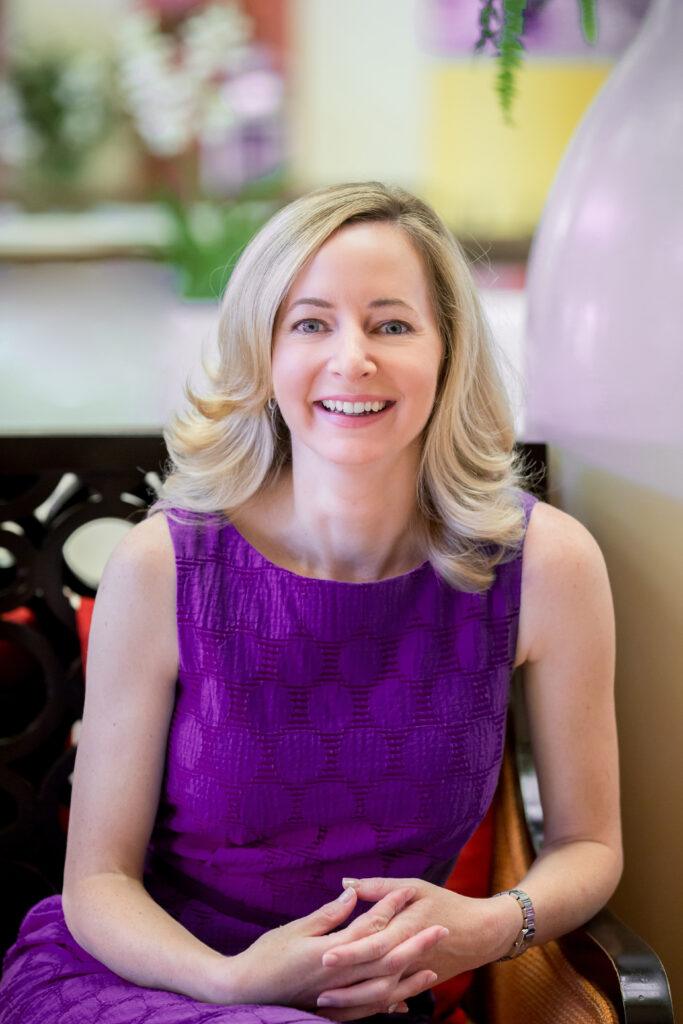
I have to admit I was a little intimidated because under Julie’s leadership PanCAN grew from one employee to 150. PanCAN has funded over $149 million dollars in research for Pancreatic Cancer and created a platform that has fueled incredible change for the Pancreatic Cancer community. Despite my fears, Julie was beyond amazing, passionate and so much fun to talk to. Join me today to meet this inspirational leader and learn about her incredible journey in changing lives.

Here are a few highlights from our conversation:


Charity Matters: Tell us a little about what The Pancreatic Cancer Action Network does?

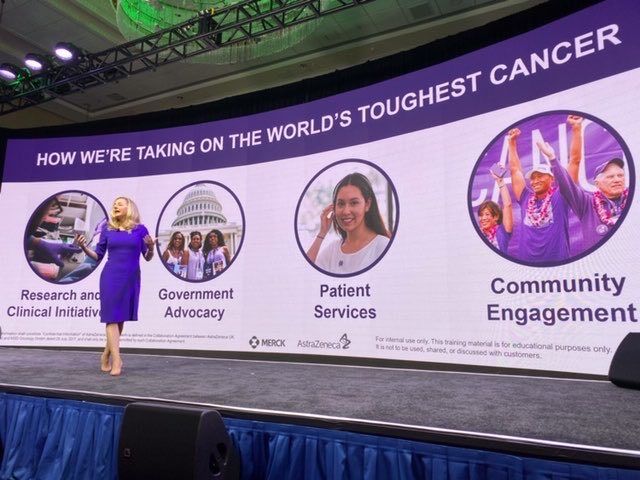
Julie Fleshman: PanCAN is a national patient advocacy organization focused on pancreatic cancer. Our vision is to create a world in which all pancreatic cancer patients will thrive. So every day, that is what we are focus on. We fund research and clinical initiatives, we provide patient services and we do government advocacy work in Washington, DC to increase the federal resources. And we have an amazing network of volunteers all across the country that are helping us to raise awareness, visibility, and funds for the disease.
Charity Matters: Tell us how you got involved and went from employee number one to CEO?

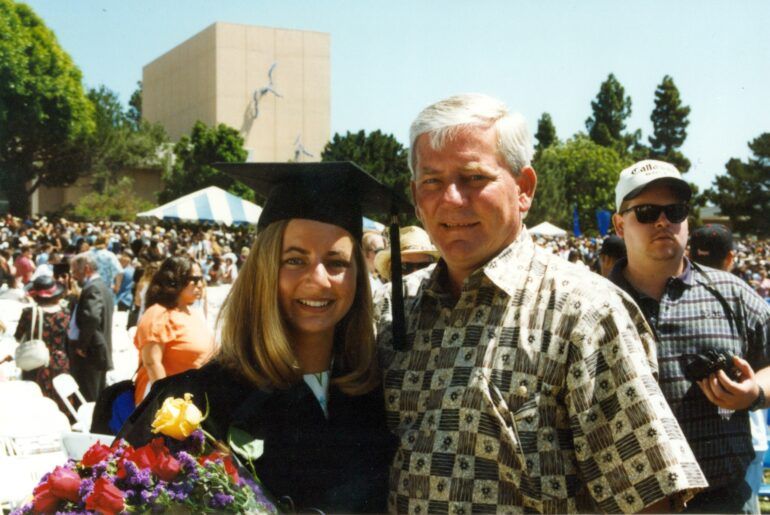
Julie Fleshman:  I got involved 22 years ago now, it is hard to believe. In 1999, my dad was diagnosed with pancreatic cancer when he was only 52 years old. He hadn’t been feeling well, but they couldn’t really figure out what was wrong with him. At one point, he was told to go home and take some time because they thought he was just having indigestion. Unfortunately, it ended up being a diagnosis of pancreatic cancer. He only lived for four months after his diagnosis and we were devastated.

I had never heard of pancreatic cancer, we really didn’t have cancer in our family. And I could not believe that there was absolutely nothing that could be done that there were no treatments. We were basically told, go home and get your affairs in order. So after he died, I was mad, and I started to do some research back in those early days of the Internet.  PanCAN had just been founded in 1999 by three people who had also all lost their parents the disease. One thing led to another, sort of serendipity,  I ended up being hired as the very first employee in 2000.
Charity Matters: What Have been your biggest challenges?

Julie Fleshman:  I think there are two sets of challenges. One is the challenge of this disease. It is a challenging disease scientifically. Certainly when PanCAN was founded, literally, there was very little known about even why it was challenging. So the baseline was really nothing. There was so little research happening anywhere in the country focusing on pancreatic cancer. So there was that challenge of how do we even attack this? What is the strategy? And what do we do?

Then there’s the challenge of the organization and the operations and raising money and what our programs going to be. And hiring staff and all of those things.  I think we did a really good job in the early days of creating excellent programs, that we’re serving the pancreatic cancer community.  Our patient’s services were literally providing services to patients and families.  Also on the research side, really looking at the big picture and saying, “Okay, at this time, we’re small but where can we have the greatest impact with the least amount of dollars?”  I think we did a good job being smart in those early days about what those things were. You know, we just feel very lucky that it is an amazing community, from the research community to the constituents, volunteers, and donors, who have helped us to continue to grow year over year.
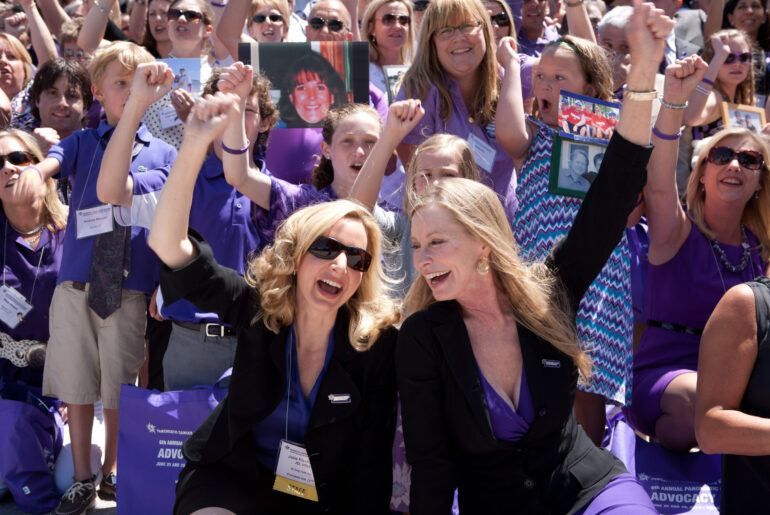
Julie with Patrick Swayze’s widow, Lisa Swayze

Charity Matters: What fuels you to keep doing this work?

Julie Fleshman: I think although, the progress is never as fast as we want it to be. But you know, you meet people and you share their stories and you talk to a patient and maybe that they’re not going to beat it, but they want to be a part of helping to make sure that it’s better for future people. That just gives you that inspiration to say, we got to keep doing this for them. If they’re not here to get to be that voice, we have to be that that voice for them. And there are successes, right? It’s not maybe the big win that we all want that there’s a cure, but there are steps every day towards that. So you really have to celebrate sort of those small wins.
Charity Matters: Tell us what success you have had and your impact? 

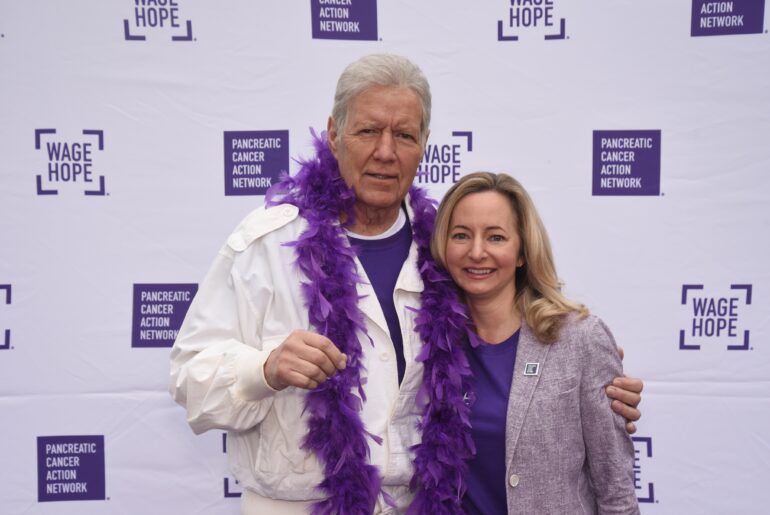
Julie Fleshman:  Ultimately, we’re trying to change patient outcomes. So for cancer and looking at pancreatic cancer, we sort of use the five-year survival rate.  That’s the kind of Capstone it doesn’t move very quickly, but it has moved from 3% when I started doing this, to 10% today. That is still unacceptable but is absolutely moving in the right direction.

Then you have to look at sort of all the things day to day. Like the research grants that we’re funding and when and those researchers go on to publish that work and that publish work changes practice. Then the next researcher who’s now going to take those that outcome and they’re going to add to it to get to the next step.

 Just last year alone, we had 45,000 interactions with patients and families through email and phone calls and people attending our webinars using all of our different patient services. I know from the feedback that we get, how meaningful that is to people. Especially those families that connect with one of our case managers and utilize them throughout their journey that when that family member dies, usually our case managers get the most beautiful email or card from the family saying, thank you for being there with us through this whole journey and so even though the outcome isn’t what we want it to be yet they add to the making it a more positive experience.

 I can see there is a pancreatic cancer research community today that didn’t exist. There was not a research community focused on pancreatic cancer 20 years ago. There are more resources being put towards the disease across the board and all of that is helping to drive and accelerate progress. I feel like every year now there’s sort of this major scientific breakthrough. That before it felt like it was a really long time between when it felt like we were making progress.  You can definitely see the momentum is picking up and, and the rate of progress is much faster.
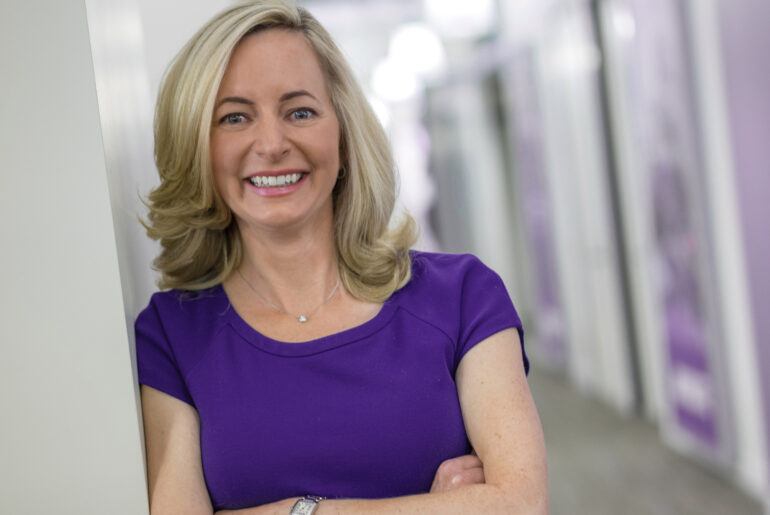
Charity Matters: How has this journey changed you?

Julie Fleshman:  It is hard for me sometimes to believe it was 22 years ago that my dad died. I mean, really, it feels like a lifetime ago in some ways. And in other ways, I can still remember sitting on the couch next to them and having a heart-to-heart. Those are things when you lose a parent, or someone close to you, that are life-changing, and really do change the way you view the world.

I always think God, I’d love, of course, my dad to be back. But I also cannot imagine my life without PanCAN. This has become such an important part of who I am and what I do, and just everything, it’s so important to me. So I feel like, in this strange way, he gave me this amazing gift. Right? And it’s not just doing the work, but I  feel passionate and committed to being a part of changing outcomes.

CHARITY MATTERS.


New episodes are released every Wednesday!  If you enjoyed today’s episode, please connect with us:
YOUR REFERRAL IS THE GREATEST COMPLIMENT,  IF YOU ARE SO MOVED OR INSPIRED, WE WOULD LOVE YOU TO SHARE AND INSPIRE ANOTHER.

Copyright © 2021 Charity Matters. This article may not be reproduced without explicit written permission; if you are not reading this in your newsreader, the site you are viewing is illegally infringing our copyright. We would be grateful if you contact us.