Tag

CNN Heroes

Browsing

Episode 101: Sleep in Heavenly Peace

Most of us tuck our children into bed each night without giving it a second thought. A warm blanket, a pillow, a place to rest….these simple comforts feel like basic parts of life. But what if you discovered that thousands of children in communities just like yours don’t have a bed at all? That realization changed everything for Luke Mickelson. What began as a small Christmas project in his garage with a few teenage boys and a power drill has grown into a global movement dedicated to making sure no child sleeps on the floor.

In this powerful episode of the Charity Matters Podcast, Luke shares the unforgettable moment that opened his eyes to the hidden crisis of child bedlessness and the little girl named Haley whose first bed changed the trajectory of his life. From one bunk bed to more than 425,000 beds delivered to children around the world, Luke’s story is a beautiful reminder that sometimes the simplest acts of kindness create the biggest ripple effects. This conversation will inspire you to look at the world a little differently and maybe even pick up a hammer and help change a child’s life.


Here are a few highlights from our conversation:


Charity Matters: Tell us a little about what Sleep in Heavenly Peace does?

Luke Mickelson:  Sleep in Heavenly Peace started as a family Christmas project in a garage, and now it’s a 501(c)(3) nonprofit that’s been around since 2012. Our main and only mission is to see that no kid sleeps on the floor in our town. Of course, we want “our town” to be everybody’s town. So what we do is build and deliver twin beds and bunk beds for kids ages three to seventeen.

The name came around Christmas time, and it really fulfilled two things. It’s what we wanted those kids to feel like when we left, and it had a little tie to the one person we know who didn’t have a bed when He was born. It’s simple, but that’s the whole idea: no kid should be sleeping on the floor.

Charity Matters: What experiences did you have as a child that influenced your work?

Luke Mickelson: The answer is absolutely and not really. What I mean by that is I grew up in a very small town—about 4,000 people. The beauty of growing up in a small town is you know everybody. The crappy thing is, you know everybody. But because you rub shoulders with people everywhere you go, you learn to support each other. I didn’t know any different. That built a desire in me to want to help people. That’s just what you did.

I also grew up most of my school years with my mom as a single parent. There were five of us kids. We didn’t have much. I remember one Christmas, right after my parents divorced, I was pretty sure we weren’t going to have much at all. I went out to the mailbox for my mom, and there was an envelope with $1,500 in it. We knew where it came from. We knew it was our community, people who had donated. Those are the things that happen in your community that change you.

So I didn’t grow up thinking, “I’m going to be philanthropic.” I just grew up in a place where helping each other was normal. I played sports, was team captain, student body president, and I loved being involved. I loved big groups, loved people, loved serving. It was ingrained in me.

I’ve always felt that if there’s one common denominator among all of us, it’s that we’re human. We’re all just humans. Deep down, I think all of us have some desire to help our own. I had a mission president tell me once: if you want to enjoy your career, look at it as a way of service. That stuck with me. If you show up looking at your work as service, it changes everything.

Charity Matters: What was the moment you knew you needed to act and start Sleep in Heavenly Peace?

Luke Mickelson: I was about thirty-five, and on paper my life looked great. I had a good job, had moved into the corporate office as executive vice president of sales and marketing, was coaching my kids, serving in church, and even planning to buy the business. Everything looked awesome. But internally, there was a hole being developed in my heart. It was a slow erosion over a couple of years, and even though I’m a happy, service-oriented guy, I could feel myself slipping.

Then one night at church, a family was mentioned, and in passing someone said, “The kids don’t have beds.” I stopped her. “Wait a minute, what?” She said they were sleeping on the floor. It hit me like a two-by-four. I went home, drew up a simple bunk bed plan off my daughter’s bed, got the boys together, and we built one. Delivering that bed filled something in me instantly. A few days later, when my own kids were asking for another Xbox, I walked straight to the garage and said, “I’ve got leftover wood. I’m going to build another bunk bed, and you’re going to come help me.”

We didn’t know who to give that second bed to, so I posted it online. What stunned me was how many people responded and how many knew children sleeping on floors, couches, pallets, anywhere but a bed. Then I met Haley, a six-year-old girl who had never slept in a bed, only in the backseat of her mom’s car. When I saw the pile of clothes in the corner where she slept, I almost lost it. But when we put her bed together, she hugged it, kissed it, and her mom stood there crying. That’s when I knew this was way more than a bed.

On the drive home, I told my buddy, “No kid can sleep on the floor in my town if I have anything to do with it.” That Christmas we built and delivered 21 beds. There was no going back.

Charity Matters: What are your biggest challenges?

Luke Mickelson: When you’re passionate about something, passion can be contagious, but it can also act like a bulldozer. You gain friends and you lose friends. Some people wanted to keep it local, and I was thinking, “No, I need to do this.” That’s hard.

Another challenge was my job. Every vacation, every spare minute I had, went to helping the charity grow. My employer saw that this wasn’t slowing down. Eventually my boss sat me down and basically said, “I know you. This isn’t going to stop. You either quit the charity and go to work, or quit work and go do your charity.” At the time it was hard, but it was a gift.

And then as we grew, the challenge became scale. We could build beds fast, but delivering them, organizing volunteers, funding chapters, building a structure that’s real work. Even now, the need is huge. There are 155,000 kids on our waiting list, and we only geographically cover 27% of the United States. That means most of the country still doesn’t know child bedlessness is even a thing.

Charity Matters: What fuels you to keep doing this work?

Luke Mickelson: I live by this mantra: if you want true joy, stop looking at yourself and see how you can help someone else out. Your problems won’t go away, but they won’t seem nearly as heavy.

That’s what this work did for me. It filled something in me that nothing else had. I didn’t care about the paycheck anymore. I didn’t care about the zeros behind it. What fueled me was knowing this mattered. I also had support at home. My wife at the time supported me, and not everybody would support someone saying, “Hey, I’m quitting my job and we’re going to sacrifice for a while.” But she knew this was what made me happy.

Then the mission got a megaphone. Mike Rowe’s Returning the Favor aired our story to 10 million people. We went from seven chapters to 125 in a year. CNN Heroes, Good Morning America, People Magazine….all of it furthered the mission. But at the center of it, what fuels me is still the same thing: helping one kid at a time.

Charity Matters: When do you know you have made a difference?

Luke Mickelson: I knew right there in Haley’s room. When a little girl hugs and kisses a bed, and her mom is crying because for six years she hasn’t been able to give her daughter that, you realize this is way more than furniture.

A bed means physical rest, mental peace, dignity, security, and a sanctuary. These kids sleep better, go to school better prepared, and feel like they matter. They can have friends over. They’re not hiding their lives. So when I see a child’s face, or a parent’s tears, I know we’ve made a difference.

And honestly, I also know it every time a volunteer delivers a bed and comes back changed. The mission helps the child, but it changes the person serving too.

Charity Matters: Tell us what success you have had and what your impact has been? 

Luke Mickelson: We started in 2012 with one family Christmas project. We made it a charity in 2014 because we couldn’t finance it ourselves anymore. By the end of 2017, we had seven active chapters in five states. Then after Mike Rowe’s show aired, it exploded.

Now we’ve trained over 440 chapters in four countries. We’re in almost every state, and this year we’ll pass 425,000 beds built and delivered. We’re the largest bed-building charity in the world. That’s remarkable, especially when you realize I found only one other charity in the country doing this when I first looked.

The success is huge, but the impact is still one child at a time.

Charity Matters: If you could dream any dream for your organization, what would that be?

Luke Mickelson: The dream is simple: that no kid sleeps on the floor. Right now 70% of the country still doesn’t know who we are. I want every family, every teacher, every counselor, every foster agency, every church, every volunteer to know there is a solution.

If someone’s sister in Miami has a child sleeping on the floor, I want them to know exactly where to go. I want chapters everywhere. I want awareness everywhere. I want this epidemic to stop being invisible.

Charity Matters: What life lessons have you learned from this experience?

Luke Mickelson: I’ve learned a lot about people, about passion, and about myself. Skill set matters, but passion matters more. I’ve learned the value of people’s hearts.

I’ve also learned that founders have to grow. Your role has to shift if you want the mission to outlive you. That’s hard, because your mission and your identity get fused together. But growth isn’t loss. Growth is legacy.

And I’ve learned that tiny moments matter. We dismiss them too easily. We think, “I don’t have time,” or “Someone else will do it.” But those little moments of inspiration can become something massive if you act.

Charity Matters: How has this journey changed you?

Luke Mickelson: A million percent it changed me. I value success differently now. I used to think success was the stuff you had and the zeros behind your paycheck. I don’t believe that anymore.

I believe more deeply than ever in humans helping humans. I wish everybody would adopt that. We’re all human first. If we could put differences aside or even celebrate differences….we’d be so much better off.

And maybe the biggest thing is this: I can now step back and see that if I died tomorrow, the mission would keep going. As a founder, that’s one of the greatest gifts you can ever have.  It means what started in a garage as one family Christmas project became something bigger than me.

CHARITY MATTERS.


YOUR REFERRAL IS THE GREATEST COMPLIMENT,  IF YOU ARE SO MOVED OR INSPIRED, WE WOULD LOVE YOU TO SHARE AND INSPIRE ANOTHER. If you enjoyed today’s episode, please connect with us:

Copyright © 2026 Charity Matters. This article may not be reproduced without explicit written permission; if you are not reading this in your newsreader, the site you are viewing is illegally infringing our copyright. We would be grateful if you contact us.

Episode 59: Project Libertad and our CNN Hero

At Charity Matters we love heroes, people who give and people who serve others. We have been interviewing and finding remarkable heroes long before the iconic CNN Heroes came along. Don’t get me wrong, anyone who amplifies the voices of these remarkbale humans should be applauded, so bravo CNN! When one of the people we interviewed a year and half ago became a CNN Hero, well we had to share. We are so proud of Rachel and she was always a hero to us. Here is her story in video and for everyone who wants to revisit our conversation and podcast, take a look below. The world needs to continue to highlight heroes…because charity does matter.

Photo via: CNN
Rachel’s Story from our May 2023 conversation:

I was recently having a conversation with friends about what our grandparents and great grandparents went through coming to America. I love these conversations for a few reasons. First because we all have these stories. Secondly, because they remind us how strong and resilient our ancestors were and what they sacrificed for us. The immigrant story is the story of our country.

While immigration has been a hot political topic these days, regardless of your stance, there are still people coming to our country who need help. That is where today’s guest, Rachel Rutter comes in. Rachel is the founder of Project Libertad, an organization that helps immigrant youth in a multitude of ways. Join us for an inspirational conversation about some of the challenges these children are facing and how she and Project Libertad and making a difference.


Here are a few highlights from our conversation:


Charity Matters: Tell us a little about what Project Libertad does?

Rachel Rutter: We are a nonprofit organization serving newcomer immigrant youth. So we’re working with kids who have recently arrived in the US and their families. The people we primarily work with are unaccompanied minors from Central America and Mexico. In addition, we also work with a lot of families from Brazil.

There are fewer services in the counties outside of Philadelphia, so we’re providing legal services,  helping kids with their immigration process, and trying to address the other needs that they have. For example, we have kids who struggle with housing insecurity, food insecurity, mental health support, and all those sorts of things. So we’re trying to not only meet their need for immigration status and help them with that process, but also all these other challenges that they face as they’re adjusting to being here in the US.

Charity Matters: What was the moment you knew you needed to act and start Project Libertad?

Rachel Rutter:  When I was in college, I had this idea that I wanted to start a nonprofit someday.  I was very naive about how hard it would be. So I started all of the paperwork, and incorporating and 501 C 3 status in law school.  Then at the same time, I was working with all these clients who had legal needs, needed asylum, or they needed to apply for immigration status. 

Then they always have all these other needs. For example they don’t have a safe place to live, have family issues, trauma, and need food. There are any number of different issues that they have.  I just wished we had a social worker that we could partner with and have like a wraparound approach. A place where we are meeting all the needs, not just this legal needs.

So the idea came to create an organization that does try to do all those different things in a one stop shop.  We are doing that now, and we had just hired a case manager to connect kids to resources in the community and social services.  I’m obviously doing the legal part. And we hope to continue replicating that and growing in new areas. 

Charity Matters: What are your biggest challenges?

Rachel Rutter: One of the biggest things I remember getting really frustrated with was applying for different grants.  It’s really hard to get your foot in the door as a new nonprofit. Nobody wants to take a chance on you, you’re tiny, and they want to see that you have money before they give you money. But you can’t show them that unless someone gives you money. It’s just kind of like a chicken and egg problem. So that was really frustrating.

We took classes on grant writing.  I just practiced and got better over time. Eventually, we did a grant in partnership with HIAS which was the first ever grant that we got. Just being able to say that this other foundation gave us a grant went really far. Being patient, learning how to talk about your mission in a way that people want to fund it. Because it’s really important. It’s like writing a thesis in college where you have to structure it the right way so that people want to support it.  That was a big learning curve for us.

Charity Matters: What fuels you to keep doing this work?

Rachel Rutter: It can be really hard, but the most important thing for me has always been like the relationship that I have with the kids that we work with. So that’s definitely like the biggest motivator for me. I also have a very supportive family, husband, and friends who work in this industry as well.

So I feel like I have not only my team, my project like that, but also my colleagues from other organizations  who are always supportive. We can always like work together to solve problems.  It can definitely be challenging, but I feel like I have a good support system. Working directly with the kids is what gives me energy. Usually, that’s what I’m trying to focus on. If I need to push through, I’m thinking about the kids and that connection that we get to have with them.

Charity Matters: Tell us what success you have had and what your impact has been? 

Rachel Rutter:  In terms of our impact, we served over 1000 people last year. The times I think when I feel like the most impactful are when a student shares some things that were going on in her family.  After hearing this we were able to provide support with that. There was food insecurity in the household and so we went grocery shopping. It doesn’t always have to be complicated. This kid said I need food and we went to the store and we got food and like that was that. My colleagues and I do stuff like that all the time.

I think those are definitely the moments for me that are the most rewarding when you can just help somebody in such a concrete immediate way. So I love that we have the ability to do that. Sometimes those kinds of moments don’t necessarily get captured in the numbers you put in a grant report. 

Charity Matters: If you could dream any dream for your organization, what would that be?

Rachel Rutter: I have two thoughts about that. One is to continue expanding and replicating what we’re doing now in our current locations. Having the combination of lawyers and social workers reproducing that in new counties as we grow.

Then the other thing I would love to do is to have some sort of shelter for youth who are 18 to early 20s. Something that we run into a lot is youth who have housing insecurity. They don’t either have anywhere to go because the foster care system doesn’t help them once they are 18. We run into cases like that where kids don’t have anywhere to go. There are really limited options currently for them. We would really love is to eventually have some sort of space for kids like that. So that would be  another dream that I would have for the future. 

Charity Matters: What life lessons have you learned from this experience?

Rachel Rutter: I think one thing is just like the importance of these relationships with the kids.  So I think just the value in those long term relationships is so important, and like sustaining for me. I’ve definitely been learning to delegate more, now that we have more staff.  It’s always hard for me to kind of let go of things because this is my baby.

 I also realize when I’m feeling burned out that having a good team that you can trust to do things so that you aren’t trying to do everything as one person is really important. I’m learning to  relax a little more. A lot of things work themselves out if you wait long enough. 

Charity Matters: How has this journey changed you?

Rachel Rutter:  I think when I started this out, I was a little bit naive about how difficult it might be to get funds. So like I mentioned, I’ve learned a lot there. I just think I have more confidence in myself and my knowledge as an attorney.  We’ve really developed our niche where we are the local experts working with this population.

I think that took me a long time to kind of see this as like a real thing and now other people see it that way too.

CHARITY MATTERS.


YOUR REFERRAL IS THE GREATEST COMPLIMENT,  IF YOU ARE SO MOVED OR INSPIRED, WE WOULD LOVE YOU TO SHARE AND INSPIRE ANOTHER. If you enjoyed today’s episode, please connect with us:

Copyright © 2023 Charity Matters. This article may not be reproduced without explicit written permission; if you are not reading this in your newsreader, the site you are viewing is illegally infringing our copyright. We would be grateful if you contact us.

How do you choose a hero?

Nothing is given to man on earth-struggle is built into the nature of life, and conflict is possible-the hero is the man who lets no obstacle prevent him from pursuing the values he has chosen.”

Andrew Bernstein
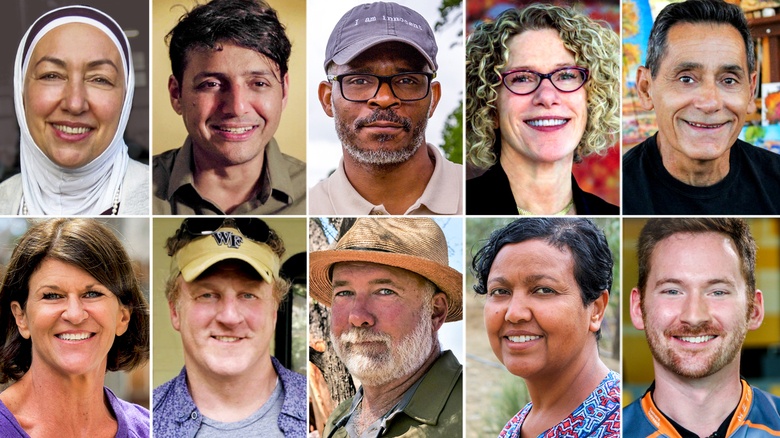
photo credit: CNN

I was recently asked who my favorite nonprofit founder or hero is? To be honest, it was as if someone asked who my favorite son is?  There is no favorite. Each person that I am privileged enough to interview brings a unique story and journey that has lead them to serve. These men and women use their lives challenges as fuel to help others’ lives. Honestly, there is no one better than another. They are all amazing! Their stories and life journeys are all lessons for each of us on how we can use our own gifts to the greatest good.
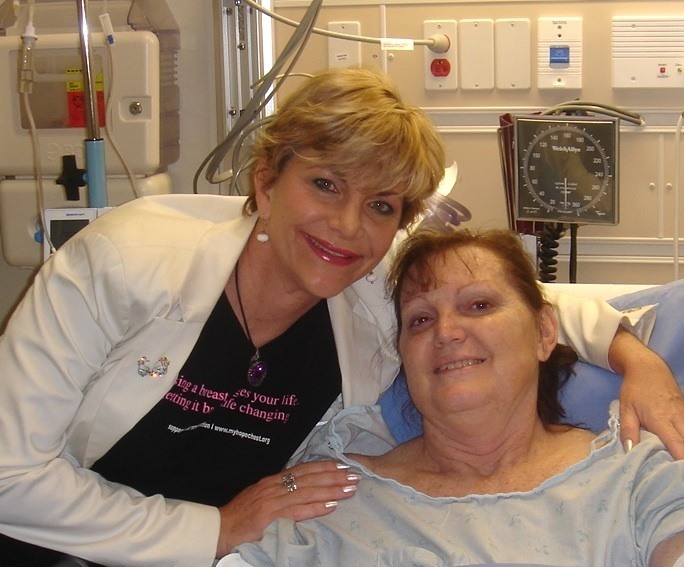
Each hero’s story and cause are different and diverse. Inspiring people like the Vegas dancer, who began My Hope Chest. A former supermodel who has committed her life to serve the homeless with I Am Waters.  Infinite Heros founder, Colin Baden, using his work at Oakley to serve our Veterans. How could you choose or vote because everyone you have met through Charity Matters is a hero.

CNN Heroes

CNN has also been profiling amazing humans for their show CNN Heroes for about the same time that Charity Matters has. They do ask you to nominate your heroes and this got me thinking. How do you pick a hero? I could spend days filling these nomination forms out with all of the incredible everyday heroes I have met. The world is full of amazing people but sadly we are not watching them, our attention is elsewhere.

VOTE

Here is one nominee from a few years back. So take a minute and think if you know someone who is making a difference in your community or world? Nominations are due July 31st, so you have a few days to fill out the application and help a helper. There is simply nothing better.


Charity Matters


YOUR REFERRAL IS THE GREATEST COMPLIMENT,  IF YOU ARE SO MOVED OR INSPIRED, WE WOULD LOVE YOU TO SHARE AND INSPIRE ANOTHER.

Copyright © 2020 Charity Matters. This article may not be reproduced without explicit written permission; if you are not reading this in your newsreader, the site you are viewing is illegally infringing our copyright. We would be grateful if you contact us.

CNN Heroes

CNN Heroes

Last week CNN announced their CNN Heroes for 2015. A tradition that began in 2007 finding extra-ordinary people,  who use their gifts to make other’s lives better. Each year ten amazing people are nominated, all who are deserving non-profit heroes.

So now its time to vote, the video ballot is below. Take a peek at these amazing people.

To cast your vote go to  CNN Heroes. There are too many inspiring stories to share here, but treat yourself to see how remarkable it is, when people use their gifts to make others lives better. Everyone of these nominees are winners already.

Charity Matters.


Copyright © 2015 Charity Matters. This article may not be reproduced without explicit written permission; if you are not reading this in your newsreader, the site you are viewing is illegally infringing our copyright. We would be grateful if you contact us.