Category

Podcast

Category

May the FORCE be with You

In a world often filled with noise, division, and overwhelming need, it’s easy to feel small and like one person can’t possibly make a difference. But the truth is, we can. Not by changing the whole world in one grand gesture, but by choosing, moment by moment, to be a force for good. Since this is the month of May it seems like a good time to reflect upon the force within each of us.

Being a force for good doesn’t require perfection, wealth, or extraordinary talents. It begins with empathy, the willingness to see and feel someone else’s pain and to respond with love. It’s found in everyday choices: the kindness we show to a neighbor, the time we give to someone in need, the forgiveness we extend even when it’s hard. It’s those small acts that, over time, ripple outward, creating real change. Service doesn’t have to be complicated to be meaningful. Sometimes the simplest gestures are the most powerful.

Each week on the Charity Matters Podcast we interview extraordinary humans who start nonprofits. None of theses founders set out to do this work but something happened along their journey that inspired them to serve. Max Page a young boy born with a congenital heart defect who played “Little Darth Vader” in a famous Super Bowl commercial. Despite countless surgeries and hospital stays, Max and his family turned their pain into purpose. They began advocating for children’s health, raising money and awareness for causes that had once touched their own lives. Max’s courage and generosity remind us that being a force for good isn’t about age or experience…it’s about heart. Max knew about being a force for good.

We all have a story. Some of our stories are marked by loss, trauma, or failure. But those experiences can become the very fuel we need to help others. That’s what Carolyn Blashek discovered. After trying to help a heartbroken soldier during the early days of the Iraq War, she felt called to do something more. She started Operation Gratitude, sending care packages and handwritten letters to military members. Her response to one person’s pain has since touched over 3 million service members. Carolyn’s story shows that when we act from the heart, even the most personal moments can ignite a movement.

Each of these stories teaches us something essential: we don’t need to wait for the perfect time or the perfect version of ourselves to make a difference. We just need to begin. Service is a journey, not a destination. Along the way, we discover more about who we are and what we’re capable of. We find connection in unexpected places. And we realize that the very act of giving not only helps others…..and it changes us.

When we step outside of ourselves and serve, we begin to heal. We begin to understand that we’re not alone, that our lives have meaning beyond our individual circumstances. We find purpose in the shared humanity of helping one another and a call to see ourselves not just as individuals, but as part of something bigger.

So how do we start? We begin by paying attention….. by noticing the lonely neighbor, the friend going through a hard time, the child who needs encouragement. Then we offer what we have…..a listening ear, a helping hand, a small donation, or simply our time. We act not because we have to, but because we want to be part of the solution.

Being a force for good doesn’t mean saving the world. It means showing up, again and again, with love. Being a force for good means choosing kindness even when it’s inconvenient. It means believing that every person matters and that includes ourselves. When we give from that place, we discover the magic that happens when one life touches another.

The truth is, you already have everything you need to be a force for good. Your story, your pain, your joy, your heart, they are your tools. The question is not whether you can make a difference, but whether you’re willing to try. And if you are, then you are already well on your way.

Because changing the world doesn’t start with a grand plan. It starts with you. May the force be with you.

CHARITY MATTERS.


YOUR REFERRAL IS THE GREATEST COMPLIMENT,  IF YOU ARE SO MOVED OR INSPIRED, WE WOULD LOVE YOU TO SHARE AND INSPIRE ANOTHER. If you enjoyed today’s episode, please connect with us:

Copyright © 2026 Charity Matters. This article may not be reproduced without explicit written permission; if you are not reading this in your newsreader, the site you are viewing is illegally infringing our copyright. We would be grateful if you contact us.
Episode 103: Walk with Me Brother

Some stories ask you to listen. Others ask you to feel. And then there are the rare ones, like this one, that ask you to walk alongside them. This week on the Charity Matters Podcast, you’ll meet Robb Pollard, a husband, father, entrepreneur, and now the founder of Walk With Me Brother, who is about to do something extraordinary. On Monday, Robb began a 2,500-mile run across America…..not because he’s a runner, not because it’s easy, but because he knows what it feels like to be at the very bottom and wonders if his journey might help someone else choose to stay. This isn’t about miles. It’s about meaning. It’s about one man’s decision to turn pain into purpose and to remind us all that asking for help might be the bravest step we ever take.

By the time this episode airs on Thursday, Robb will already be on the road one step at a time, inviting all of us to come with him. His story is raw, honest, and deeply human. It’s about mental health, about breaking the silence so many men carry, and about the power of simply showing up for one another. If you’ve ever wondered how one person can make a difference, this conversation will stay with you. Because sometimes, changing the world doesn’t start with a grand plan …it starts with one step… and the courage to take it.


Here are a few highlights from our conversation:

Charity Matters: Tell us a little about what Walk With Me Brother does?

Robb Pollard:  Walk With Me Brother is a mental health nonprofit, but I try not to overcomplicate it. At its core, it started with one simple goal: help one person. If I could save one person from taking their own life (most likely a man) then everything I’m doing is worth it.

That’s really it. That’s the mission.

People talk a lot about mental health awareness, but the truth is, we’re already aware. We know what mental health is. What we’re trying to do is take action…real action to prevent suicide. For me, that means creating connection. It means building a brotherhood where people feel safe enough to talk, to open up, to not feel alone.

The run across America is part of that. It’s a way to get attention without destroying myself. It’s a way to show people, especially men, that there is another option. That you can ask for help. That you can choose a different path.

If I have to run 2,500 miles to reach one person, then it’s worth every step.

Charity Matters: What experiences did you have as a child that influenced your work?

Robb Pollard:   I grew up in a small town in England, and it was very community-driven. Everyone knew each other. Neighbors looked out for one another. It wasn’t nonprofit work in the formal sense, but it was people helping people.My grandmother, my Nan, had a big influence on me. She always used to say, “No matter what you’re going through, there’s always someone worse off than you.” That stuck with me. It gave me perspective early on.

As I got older, I naturally gravitated toward helping where I could. When I lived in Shanghai, I worked with an animal rescue and ended up fostering over 100 dogs. I also spent time with an orphanage, which was pretty eye-opening.

But even then, I never thought I’d start a nonprofit. I just thought I’d support causes, donate money, do my bit. Looking back now, all those experiences were shaping me. They were laying the groundwork for something bigger….I just didn’t know it at the time.

Charity Matters: What was the moment you knew you needed to act and start Walk With Me Brother?

Robb Pollard: The moment everything changed was when I said three words: I need help.I couldn’t even say it out loud at first. I had to write it in an email to my family. But that was the turning point. I knew that nothing was going to change unless I did something different.

I’d been struggling for a long time with my mental health, with addiction, with feeling like I was never enough. And even when I got sober, there was still that voice in my head. I knew eventually I’d crack if I didn’t do something drastic.

Then I went through ketamine infusion therapy, and during one of the sessions, I had this vision of myself running across America. It wasn’t about ego. It wasn’t about proving anything to anyone else. It was about doing something so big that people would notice and in noticing, maybe they’d realize there’s another way. That idea stuck with me. I couldn’t ignore it.

And once it was there, I knew I had to follow through. That’s when it shifted from just a personal challenge to something bigger….a mission. That’s when Walk With Me Brother really began.

Charity Matters: What are your biggest challenges?

Robb Pollard: I definitely underestimated how hard this would be. Starting a nonprofit is no joke. There’s no clear roadmap, and everything takes more time, more effort, and more consistency than you think. Fundraising alone is a massive challenge we’re trying to raise around $80,000 just to support the run.

Then there’s building the right team. The people around you have to believe in the mission. A lot of the people helping right now have personal stories of loss, struggles, experiences with mental health and that’s what drives them. On a personal level, the biggest challenge is balancing everything. I have a business, a wife, kids, a life. And I’m about to step away from that for a long time to do something that’s physically and mentally demanding.

There are moments where I think, “What am I doing?” But once you commit to something like this, there’s no backing out. You just have to keep going.

Charity Matters: What fuels you to keep doing this work?

Robb Pollard: What keeps me going is the thought that someone might still be here because of this. Maybe a kid still has his dad. Maybe a parent still has their son. That’s what I hold onto.

And then there’s my own family. My kids might not understand this right now, but one day they will. I want them to see that you can push yourself beyond what you think is possible. That you can do hard things.

There’s also something personal in this for me. I’ve never really felt proud of myself. This is about changing that. It’s about proving to myself more than anyone that I can do something meaningful.

Charity Matters: When do you know you have made a difference?

Robb Pollard:  If one person chooses to stay because of this, then I’ve made a difference.

That’s success to me. It’s not about numbers, followers, or how much money we raise. It’s about impact. One life is enough.

Charity Matters: Tell us what success you have had and what your impact has been? 

Robb Pollard:  We’re still early in the journey, but already I’m seeing the impact. People are reaching out. They’re sharing their stories. They’re opening up in ways they haven’t before. That alone tells me this is needed.

The real impact will come over time. We’re building something bigger than just the run it is a community, a brotherhood, a place where people can talk without judgment. We’re also working on future initiatives things like providing access to support for people who can’t afford it, creating local walking communities, and bringing in ideas that have worked in other countries.

This isn’t a one-time event. This is the start of something much bigger.

Charity Matters: If you could dream any dream for your organization, what would that be?

Robb Pollard: The dream is to create a system where no one feels like they have nowhere to turn. I want Walk With Me Brother to become a community….something people can plug into anywhere. Walks, conversations, meetups. Real connection.

I’d love to see it grow across the country and beyond. I want to go into schools, especially high schools, and talk to young men. If we can reach them early and show them it’s okay to ask for help, we can change outcomes.

Long term, I’d like to create access to real support whether that’s therapy, resources, or just someone to talk to. Something practical, not just awareness.

Charity Matters: What life lessons have you learned from this experience?

Robb Pollard: The biggest lesson is that asking for help isn’t weakness it’s strength. There is always someone out there who will help you. You just have to ask.

I’ve also learned that nothing changes unless you change something. You can’t stay stuck and expect things to get better. And I’ve learned how important it is to have the right people around you. This isn’t something you do alone. The people involved in this all have a connection to the mission. That matters.

Charity Matters: How has this journey changed you?

Robb Pollard: It’s already changing me, and I know the biggest changes are still to come.

I’m someone who’s always been very family-oriented, very comfortable at home. This is pushing me way outside of that. Being away from my family is going to be one of the hardest parts. Physically, it’s going to be tough. But mentally, it’s going to be even tougher.

At the same time, I know that if I can do this, I’ll come out stronger. I’ll know what I’m capable of. And more than anything, I’ll know that I tried to make a difference. Even if it’s just for one person.

Because at the end of the day, that’s all this has ever been about.

CHARITY MATTERS.


YOUR REFERRAL IS THE GREATEST COMPLIMENT,  IF YOU ARE SO MOVED OR INSPIRED, WE WOULD LOVE YOU TO SHARE AND INSPIRE ANOTHER. If you enjoyed today’s episode, please connect with us:

Copyright © 2026 Charity Matters. This article may not be reproduced without explicit written permission; if you are not reading this in your newsreader, the site you are viewing is illegally infringing our copyright. We would be grateful if you contact us.
Episode 102: JDS Creative

We often think of the arts as something extra….something creative, expressive, maybe even optional. But what if the arts were actually the bridge to confidence, communication, independence, and purpose? In this powerful and inspiring conversation, I sit down with husband and wife Diane and Scott Strand, the founders of JDS Creative Academy, who are using the arts in the most extraordinary way…..to transform lives. What began as two creatives working in Hollywood, juggling long hours and raising a young family, turned into a simple “what if?” and that one question has now grown into a thriving nonprofit that is changing the trajectory of lives every single day.

Through filmmaking, acting, digital media, and storytelling, Diane and Scott are giving people, especially adults with developmental disabilities, the tools to find their voice, build real-world skills, and step into a life they may have never believed possible. This episode is a beautiful reminder that sometimes the greatest impact doesn’t come from grand plans, but from saying yes to one person, one opportunity, one moment at a time. Their story is filled with heart, humility, and hope and it will leave you inspired to look at your own gifts and ask, “What if I used them to help someone else?”


Here are a few highlights from our conversation:


Charity Matters: Tell us a little about what JDS Creative does?

Diane Strand:  JDS Creative Academy is a nonprofit 501 c3 with a mission of using visual, performing, and digital arts to enhance life, creativity, and business. We serve youth, teens, and adults both mainstream and special needs through hands-on programs that allow people to step in and immediately be part of the creative process.

The goal is not just learning the arts for fun, although there is joy in that. It is about giving people tools they can use for career pathways, workforce development, and independence. We want people to understand the power of the arts….not just as expression, but as a way to build a life.

Charity Matters: What experiences did you have as a child that influenced your work?

Diane Strand:  I always say you cannot connect your dots looking forward you have to look back. For me, those dots go all the way back to first and second grade. I was a little girl who just wanted to play Betsy Ross in the school play, and everyone told me I couldn’t. I was a struggling reader, an undiagnosed dyslexic, and school was not easy for me.

But the arts were my connection. They kept me engaged in learning and gave me a way to grow beyond my challenges. At the time, I couldn’t articulate why it mattered so much, but now I see it clearly. The arts gave me a voice when I didn’t have one in other areas.

Later in life, when Scott and I were in Hollywood and becoming successful, the environment wasn’t always kind. Something in me instinctively knew I wanted something different something rooted in kindness and purpose. Looking back, all of those experiences were pointing me here.


Charity Matters: What was the moment you knew you needed to act and start JDS Creative?

Scott Strand:  It really started with a “what if” moment. Diane and I were both working long, exhausting hours, and we had just had our son. I was taking him to auditions in a stroller, and Diane was leaving before he woke up and coming home after he was asleep. It just wasn’t sustainable.

One night, after I finished my film degree, I said, “What if we sold everything, moved, and built our own production company? You know how to produce, I know how to film….we can do this.” She said yes, and that started our entrepreneurial journey.

The nonprofit came later, and it happened organically. We had a successful production company and an actor studio that grew out of a drama club we were running. People kept asking us to do more teach writing, filmmaking, theater. We kept saying yes.

Then one day someone asked, “What if you worked with an adult with developmental disabilities who wanted to learn audio?” We said, “Let’s try it.” And once we saw what was possible, it became, “If we can teach one, we can teach many.”

That was the moment. It wasn’t a grand plan……it was a series of “what ifs” that we chose to answer.

Charity Matters: What are your biggest challenges?

Scott Strand: One of the biggest challenges is capacity. The need is so much bigger than what we can serve. When we started, we had five adults in the program, and very quickly that number grew. Once people saw what we were doing, the applications started coming in.

It’s a good problem, but it’s also a hard realization that you cannot meet every need. No matter how much you want to help, you can only serve as many people as your resources allow.

Another challenge is building the right team. Not everyone understands the nonprofit space or shares the same vision right away. We had to grow into leadership that allows people to be creative while still supporting the mission. Now we have a team that truly believes in what we are doing, and that makes all the difference.

Charity Matters: What fuels you to keep doing this work?

Diane Strand:  For me, it’s the people. It’s our students, our families, and our team. Some of the people who stepped in during the early years are still here today. That kind of loyalty and belief is incredibly powerful.

Our own children fuel us as well. They grew up in this environment…. in the arts, in the theater, in this mission and they’ve bought into it completely. That tells me we’re building something that matters.

And truly, the more you serve, the more you receive. That has been one of the greatest lessons of this journey. You give and give, and somehow your life becomes fuller in the process.


Charity Matters: When do you know you have made a difference?

Scott Strand:  It’s in the small, real moments. It’s when you see the light bulb go on. I had a moment recently where I walked into the studio and saw a group of students some neurotypical, some adults with autism sharing their ideas for films they wanted to create.

They were listening to each other, supporting each other, and fully engaged. I stopped and thought, “This is it. This is why we do this.”

It’s not about numbers it’s about those moments where someone feels seen, heard, and capable.

Charity Matters: Tell us what success you have had and what your impact has been? 

Diane Strand:  Of course, we’ve had awards and recognition, and those are wonderful. But our real success is in the lives we’ve seen transformed.

We’ve had students who didn’t speak much at home start coming home and sharing their day with their families. We’ve had individuals placed into internships and jobs. We’ve seen people gain independence and confidence in ways they never thought possible.

I always say, “Help one person every day,” because that one act creates a ripple effect. When someone grows here, they take that growth home, into their families, into their communities. It changes everything.


Charity Matters: If you could dream any dream for your organization, what would that be?

Diane Strand:   We created JDS Creative Academy to outlive us. The dream is legacy. We want this work to continue far beyond our time.

I would love to see programs like this across the country arts-based workforce development programs that help adults with developmental disabilities build real skills, find independence, and thrive.

We are working toward making the organization self-sustaining so it can continue without relying on us. That’s the dream that what we’ve built lives on and continues to serve.

Charity Matters: What life lessons have you learned from this experience?

Diane Strand:  Patience has been one of the biggest lessons. I came from a fast-paced, results-driven world, and this work requires a different kind of leadership one rooted in patience, kindness, and compassion.

It has also taught me to be more open. For most of my life, I worked around my dyslexia and didn’t talk about it. Now I can share that part of my story and recognize that it’s not something to hide, it’s part of what shaped me.

Kindness, clarity, and perspective those are the lessons I carry with me every day.

Charity Matters: How has this journey changed you?

Scott Strand: It’s allowed me to become more myself. I’ve always been a performer at heart, but for a long time I felt like I had to be more guarded as a business owner and leader.

Now I can lead with humor, creativity, and openness. I can be playful, and that actually makes me a better leader. It creates an environment where people feel safe to express themselves and grow.

This journey has shown me that when you help someone step into who they truly are, it doesn’t just change their life it changes yours too.

CHARITY MATTERS.


YOUR REFERRAL IS THE GREATEST COMPLIMENT,  IF YOU ARE SO MOVED OR INSPIRED, WE WOULD LOVE YOU TO SHARE AND INSPIRE ANOTHER. If you enjoyed today’s episode, please connect with us:

Copyright © 2026 Charity Matters. This article may not be reproduced without explicit written permission; if you are not reading this in your newsreader, the site you are viewing is illegally infringing our copyright. We would be grateful if you contact us.
Episode 101: Sleep in Heavenly Peace

Most of us tuck our children into bed each night without giving it a second thought. A warm blanket, a pillow, a place to rest….these simple comforts feel like basic parts of life. But what if you discovered that thousands of children in communities just like yours don’t have a bed at all? That realization changed everything for Luke Mickelson. What began as a small Christmas project in his garage with a few teenage boys and a power drill has grown into a global movement dedicated to making sure no child sleeps on the floor.

In this powerful episode of the Charity Matters Podcast, Luke shares the unforgettable moment that opened his eyes to the hidden crisis of child bedlessness and the little girl named Haley whose first bed changed the trajectory of his life. From one bunk bed to more than 425,000 beds delivered to children around the world, Luke’s story is a beautiful reminder that sometimes the simplest acts of kindness create the biggest ripple effects. This conversation will inspire you to look at the world a little differently and maybe even pick up a hammer and help change a child’s life.


Here are a few highlights from our conversation:


Charity Matters: Tell us a little about what Sleep in Heavenly Peace does?

Luke Mickelson:  Sleep in Heavenly Peace started as a family Christmas project in a garage, and now it’s a 501(c)(3) nonprofit that’s been around since 2012. Our main and only mission is to see that no kid sleeps on the floor in our town. Of course, we want “our town” to be everybody’s town. So what we do is build and deliver twin beds and bunk beds for kids ages three to seventeen.

The name came around Christmas time, and it really fulfilled two things. It’s what we wanted those kids to feel like when we left, and it had a little tie to the one person we know who didn’t have a bed when He was born. It’s simple, but that’s the whole idea: no kid should be sleeping on the floor.

Charity Matters: What experiences did you have as a child that influenced your work?

Luke Mickelson: The answer is absolutely and not really. What I mean by that is I grew up in a very small town—about 4,000 people. The beauty of growing up in a small town is you know everybody. The crappy thing is, you know everybody. But because you rub shoulders with people everywhere you go, you learn to support each other. I didn’t know any different. That built a desire in me to want to help people. That’s just what you did.

I also grew up most of my school years with my mom as a single parent. There were five of us kids. We didn’t have much. I remember one Christmas, right after my parents divorced, I was pretty sure we weren’t going to have much at all. I went out to the mailbox for my mom, and there was an envelope with $1,500 in it. We knew where it came from. We knew it was our community, people who had donated. Those are the things that happen in your community that change you.

So I didn’t grow up thinking, “I’m going to be philanthropic.” I just grew up in a place where helping each other was normal. I played sports, was team captain, student body president, and I loved being involved. I loved big groups, loved people, loved serving. It was ingrained in me.

I’ve always felt that if there’s one common denominator among all of us, it’s that we’re human. We’re all just humans. Deep down, I think all of us have some desire to help our own. I had a mission president tell me once: if you want to enjoy your career, look at it as a way of service. That stuck with me. If you show up looking at your work as service, it changes everything.

Charity Matters: What was the moment you knew you needed to act and start Sleep in Heavenly Peace?

Luke Mickelson: I was about thirty-five, and on paper my life looked great. I had a good job, had moved into the corporate office as executive vice president of sales and marketing, was coaching my kids, serving in church, and even planning to buy the business. Everything looked awesome. But internally, there was a hole being developed in my heart. It was a slow erosion over a couple of years, and even though I’m a happy, service-oriented guy, I could feel myself slipping.

Then one night at church, a family was mentioned, and in passing someone said, “The kids don’t have beds.” I stopped her. “Wait a minute, what?” She said they were sleeping on the floor. It hit me like a two-by-four. I went home, drew up a simple bunk bed plan off my daughter’s bed, got the boys together, and we built one. Delivering that bed filled something in me instantly. A few days later, when my own kids were asking for another Xbox, I walked straight to the garage and said, “I’ve got leftover wood. I’m going to build another bunk bed, and you’re going to come help me.”

We didn’t know who to give that second bed to, so I posted it online. What stunned me was how many people responded and how many knew children sleeping on floors, couches, pallets, anywhere but a bed. Then I met Haley, a six-year-old girl who had never slept in a bed, only in the backseat of her mom’s car. When I saw the pile of clothes in the corner where she slept, I almost lost it. But when we put her bed together, she hugged it, kissed it, and her mom stood there crying. That’s when I knew this was way more than a bed.

On the drive home, I told my buddy, “No kid can sleep on the floor in my town if I have anything to do with it.” That Christmas we built and delivered 21 beds. There was no going back.

Charity Matters: What are your biggest challenges?

Luke Mickelson: When you’re passionate about something, passion can be contagious, but it can also act like a bulldozer. You gain friends and you lose friends. Some people wanted to keep it local, and I was thinking, “No, I need to do this.” That’s hard.

Another challenge was my job. Every vacation, every spare minute I had, went to helping the charity grow. My employer saw that this wasn’t slowing down. Eventually my boss sat me down and basically said, “I know you. This isn’t going to stop. You either quit the charity and go to work, or quit work and go do your charity.” At the time it was hard, but it was a gift.

And then as we grew, the challenge became scale. We could build beds fast, but delivering them, organizing volunteers, funding chapters, building a structure that’s real work. Even now, the need is huge. There are 155,000 kids on our waiting list, and we only geographically cover 27% of the United States. That means most of the country still doesn’t know child bedlessness is even a thing.

Charity Matters: What fuels you to keep doing this work?

Luke Mickelson: I live by this mantra: if you want true joy, stop looking at yourself and see how you can help someone else out. Your problems won’t go away, but they won’t seem nearly as heavy.

That’s what this work did for me. It filled something in me that nothing else had. I didn’t care about the paycheck anymore. I didn’t care about the zeros behind it. What fueled me was knowing this mattered. I also had support at home. My wife at the time supported me, and not everybody would support someone saying, “Hey, I’m quitting my job and we’re going to sacrifice for a while.” But she knew this was what made me happy.

Then the mission got a megaphone. Mike Rowe’s Returning the Favor aired our story to 10 million people. We went from seven chapters to 125 in a year. CNN Heroes, Good Morning America, People Magazine….all of it furthered the mission. But at the center of it, what fuels me is still the same thing: helping one kid at a time.

Charity Matters: When do you know you have made a difference?

Luke Mickelson: I knew right there in Haley’s room. When a little girl hugs and kisses a bed, and her mom is crying because for six years she hasn’t been able to give her daughter that, you realize this is way more than furniture.

A bed means physical rest, mental peace, dignity, security, and a sanctuary. These kids sleep better, go to school better prepared, and feel like they matter. They can have friends over. They’re not hiding their lives. So when I see a child’s face, or a parent’s tears, I know we’ve made a difference.

And honestly, I also know it every time a volunteer delivers a bed and comes back changed. The mission helps the child, but it changes the person serving too.

Charity Matters: Tell us what success you have had and what your impact has been? 

Luke Mickelson: We started in 2012 with one family Christmas project. We made it a charity in 2014 because we couldn’t finance it ourselves anymore. By the end of 2017, we had seven active chapters in five states. Then after Mike Rowe’s show aired, it exploded.

Now we’ve trained over 440 chapters in four countries. We’re in almost every state, and this year we’ll pass 425,000 beds built and delivered. We’re the largest bed-building charity in the world. That’s remarkable, especially when you realize I found only one other charity in the country doing this when I first looked.

The success is huge, but the impact is still one child at a time.

Charity Matters: If you could dream any dream for your organization, what would that be?

Luke Mickelson: The dream is simple: that no kid sleeps on the floor. Right now 70% of the country still doesn’t know who we are. I want every family, every teacher, every counselor, every foster agency, every church, every volunteer to know there is a solution.

If someone’s sister in Miami has a child sleeping on the floor, I want them to know exactly where to go. I want chapters everywhere. I want awareness everywhere. I want this epidemic to stop being invisible.

Charity Matters: What life lessons have you learned from this experience?

Luke Mickelson: I’ve learned a lot about people, about passion, and about myself. Skill set matters, but passion matters more. I’ve learned the value of people’s hearts.

I’ve also learned that founders have to grow. Your role has to shift if you want the mission to outlive you. That’s hard, because your mission and your identity get fused together. But growth isn’t loss. Growth is legacy.

And I’ve learned that tiny moments matter. We dismiss them too easily. We think, “I don’t have time,” or “Someone else will do it.” But those little moments of inspiration can become something massive if you act.

Charity Matters: How has this journey changed you?

Luke Mickelson: A million percent it changed me. I value success differently now. I used to think success was the stuff you had and the zeros behind your paycheck. I don’t believe that anymore.

I believe more deeply than ever in humans helping humans. I wish everybody would adopt that. We’re all human first. If we could put differences aside or even celebrate differences….we’d be so much better off.

And maybe the biggest thing is this: I can now step back and see that if I died tomorrow, the mission would keep going. As a founder, that’s one of the greatest gifts you can ever have.  It means what started in a garage as one family Christmas project became something bigger than me.

CHARITY MATTERS.


YOUR REFERRAL IS THE GREATEST COMPLIMENT,  IF YOU ARE SO MOVED OR INSPIRED, WE WOULD LOVE YOU TO SHARE AND INSPIRE ANOTHER. If you enjoyed today’s episode, please connect with us:

Copyright © 2026 Charity Matters. This article may not be reproduced without explicit written permission; if you are not reading this in your newsreader, the site you are viewing is illegally infringing our copyright. We would be grateful if you contact us.
Joy is a Strategy

A few weeks ago, I had the pleasure of being a guest on a podcast called You Are What You Give, hosted by Avi Zimmerman. Avi lives in Israel and has built his podcast around a simple but powerful idea that what we give to the world ultimately defines who we are. It’s a message that immediately resonated with me because it sits right at the heart of everything we talk about here at Charity Matters: kindness, service, and the quiet power of people helping one another.

About a week after we recorded our conversation, Avi happened to be traveling through Los Angeles. On a rare rainy morning in LA one of those gray days when the city feels softer and slower, we met for breakfast. It is always such a treat when relationships that begin through conversations and shared values get to move from the virtual world into real life. We sat together over coffee and talked about everything from the business side of nonprofits to the deeper questions about why we serve, how we inspire others to care, and the ongoing challenge of getting people to truly listen to messages about kindness and giving.

Those conversations are never small talk.

When two people who care deeply about service sit down together, the dialogue quickly moves beyond surface level. Avi and I spoke about the struggles nonprofit leaders face, the challenge of fundraising in a distracted world, and the reality that sometimes the most important messages about compassion, generosity, and humanity can be the hardest ones to amplify.

But what struck me most was how aligned our missions are.

Despite living on opposite sides of the world, Avi and I are both trying to do something very similar: tell stories that remind people of their capacity to give. We both believe that service is not just a nice idea or a feel-good activity. It is a powerful force for connection, healing, and hope.

Before we left breakfast, Avi handed me a small gift. It was a giving journal he had created—designed as a place to write down acts of giving, thoughts about generosity, causes we care about, and reflections on how giving makes us feel.

It was such a thoughtful and beautiful idea.

The journal invites you to slow down and notice generosity in your life to document the moments when you help someone, support a cause, or simply take the time to care. It reminds us that giving isn’t just something we do occasionally. It’s a mindset. A practice. A way of seeing the world.

We hugged goodbye, each heading back to our busy lives.

Shortly after that breakfast, I had an unexpected injury that sidelined me for a while and forced me to slow down in ways I hadn’t planned. Avi, meanwhile, returned home to Israel.

Then something happened that gave me real pause.

A few days later Avi sent me the link to our podcast episode and told me that when he sent it, he was sitting in a bunker.

Let that sink in for a moment.

While we were sharing a conversation about generosity and joy, the world around him had shifted dramatically. His country was under attack and he was literally sheltering from danger.

And yet, even from a bunker he was still sending out a message about helping others.

That moment stopped me in my tracks.

We live in a world that often feels heavy with conflict, division, and uncertainty. Turn on the news and it can feel overwhelming. The problems seem enormous. The suffering can feel endless.

It’s easy to wonder what difference kindness can possibly make.

But Avi reminded me of something important.

Even in the middle of chaos, people can choose generosity. When the world feels uncertain, we can still choose to help someone. Even when bombs are falling, someone can still send out a podcast about giving. That’s when the title of our conversation really hit me.

Joy is a strategy.

Not because joy ignores suffering but because kindness erases hardship. Choosing joy and generosity in difficult times is one of the most powerful responses we have. Joy shifts perspective. Kindness builds connection.
Giving reminds us of our shared humanity.

In our conversation, Avi and I talk about the power of service, not just for the people receiving help, but for the people giving it. We talk about how generosity changes the giver as much as the recipient. And we talk about how acts of kindness no matter how small can ripple outward in ways we may never fully see.

It’s the same idea I come back to again and again in my work: when we help someone else, something inside of us changes too. Service heals.

It connects us to something larger than ourselves. And sometimes, it is the very thing that helps us navigate the hardest moments in life.

That’s why I wanted to share this conversation with you today.

Not just because I’m honored to have been a guest on Avi’s podcast, but because his perspective continuing to talk about generosity even while facing the realities of war is a powerful reminder of what truly matters.

So today I invite you to take a few minutes and listen to our conversation on You Are What You Give.

Listen to the ideas.
Reflect on your own experiences with giving.
And maybe even start your own version of Avi’s giving journal taking note of the moments when kindness appears in your life.

Because even in a complicated world, we still have choices.

We can choose compassion.
We can choose generosity.
And yes, we can choose joy.

Sometimes joy isn’t just a feeling, joy is a strategy.

🎧 Listen to the episode here:

And if there’s one thing this conversation reminded me, it’s this: no matter what is happening around us, helping one another will always matter.

CHARITY MATTERS.


YOUR REFERRAL IS THE GREATEST COMPLIMENT,  IF YOU ARE SO MOVED OR INSPIRED, WE WOULD LOVE YOU TO SHARE AND INSPIRE ANOTHER. If you enjoyed today’s episode, please connect with us:

Copyright © 2026 Charity Matters. This article may not be reproduced without explicit written permission; if you are not reading this in your newsreader, the site you are viewing is illegally infringing our copyright. We would be grateful if you contact us.
 

Episode 100: Safe Families for Children

For our 100th episode of the Charity Matters Podcast, we are celebrating in the most meaningful way possible….by spotlighting a true innovator, a quiet disruptor, and a modern-day hero who dared to ask a simple but world-changing question: What if no parent ever had to say, “I have no one to call?” When psychologist Dave Anderson saw firsthand the devastating ripple effects of child abuse and foster care, he didn’t just shake his head at a broken system, he built something different. What started with one desperate mom, one brave “yes,” and one family opening their home has grown into a national movement that has helped over 100,000 children and counting.

In this powerful Episode 100 conversation, Dave shares how his bricklayer father’s words, “If I don’t help them, who will?” became the blueprint for Safe Families for Children, a revolutionary approach that mobilizes communities to step in before crisis becomes catastrophe. This episode is about courage, radical hospitality, and the extraordinary impact of ordinary people choosing to care. If you’ve ever wondered how one idea can spark a movement or how you can be part of changing the world? This conversation will leave you inspired, hopeful, and ready to say yes.


Here are a few highlights from our conversation:


Charity Matters: Tell us a little about what Safe Families For Children does?

Dave Anderson:  Well, I’m a psychologist, and I started Safe Families really, to prevent what I was seeing in foster care. I also run a child welfare agency. What we do is we mobilize communities and engage volunteers to do really a couple different things.

One is to host children in their home for however long a parent needs in order to keep them safe and eventually be able to go back to their parent… and to come alongside and mentor parents and help them get back on their feet. So our goal is to really prevent child abuse, prevent the need to go into foster care, and ultimately, to keep families together. Because our belief is, in nearly all situations, the family is the best place for that child.


Charity Matters: What experiences did you have as a child that influenced your work?

Dave Anderson:  I come from a blue collar family. My dad was a bricklayer, so my goal in life was to be a bricklayer… and I was what they call a laborer… and I noticed my dad would always bring on new bricklayers without really any warning. And as kind of a shy, quiet guy, I would talk to these guys that were hired by my dad… and they would say, ‘Oh, I’m from Joliet… Joliet prison.’ And another guy… ‘I just got out of this prison…’”

So one time… I said, ‘Hey, Dad, I think you need to do a better job of vetting your people… all these people you’re hiring are prisoners.’ And he said, ‘Oh, I know that.’ And I’m like, ‘Well, why in the world would you do that?’ And he said, ‘If I don’t help them, who will?’” And it was really those words that… got me thinking about… our role and responsibility in society… there are people in our society who have no one on their side, and I think we as a society have a responsibility to do that.

And what was interesting… my dad never had any of them steal from him… and I remember asking one of them… ‘Why would you risk it?’ And he said, ‘No one else would give us a chance. And your dad did, and I would do anything to support him.’ So that was really the initial model for me… the responsibility to give back.

Charity Matters: What was the moment you knew you needed to act and start Safe Families For children?

Dave Anderson:  It’s interesting. I actually wanted to be a bricklayer. I didn’t want to be a psychologist. And my dad said, ‘Well, whatever you do, don’t be a bricklayer.’” I used to drive a city bus… people from the university would get on my bus and just sit there and talk to me for hours… and eventually someone said, ‘People like to talk to you… why don’t you become a psychologist?’”

And I got into the world of foster care and child abuse… I worked at a large medical center. My job was to assess children who had been horribly abused… determine what’s the psychological impact… find out who did it and put them in jail. And it was a very hard job. But… I met this girl… she happened to be the same age as my daughter at the time… her arm was broken, her retina was detached, and her brain was swelling.

And eventually I talked to her mom… and she said, ‘I grew up in foster care… when I turned 18, my foster parents didn’t want anything to do with me anymore… my bio parents’ rights were terminated… I turned 18 and there was really no one helping me out.’

And she said, ‘I got pregnant… I tried to work… my daughter got sick… if I were to miss one more day of work, my job… so I asked my ex-boyfriend to take care of her… I didn’t realize he went back to drugs, and he did this to her while I was at work.’ And she basically said, ‘I just had no one to call.’ And I couldn’t imagine, in a crisis situation, not having anyone to call.

And I began to look at… that’s why a lot of kids go into foster care because their parent has no one to call. And if they had extended family or a support system… they could tolerate most difficult situations. But if you have no one to call when things go wrong, then worse things are going to go wrong.

So I started to think… what if we could have had a network of people that this woman could call… someone could step up and say, ‘Oh, you need someone to watch your kid today. I’ll take them in.’ We could make a huge difference in preventing kids from going into foster care or from being abused.

And then there was another moment… I was running a nonprofit called Lydia, and this mom came… knocked on my door and said, ‘I’m in trouble. I need someone to take my kids.’ And I said, ‘I’m sorry. We can’t take them unless you abuse them… if it gets like that, then come back…’ And then I thought, What in the world did I just say?

She grabbed my arm and said, ‘I need someone to take my kids, and I want you to do it…’ And I said, ‘Okay, my wife and I will take your kids.’ And she was emotional. She said, ‘There’s no one in my life willing to help me out… it’s just shocking that a stranger… is willing to help me out.” She completed what she needed… got her kids back… and she called me a couple weeks ago—this was 20 years.

And then more moms would end up calling… and I was pastoring a church… and anyone could take them home… and I realized, we should vet people… and we should probably call it something. And this second mom said, ‘I don’t know you… I just have one question… Are you a safe family?’ And that’s kind of how I came up with the name.

Charity Matters: What are your biggest challenges?

Dave Anderson: One is, I didn’t know how to scale. I never actually even had a desire to scale… but I knew there was a couple problems. How do I convince people to do this? Because everyone’s busy… concerned about their own kids… and if we’re trying to build a safety net and mobilize communities, that means everybody has a role to play.

And what we were looking for was host families… who could take kids at the most critical time. Then… how do we find others who are willing to just befriend a mom or dad and say, ‘I’m a listening ear,’ or ‘I can help you find work,’ or ‘you need a ride… And then I needed someone who had things… because moms needed a mattress… dishes… whatever. So those were my three things.

My biggest issue is recruiting people not based on need, but based on shared values… how do I find people that have similar values… and then how do I unleash them and connect them with parents that are in difficult situations.

Charity Matters: What fuels you to keep doing this work?

Dave Anderson: There were times like I’d lay on the floor in my office and cry and think… if we don’t help, kids are going to be harmed. For me… I thought of my kids… If my wife and I weren’t available, I would hope somebody would help them. And I go back to this little girl at Mount Sinai… she’s suffering now the rest of her life… because of a simple problem that had a solution.

And foster care isn’t bad… but when I started Safe Families, if your kid went into foster care, you as a mom or dad would only have a 20% chance of getting them back again… and I just thought, that’s wrong. In the end, kids want to be with their mom and dad… and if we can come alongside mom and dad… help them become what their kids want them to be… that’s the issue.

Charity Matters: When do you know you have made a difference?

Dave Anderson: When you’re helping, it’s not just giving them something… the key thing that they need is relational connections. We call it transactions versus relationships. Everybody does transactions… ‘I’m going to give this kid a pencil or a backpack’… and not that it’s bad, but that’s really not what they need.

What they need is community. They need someone to call and they need a safety net. That happens when isolation is replaced by connection…..you see real change.

Charity Matters: Tell us what success you have had and what your impact has been? 

Dave Anderson: I think… one is I had to figure out how to write laws… and so we wrote and passed 17 laws. And… we’ve hosted or placed over 100,000 kids in homes and have probably helped another 100,000 families.” I had to learn what is a movement… because we didn’t want to be a program… we wanted to be a movement.

We did research… in Illinois, they randomly assigned kids that were called into the hotline to Safe Families versus business as usual… and we were able to prove that we were more effective in keeping kids safe and out of care and ultimately with their parents… so that was a big deal for us—to be an evidence-based program.

Then it started growing internationally… helping kids in human trafficking situations and child labor… and the solution is really the same: how does the community take care of these kids, support their parents, in order to avoid these other situations?

Charity Matters: If you could dream any dream for your organization, what would that be?

Dave Anderson:  I think we can not eliminate foster care, but we can substantially reduce it… cut it in half.And… the idea that if people had a network of people around… that’s how you survive.

How do we create this network… for any family, for any reason… and I don’t think people should have to prove that they’re worthy of that. It has nothing to do with government benefits… it’s, you’re a human… and we as humans… have a basic responsibility to be the safety net… to be this loving neighbor… particularly at times of need.

And it’s not about me anymore… it’s getting people who are doing it to believe in it… to realize, ‘I’m not necessarily part of a big national movement… I’m just helping these kids in my neighborhood.’ They’re the change agents.


Charity Matters: What life lessons have you learned from this experience?

Dave Anderson: With a new idea comes failures… and to really be good at something new, you have to be good at getting over your failures. I had failed… I kind of thought of giving up. But… the need is too great to not figure it out. And… you have to learn when something is ‘good enough.’ My dad would say, ‘It’s good enough,’ and I realized in order to do this, you can’t have things perfect. Try a bunch of things.

I’ve learned… people don’t need professionals necessarily. They need what you have to offer. No matter what you have, you have what they need. For me… how do you make it a way of life? I call that hospitality… love of strangers… welcoming people into your home.

I wrote a book, Unleashing Radical Hospitality because I think what we’re doing is bubbling up principles we all have… loving our neighbor… intentional compassion… resurrecting these ideas and values.

Charity Matters: How has this journey changed you?

Dave Anderson: I grew up with very low self-esteem and not a strong person. I’d always give up when something bad happens… Okay, I’m not going to push that issue. So I’ve become more confident, more comfortable with failure. And I’ve learned you can’t make it perfect. It has to be ‘good enough.

And the joy of doing something for somebody, not just giving them something….has changed me. We call it transactions versus relationships. Not that a backpack is bad. But what sustains people is connection. I think that changed me for the rest of my life.

CHARITY MATTERS.


YOUR REFERRAL IS THE GREATEST COMPLIMENT,  IF YOU ARE SO MOVED OR INSPIRED, WE WOULD LOVE YOU TO SHARE AND INSPIRE ANOTHER. If you enjoyed today’s episode, please connect with us:

Copyright © 2026 Charity Matters. This article may not be reproduced without explicit written permission; if you are not reading this in your newsreader, the site you are viewing is illegally infringing our copyright. We would be grateful if you contact us.
Episode 99: Looking back

It is incredible believe that we are on the precipice of 100 episodes of this podcast! Truly remarkable.  I mentioned at the beginning of the year Mel Robbins saying that we can not know where we are going unless we know where we have been. So this moment, before we step off into a new season seemed like that moment to reflect on so many incredible life lessons learned from 99 incredible guests!

Since 2020, the world has changed in ways none of us could have imagined. We’ve all lived through loss, fear, isolation, and uncertainty. And yet, during these years, something extraordinary happened here at Charity Matters … we kept meeting heroes.

Not superheroes.
Not people with perfect answers.

But ordinary humans who faced life’s hardest moments and chose love anyway.

Episode 99 is a pause. A breath. A moment to look back at the people who showed us what courage, compassion, community, and faith really look like. These are the stories that didn’t just inspire us….they changed us.

I’m so glad you’re here.

 Loss, Love, and Legacy 

“Some of the most powerful Charity Matters conversations begin with the unimaginable……the loss of a child.”

Episode 94: Kate Doerge  Penny’s Flight

Kate Doerge lost her daughter Penny to Neurofibromatosis. And yet, what stays with me most from that conversation was not just grief it was joy. Kate taught us that joy and sorrow are not opposites. They coexist.

Through Penny’s Flight, Kate searches for a cure for NF while keeping Penny’s spirit alive. She reminded us that love does not end when life does and choosing joy is not denial, it is bravery.

Lesson: Joy can be an act of defiance in the face of grief.

Episode 92: Rob Thorsen  Shoulder Check

Rob Thorsen lost his son to mental health struggles and instead of letting silence continue, he broke it. Shoulder Check is built on one life-saving idea: checking in.

Rob showed us that mental health conversations are not optional. Asking “Are you okay?” can be an act of love and sometimes, an act that saves a life.

Lesson: Love becomes legacy when it leads to action.

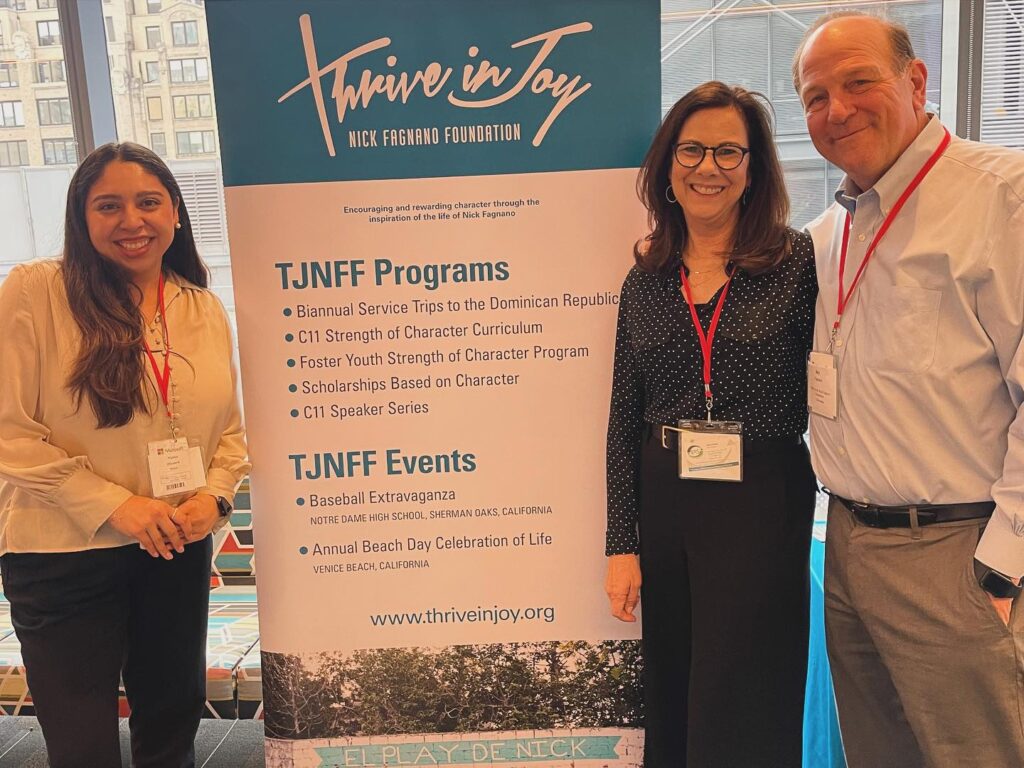
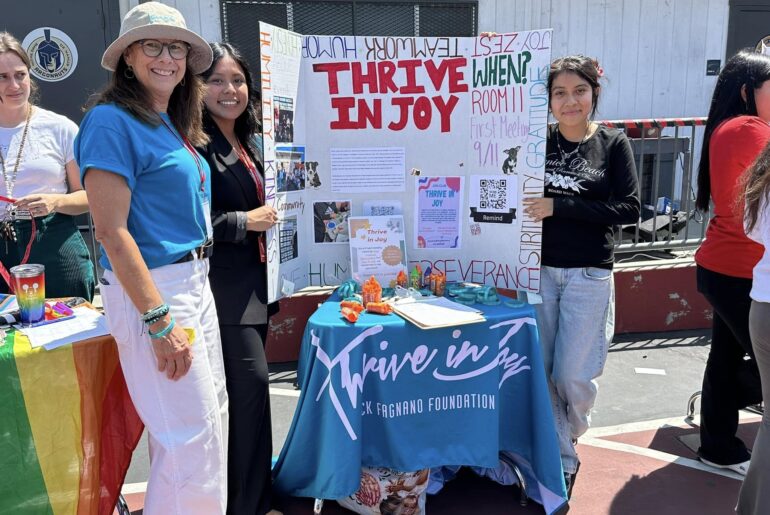
Episode 84:  Mary Fagnano Thrive N Joy

After a tragic surfing accident changed their son Nick’s life forever, his parents chose purpose. Thrive N Joy became a youth leadership organization rooted in resilience, character, and hope.

The Fagnano family reminded us that tragedy does not have to be the end of the story, it can become the mission.

Lesson: Resilience can be modeled, taught, and shared.

Episode 64: Ian Sandler Riley’s Way

When a father lost his nine-year-old daughter Riley at sleepaway camp, he created a movement of kind leaders in her name. Riley’s Way is about empathy, courage, and leading with heart.

Riley’s short life left a long legacy.

Lesson: Kindness is never small and leadership begins with compassion.

“None of these parents chose this path. But all of them chose what came next.”

Homelessness, Dignity, and Healing 

Homelessness is not just about housing….it’s about dignity and being seen.”

Episode 90: Terry Grahl  Enchanted Makeovers

Terry Grahl knows homelessness and trauma personally. Through Enchanted Makeovers, she transforms shelters for women and children into spaces of beauty and calm.

These rooms say: You matter.

Terry taught us that dignity is not a luxury, it is the foundation of healing.

Lesson: Beauty can be a form of justice.

Episode 36: Kevin Adler  Miracle Messages

Kevin Adler showed us that connection can be the bridge back to life. Miracle Messages reconnects people experiencing homelessness with loved ones they’ve lost touch with….sometimes for decades.

Homelessness often begins with broken relationships. Healing begins with being remembered.

Lesson: Community heals what isolation breaks.

Community: How We Rise Together

If there is one truth that echoes through nearly every Charity Matters episode, it is this: we are not meant to do life alone.”

Episode 71: Debbie Bial  The Posse Foundation

Debbie Bial believed that talent is everywhere, but opportunity is not. By sending students to college together in “posses,” she created belonging and tens of thousands of college graduates.

Lesson: Belonging is a catalyst for success.

Episode 69: Rachel Doyle Glamour Gals

Teenagers doing nails with seniors might sound simple but it dissolves loneliness on both sides. GlamourGals reminded us that community doesn’t have to be complicated to be powerful.

Lesson: Small connections create big change.

Episode 46: Maggie Kane  A Place at the Table

Maggie Kane’s pay-what-you-can café invites everyone to the same table…..housed or unhoused. No labels. Just dignity.

Lesson: When we eat together, we humanize one another.

Faith: The Quiet Foundation 

“So many of these heroes didn’t set out to build nonprofits. They set out to live their faith.”

Episode 9: Brian Mavis America’s Kids Belong

Brian Mavis and his wife’s faith compelled  them to act for foster children turning belief into belonging for tens of thousands of kids.

Lesson: Faith becomes powerful when it moves us beyond ourselves.

Episode 24: Hal Hargrave  Be Perfect Foundation

After becoming a paraplegic, Hal Hargrave chose to see his setback as a calling. His faith helped him transform pain into purpose.

Lesson: Faith doesn’t remove obstacles—it gives them meaning.


Episode 58: Kurt Handler  410 Bridge

Kurt Kandler showed us faith in action through partnership, not handouts. Empowering communities to lift themselves up.

Lesson: True service creates possibility, not dependence.

“When I look back at all of these heroes, one thing is clear….none of them did this alone, and none of them did this without love.”

Episode 99 is not just a look back. It’s an invitation to belong, to believe, and to act.

Revisit these stories on Spotify, Apple Podcasts, and www.charity-matters.com. Share the ones that moved you. And remember:

Every time you choose kindness, compassion, or service….you become part of this story too.

CHARITY MATTERS.


YOUR REFERRAL IS THE GREATEST COMPLIMENT,  IF YOU ARE SO MOVED OR INSPIRED, WE WOULD LOVE YOU TO SHARE AND INSPIRE ANOTHER. If you enjoyed today’s episode, please connect with us:

Copyright © 2026 Charity Matters. This article may not be reproduced without explicit written permission; if you are not reading this in your newsreader, the site you are viewing is illegally infringing our copyright. We would be grateful if you contact us.
 

Episode 98: Caroline’s Cause

Nonprofit founders are some of the most inspiring entrepreneurs on the planet. They see a problem and create a solution. Today’s guest, Drew Long is no exception. Her first entrepreneurial journey was to create a shopping cart for her disabled daughter, Caroline. Drew is an Alabama mom with a big heart, a thick skin, and the kind of determination that changes systems. After solving that problem for millions of families she went on to solve another. Drew founded Caroline’s Cause, a scholarship nonprofit created for the typical siblings of children with special needs. In the middle of caregiving, life, and all the messy real-world logistics, Drew looked at those overlooked siblings and said, “We see you.” That simple sentence becomes a force in this conversation.

Drew is that she’s the real deal. She is equal parts tenderhearted and tough, honest about how hard this life can be, and hilarious in the way only someone who’s been through it can be.  In our chat, Drew shares the moment she realized there were scholarships for everything and yet nothing for students growing up with a special needs sibling. So she built it. Her dream is simple: no unfunded scholarship, ever. If you want a story about grit, love, community, and what it looks like to take a hard card in life and turn it into change for good….press play.

Here are a few highlights from our conversation:


Charity Matters: Tell us a little about what Caroline’s Cause does?

Drew Long:  Caroline’s Cause is a nonprofit that awards college scholarships to entering freshmen who have a special needs sibling. To qualify, students come from families like mine—families where there is one child with significant needs and other children who are “typical.” In those families, the dynamic is real and unavoidable: the special needs child requires more time, more attention, more resources. That doesn’t mean you love the other children less. It simply means the needs are different.

In our home, my daughter Caroline has seizures, she doesn’t walk, she wears a diaper, and she needs full-time care. My other children grew up knowing that Caroline needed more of Mama’s time. They stepped back quietly and selflessly. And there is almost nothing out there that recognizes those siblings….the ones who take the back seat without complaint. Caroline’s Cause was created to say, we see you. We want to thank you for being such a great brother or sister. We want to honor that sacrifice and that love.

Charity Matters: What experiences did you have as a child that influenced this work?

Drew Long: I grew up with a special needs aunt, my mom’s sister had cerebral palsy. Looking back, I really believe that was God’s way of softening my heart and preparing me for a life I had no idea was coming. I was always tender toward special needs families, even before I fully understood what that life meant.

And I’ll say something that took me a long time to admit: nobody wants a special needs child and that’s okay to say. That doesn’t mean you don’t love your child. It means that as parents, we all have hopes and dreams for our kids, and when you face a diagnosis like I did, those dreams crash and burn. My heart had been prepared early on, not through nonprofits or philanthropy, but through proximity through seeing special needs up close and watching families navigate it.

Charity Matters: What was the moment you knew you needed to act and start Caroline’s Causes?

Drew Long: The moment came when my oldest daughter was getting ready for college. Like every parent, we started looking for scholarships and we found everything under the sun. If you’re left-handed, there’s a scholarship. If you have a tiny percentage of Irish ancestry, there’s a scholarship.

So I said, “Surely there’s a scholarship for students who have a special needs sibling.” There wasn’t. Not one.

That’s when I knew. I told my husband, “I have a great idea,” and he practically shut me down, until I said, “It’s not a product. It’s a nonprofit.” I thought that would make it easier. It didn’t. But it was born out of a real need, this time for my typical daughter, and for families like ours everywhere.

Charity Matters: What are your biggest challenges?

Drew Long: Honestly, my biggest challenge has been my own naïveté and strangely, that’s also what’s sustained me. I truly believed both my business and this nonprofit would be easy. Had I known how hard either one would be, I might never have started.

With the business, my husband and I ended up funding it with our retirement something we never planned or intended. With the nonprofit, I assumed that because it wasn’t a product, everyone would love it as much as I did. That hasn’t been the case. If I had sat down early on with seasoned nonprofit leaders and heard everything that could go wrong, I probably wouldn’t have done it. So not knowing what was around the corner actually worked in my favor.

Charity Matters: What fuels you to keep doing this work?

Drew Long: Award day. Every single time.

When I call the families and the moms are crying, telling me this was the only scholarship their child received…..that’s what fuels me. We don’t look at ACT scores. We require a 3.0 GPA and base everything on need. I lived the ACT nightmare with my own kids, and I don’t believe it’s a good measure of potential.

These kids often wouldn’t qualify for academic scholarships, but they are absolutely deserving. That moment when they realize, I got a scholarship, when they get to stand with their peers on awards day and that sense of pride is everything. It’s not just financial. It’s validation.

Charity Matters: When do you know you have made a difference?

Drew Long: I know we’ve made a difference because I stay in touch with the families. Our first scholarship recipients are graduating this spring. Parents tell me that we lifted a burden during that first year and that initial push made college possible.

And it goes beyond money. It’s confidence. It’s pride. It’s knowing someone believed in them. One of our recipients went to welding school, and his mom told me she applied on a whim. We were proud to support that because trades matter. AI isn’t replacing welders or plumbers. We need to normalize that path again.

Charity Matters: Tell us what success you have had and what your impact has been? 

Drew Long: So far, we’ve awarded 13 scholarships and each one is $5,000. People told me that was too much, but I wanted to move the needle. College is expensive. Five thousand dollars can cover a year at junior college. It’s enough to matter.

The impact isn’t just the number. It’s the pride these students feel. It’s families who thought college wasn’t possible suddenly seeing a path forward. That’s success to me.

Charity Matters: If you could dream any dream for your organization, what would that be?

Drew Long: My dream is simple: to never have an unfunded scholarship. Last year, we had 78 unfunded applicants. That number still sits with me.

Caroline’s Cause is my give-back. I don’t take a salary. If someone gives $5,000, it goes in and goes right back out as a scholarship. I want donors to know exactly where their money goes. People work hard for their money, and transparency matters.

Charity Matters: What life lessons have you learned from this experience?

Drew Long: Do not take no from someone who can’t say yes. Corporate America turned me down when I pitched the idea for a special needs shopping cart. Had I not lived the daily reality of this community, that cart wouldn’t exist today.

You cannot be afraid of hard. You have to be willing to put it all on the line. It’s terrifying. It’s risky. I never thought I was a risk-taker but that’s what it took. You may be asked to walk a path you never imagined, and you have to say yes anyway.

Charity Matters: How has this journey changed you?

Drew Long: You can’t go through years of financial and emotional uncertainty and come out unchanged. Being a special needs parent gives you thick skin. You learn to advocate. You learn to fight. That prepared me for business and for this nonprofit.

I’ve heard “no” more times than I can count and I’m still hearing it. But you keep going. Failure is part of the journey. Community is everything. Nothing I’ve done, neither business nor nonprofit, happened alone. It was people rallying together to solve a problem.

Caroline’s legacy lives through this work. And if there’s one thing I know for sure, it’s this: just keep going.

CHARITY MATTERS.


YOUR REFERRAL IS THE GREATEST COMPLIMENT,  IF YOU ARE SO MOVED OR INSPIRED, WE WOULD LOVE YOU TO SHARE AND INSPIRE ANOTHER. If you enjoyed today’s episode, please connect with us:

Copyright © 2026 Charity Matters. This article may not be reproduced without explicit written permission; if you are not reading this in your newsreader, the site you are viewing is illegally infringing our copyright. We would be grateful if you contact us.
Episode 97: For Farmers Movement

Before Dana DiPrima ever set out to start a movement, she was busy connecting people and communities in every corner of her life…..government, nonprofits, corporations, and even as a soccer mom “on steroids” serving 4,200 kids. What she didn’t know then was that a simple “yes” to backyard chickens would quietly change everything. That accidental farm in the Catskills introduced her to farmers whose work is nothing short of miraculous, yet largely invisible. As Dana began listening to their stories, their struggles, their pride, and their resilience…..she realized that the people feeding us every day were not being valued. Farmers weren’t asking for charity; they wanted to be seen, valued, and supported. And once Dana sees a problem that matters, she doesn’t look away.What followed was the birth of the For Farmers Movement, a bold, grassroots effort built on small actions with big impact. Since 2022, Dana has helped distribute hundreds of grants to farmers across nearly every state, proving that even $1, when multiplied by community, can change lives. Fueled by persistence, heart, and a deep belief that good grows when people are given simple ways to act, Dana has created more than a nonprofit….she’s built a movement rooted in honor, connection, and hope. Her story will forever change the way you think about the food on your table and the people who make it possible.


Here are a few highlights from our conversation:

Charity Matters: Tell us a little about what For Farmers Movement does?

Dana DiPrima:  Since 2022, we have given grants to farmers across the country in 48 states and one territory and that’s just a small piece of what the For Farmers Movement does. It really started because I felt like we go about our busy lives and we don’t think about the people who are doing things that are essential to our society. We just take them for granted. I sort of crept into the farmer space accidentally through a little accidental farm that I have. That introduced me to these local farmers who were the most amazing people.  I started listening to what they were saying and what they were doing.

 I started the For Farmers Movement because I feel like we need to focus on the people who are essential like this. Farmers are providing us with delicious and healthy food for our families, and they’re knitting together our communities. A lot of our grants are farmer-to-farmer by supporting projects where they’re buying locally, working locally, strengthening their own towns. Every single small farm is a local economic driver. Wouldn’t you rather have one giant farm driving an economy, or 200 small farms doing it? We do grants, but we do a lot of other things too. It’s all about helping people see farmers, value them, and support them in real, practical ways.

Charity Matters: What experiences did you have as a child that Influenced this work?

Dana DiPrima:   I think it’s always been a little bit a part of my DNA. I’m not 100% sure where it came from, except that in my first years out of college and in every job I’ve had every career I’ve had has always been about connecting the dots between people and communities. I’ve worked in government, nonprofits, corporations, and community-based organizations, and the thread through all of it has been moving the needle for good. Even when you’re making small improvements, it’s still an improvement, and I think it’s important to know that in your life the little things that you do that are good, they add up.

Even when I worked in a big corporation with all the media moguls, I was the good girl. I was the head of cause-related marketing.  Where I could show clients how to have a heart and a soul in their work.  It’s been a long and interesting ride, but I think I bring everything to bear here in the For Farmers Movement. Everything I’ve experienced, all of the charities I’ve worked with, all of the innovative ideas, and all of the questions led to this.

I learned a lot from incredible experiences. With St. Jude Thanks and Giving, the one thing I learned from Marlo Thomas is never say die. She does not take no for an answer. And when I worked at Jones Apparel Group, I was so proud that we focused on smaller nonprofits, making a real difference with AdoptAClassroom, teacher fund, and campaigns like Behind Every Famous Person is a Fabulous Teacher. You have to get people’s attention in 100 different ways. You have to be tenacious. You have to never quit. And all of that, it all adds up. It all leads to this.

Charity Matters: What was the moment you knew you needed to act and start For Farmers Movement?

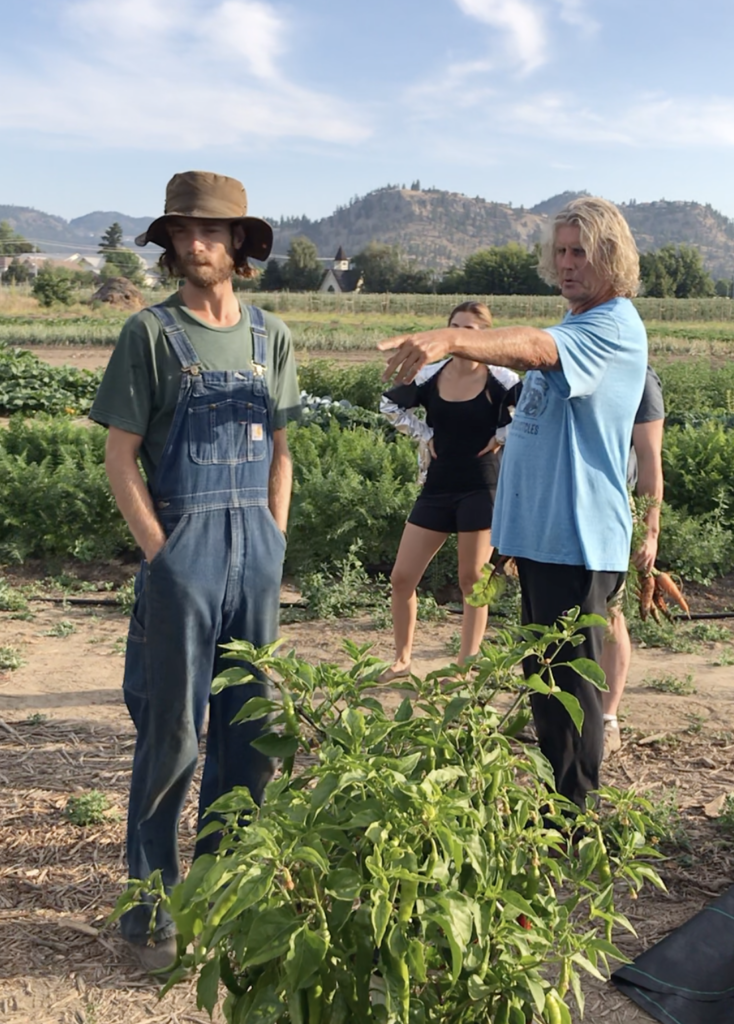
Dana DiPrima: If you look at it from the 35,000-foot view, it might not make any sense at all. Before starting the For Farmers Movement, I was the commissioner for 10 years for the largest youth soccer league in the country.  More like, I was a soccer mom on steroids, with 4,200 kids. It was a community of people who needed support and direction. Around that same time, I had a property in the western Catskills and also lived in New York City, which is a pretty dramatic contrast. I had little kids, and when my daughter asked, “Can we get some chickens?” I said yes without blinking. Then one escaped, I panicked, called the farmer, and he said, “Find your inner predator,” and hung up on me. I hunted down that chicken with big leather fireplace gloves on, caught it, and I never looked back.

From there, things escalated. Chickens turned into goats, then donkeys, ducks, bees, and 17 gardens that I do myself. I just sort of went off the deep end. But through all of that, I started to understand farmers in a real way. They became friends, touchstones, people I learned from. In 2019, I started a podcast called Talk Farm to Me. I was just a microphone and I wanted farmers to tell their stories because they’re amazing.

What they do to get butter to your table is nothing short of miraculous. Your hamburger took two to three years to get to the plate, daily work for that one meal. Then the pandemic hit, farmers were suddenly considered essential, there was this huge spotlight moment, and then overnight it disappeared. I kept listening. In 2022, after hearing a woman speak about community at a conference, everything connected. I went home, wrote a 40-page manifesto, called my coach, and said, “I have to make a presentation to you, and you have to tell me if I’m nuts.”

That led to what I call the six-grand experiment. I started on Instagram and said, “You’ve got to find your local farmers. Tag them to nominate them for a grant.” It was a mess….hundreds of nominations, reaching out to farmers who had never heard of me but we awarded six grants across the country, and it was proof. Farmers can stretch a dollar like nobody’s business. There’s not one farmer who doesn’t have a project on the back burner that could help them get to the next level. The biggest aha for me was realizing that farmers are invisible. We don’t know where our food comes from, and farmers are incredibly proud. They don’t have their hands out for charity. This is not charity. It’s an opportunity to invest in your farmer and your community. That nomination is a permission giver, but it’s also honor. And even if nothing comes from it beyond that moment of being seen, that matters.

Charity Matters: What are your biggest challenges?

Dana DiPrima: The hardest things are like a daisy chain of hardest things. The end of 2025 is the first year I don’t feel like I’m carrying it all on my back. I feel like it’s moving on its own now. There are a lot of people invested in the, For Farmers Movement. Farmers supporters, and people across the country who care about their health, their communities, their economy, and their environment. But people are busy, and they care about a lot of things, so part of my work is helping them understand why they need to care about small farmers. That’s why it’s so important to me to give people small actions that have a big impact. We are built on that.

I’ve given away almost $200,000 in grants since 2022. Every year on January 1 the ticker starts again.  I’ve got to raise more money. But the spirit of this is that $1 from a million people is more valuable than a million dollars from one person, which I would accept, of course. Because when I give a farmer a $1,000 grant and tell them there are 1,000 people standing in their field, recognizing them, applauding them, cheering them on, that is more meaningful than a big corporate check.

Charity Matters: What fuels you to keep doing this work?

Dana DiPrima: On the one side, I get a farmer calling me crying on the phone because she’s so excited. A 10th year farmer that she just got a grant to move her farm. And she can’t believe the community behind her. I can’t tell you how meaningful that is.

And on the other side, I have farmers in my inbox: “I’m so disappointed we didn’t get a grant.” And someone sends me a farm with a huge fire. So what can I do? We have an emergency fund. We have wish lists. We have 97 farmers and growing on the wish list. It’s really easy to click send…work gloves, socks. My daughter sent socks to a farmer and got the delivery message.

So again: go to the wish lists. Find a farmer in your state. Click send.

Charity Matters: When do you know you have made a difference?

Dana DiPrima: Every single farmer I’ve supported with a grant has said it’s about way more than the money. The impact is them being seen, being recognized. That nomination is honor. Farmers are invisible every day. And for someone to honor the work that matters.

Charity Matters: Tell us what success you have had and what your impact has been? 

Dana DiPrima: I count numbers….291 grants, 48 states and one territory. People’s Choice Award: 45 farmers submit videos and we get over 20,000 votes. 97 farmers on the wish list.

But more important than any of that is being seen. And I share facts too: less than 2% of our population are farmers feeding 100% of us. We lost 141,271 farmers between 2017 and 2022 and that’s over 20 million acres we can’t get back. If you shop in your supermarket, 15% stays local, but if you shop at the farmers market, over 70% stays in your local community. I try to build awareness of how important your support is.

Charity Matters: If you could dream any dream for your organization, what would that be?

Dana DiPrima: I’m living a lot of it. Every year we’re doing something different and bigger. We went from that six-grand experiment to 100 grants a year.

In 2026 we selected 20 farms for a $10,000 farm-changing grant. We’ll make that award during National Ag Week in mid-March.

And I want to keep bringing customers closer. Nominate your farmer all year. In February we send postcards, kits of 10 stamped postcards. People tell me how much it meant to say thank you. We have the Voice Awards. We piloted Walk a mile in a farmer’s boots and we’re expanding to 10 markets. And anytime you can shop the wish list. Always opportunities to do something good for farmers.

Charity Matters: What life lessons have you learned from this experience?

Dana DiPrima: Starting a movement is a crazy idea, and it’s really, really hard, and I quit. Tuesdays and Thursdays I basically quit. And I didn’t quit. I didn’t take no for an answer. That failed? I’m trying this.

I’m always trying to give people opportunities to do something good that isn’t painful. Five minutes, forty minutes, $10,000 or $1. The strongest things are the simplest. Everyone can do $1. I’m going to get to a million dollars, $1 at a time. Vote for your farmers. You don’t even have to know them.

Charity Matters: How has this journey changed you?

Dana DiPrima: Oh, I can pick up a chicken. I’m a veterinarian, a zookeeper, an excellent housekeeper and bucket scrubber. But I think I’m very much the same. I love to work, like to figure it out, like the challenges, talking to people and I like to hear why you don’t believe it yet so I can think about what I haven’t done.

The success is built on the small actions. My newsletter every Tuesday, 52 weeks a year. My podcast has gone two full years of not missing a Thursday. And I also have a life….dinner for nine, making my table nice, getting the Christmas tree up.

That is life. That is living. A full, beautiful life is giving.

CHARITY MATTERS.


YOUR REFERRAL IS THE GREATEST COMPLIMENT,  IF YOU ARE SO MOVED OR INSPIRED, WE WOULD LOVE YOU TO SHARE AND INSPIRE ANOTHER. If you enjoyed today’s episode, please connect with us:

Copyright © 2025 Charity Matters. This article may not be reproduced without explicit written permission; if you are not reading this in your newsreader, the site you are viewing is illegally infringing our copyright. We would be grateful if you contact us.
Christmas Came Early This Year

There are moments in life when the universe seems to wink at you.  Moments when all your hard work, heart, and hustle come full circle in the most unexpected and delightful way. Well friends, that moment came early for me this year. Forget wrapping paper and ribbons, because this year’s Christmas gift came straight from Spotify. And let me tell you, it was wrapped in joy, gratitude, and more than a little disbelief.

When I opened our Spotify Wrapped report for the Charity Matters Podcast, I felt a little like a kid sneaking down the stairs too early on Christmas morning ….. excited, giddy, and totally overwhelmed. There it was in black and green: we’re in the top 5% of podcasts in our category! Cue the sleigh bells and maybe a little happy dance around my office.

I have to admit, I blinked a few times, refreshed the page, and maybe even said a little “Wait, what?” out loud. But there it was again. And as if that wasn’t enough Christmas cheer, the stats just kept on coming:

 Our show’s growth outpaced 64% of all podcasts this year.
 Our listeners stayed tuned in 73% longer than the average show.
Our average rating was 75% higher than other podcasts.
And best of all …. our audience grew by 25%, with our followers growing even more than that!

If this isn’t a Christmas miracle, I don’t know what is?

When I started Charity Matters, it wasn’t about numbers or rankings . Charity Matters is  about storytelling, service and kindness.  It was about shining a light on the helpers, the doers, and the givers who are out there quietly changing the world every single day. What began as a blog over a decade ago just me, a laptop, and a whole lot of heart has blossomed into a community, a conversation, and yes, now a top 5% podcast.

That’s not my doing. That’s you.

You, the listeners who tune in each week while driving to work, folding laundry, walking your dog, or just needing a little reminder that goodness still exists in this crazy world. You, the readers who open each week’s story, share it with friends, and send me messages that remind me why I do this. You, the guests …. the amazing nonprofit founders, the changemakers, the dreamers each who share your stories so vulnerably and powerfully that they ripple far beyond the microphone.

This isn’t my Christmas gift … it’s ours.

When I think about the spirit of Christmas and the real meaning behind it ……Christmas is about love, gratitude, and giving. And that’s exactly what this podcast has become: a community built on giving. Every episode, every interview, every listener who takes an idea and turns it into an act of kindness . Each of you are proof that goodness is alive and well.

And maybe that’s why this milestone feels so personal. Because for me, Charity Matters has never been just a show  but rather  a movement for good. It’s about making kindness and service not just something we do when we have time, but something we live.

When I wrote Change for Good, I shared a line that I come back to often: “When we serve others, we heal ourselves.” That’s what I see in each of you. Every download, every listen, every small act of service that was inspired by one of our episodes  those are all little sparks of healing and hope. Together, we are creating something extraordinary.

Now, I have to confess , I’m a bit of a stats nerd (I know, shocking). But these numbers are more than data points; they’re proof of connection. Proof that even in a world obsessed with negativity and noise, people are still choosing to listen to stories about kindness. Proof that you are hungry …no, starving  for good news, for hope, for inspiration.

And you’re finding it here, week after week.

Our little show that started with a microphone and a mission has found its place in the top 5%. That’s not luck, that’s the result of thousands of ears and hearts choosing to tune in. You’ve made Charity Matters part of your lives, and in doing so, you’ve made me believe even more deeply in the power of storytelling to change the world.

Every time you share an episode, every time you leave a review, every time you tell a friend, “You have to hear this story,” you are helping kindness go viral. You are helping to make service contagious. You are proving that goodness is not only alive but it’s growing, one listener at a time.

So yes, Christmas came early this year. But the real gift isn’t the ranking or the growth or even the shiny Spotify badge (though I’ll admit, that’s pretty fun). The real gift is knowing that we are making an impact  together.

It’s knowing that somewhere out there, a listener heard a story that made them volunteer for the first time. Or donate. Or start their own nonprofit. Or maybe just smile at a stranger. Because that’s how kindness works and it multiplies.

And that’s the mission. That’s the heartbeat of Charity Matters.

As we head into the holiday season, I want to take a moment to simply say thank you. Thank you for believing in this movement for good. Thank you for making kindness a choice, not a coincidence. Thank you for showing up  week after week, story after story to remind me that there are helpers everywhere.

Fred Rogers once said, “Look for the helpers. You will always find people who are helping.” Well, I don’t have to look far.  I see them every time I open our listener stats. I see them in you.

So from the bottom of my heart and from everyone behind the scenes who makes this show possible …thank you for being the heartbeat of this movement.

Here’s to the year ahead. To more stories, more kindness, more connection, and more moments that remind us that change for good always begins with one simple act …. choosing to care.

May your holidays be filled with joy, love, and gratitude. And if you need a little extra holiday spirit, might I recommend scrolling through our Spotify playlist of goodness? You helped build it, after all.

Merry Christmas, my friends. You are the reason Christmas came early this year and I couldn’t imagine a better gift.

CHARITY MATTERS.


YOUR REFERRAL IS THE GREATEST COMPLIMENT,  IF YOU ARE SO MOVED OR INSPIRED, WE WOULD LOVE YOU TO SHARE AND INSPIRE ANOTHER. If you enjoyed today’s episode, please connect with us:

Copyright © 2025 Charity Matters. This article may not be reproduced without explicit written permission; if you are not reading this in your newsreader, the site you are viewing is illegally infringing our copyright. We would be grateful if you contact us.
Episode 96: Mom’s Christmas Stocking

Some stories find us when we need them most. Wendy Strauss’s began with a slip of paper discovered in her late mother’s tidy little office. It was a simple note titled “Mom’s Christmas Stocking,” asking her children to keep filling a stocking for Mom by giving it to a woman who needed “a shot of love.” That tender request became a calling. What started as one timid lunch-hour drop-off blossomed into an annual community tradition that now fills hundreds of beautifully curated stockings for women in shelters, prisons, and recovery programs across New York City, each one a love letter, a reminder that someone sees you and you matter.

As we enter the Christmas season, Wendy’s story reminds us what the holiday is truly about….it’s not the gifts we buy, but the love we give. It’s about connection, kindness, and finding ways to bring light to those who need it most. Through Mom’s Christmas Stocking, Wendy has turned her grief into grace, transforming loss into a legacy of giving. Her journey captures the real spirit of Christmas: that joy multiplies when we share it. If you’ve ever wondered whether one small act can change a life…..or if you’ve needed a nudge to turn love into action, then Wendy’s story will fill your heart and remind you that the greatest gift we can give is love itself.


Here are a few highlights from our conversation:

Charity Matters: Tell us a little about what Mom’s Christmas Stocking does?

Wendy Strauss:  Each holiday season we fill hundreds of Christmas stockings and donate them to a group that distributes them around the five boroughs of Manhattan. Women, often in prisons, rehabs, or shelters receive these beautifully filled stockings to get a “shot of love” and a little holiday joy, women who might not otherwise receive that.

Charity Matters: What experiences did you have as a child that helped shape your giving?

Wendy Strauss:  I was the last of five, so I grew up almost like an only child. My mom had me later in life, and I tagged along as she did a lot of spiritual seeking….yoga and meditation before they were popular. She surrounded herself with younger people, almost mentoring these hippie-type kids who were chanting and meditating. That openness to people who weren’t “the norm” formed my childhood. We were vegetarians when it wasn’t really a thing. She was my role model…open, curious, ahead of the curve. It wasn’t about “giving back” yet; it was about discovery, but that spirit of openness and love was the seed.

Charity Matters: What was the moment you knew you needed to act and start Mom’s Christmas Stocking?

Wendy Strauss:  In 2007 my mom passed away unexpectedly in March. We already had a trip planned for June to see family. We stayed in her house, she’d fixed it up for us and it felt like she was welcoming us even though she wasn’t there. One morning I wandered into her very tidy little office. She was a wonderful writer—so many articles, Historical Society work, family tree research. I picked up a random file folder and a slip of paper fell to the floor. It was titled “Mom’s Christmas Stocking.” It said:

Every Christmas you have always filled a stocking for Mom. I want you to continue to do so. Choose the very things I would love and those you love to give to me. Find someone to give this filled stocking to a woman in prison or in a drug rehab or a homeless center. This is the most precious gift I could receive or that you could give, sharing the love we know with someone who really needs a shot of love. And in this way, I will continue to share your Christmases and continue to be a part of my wonderful family.”

I made copies for my siblings. That Christmas I took it very seriously. I filled one stocking, Googled where to bring it, and found Women In Need. On my lunch hour I brought it over, explained why, tucked in a copy of Mom’s note, and they said they’d find someone to give it to. I went back to work and felt so good the rest of the day. At my evening workout my friends said, “Something’s up,” so I told them and they said, “Next year we’ll all fill stockings.” The following year we did eight. Then 75. It just grew. People wanted to donate more and know how it worked, and eventually I looked up how to become a nonprofit and did the paperwork myself.

Charity Matters: What are your biggest challenges?

Wendy Strauss: Starting anything is hard, and once I became a nonprofit the pandemic hit. I got my determination letter in 2020 and then everything closed. I was filling stockings by myself….Amazon donations came, but no gatherings. Funding is always a challenge. Spreading the word is a challenge. Space is a challenge. We host an annual stocking-stuffing event at the gym where it all began, Grassroots Fitness Project, and that’s a gift, but organizing, storing, keeping things moving when you’re doing it primarily alone is a lot. I’m good at admin, but the bigger we get, the more time those pieces take.

Charity Matters: What fuels you to keep doing this work?

Wendy Strauss: Loss has been part of my story….after my mom passed, we lost my dad; my husband passed in 2014; my brother shortly after. Everyone we encounter has something going on. I know what makes me feel better. A dear friend, who had gone through something horrific, came to one of our events and said, “Wendy, giving is healing.” That became my motto. It is so healing. Yes, the recipients get something, but we get so much in return.

Charity Matters: When do you know you have made a difference?

Wendy Strauss: The feedback is beautiful…..families who look forward to the event every year, friends who never miss. People who moved away now run their own stocking-stuffing gatherings; Massachusetts, Virginia, Maryland, Colorado, and now North Carolina. Local New York businesses and schools do their own events and ship stockings to me. That impact and seeing the seeds become their own gardens is how I know.

Charity Matters: Tell us what success you have had and what your impact has been? 

Wendy Strauss: I try to prioritize quality over quantity. I get pushed on numbers….“How many this year?” The need is so great that providers want to honor as many moms as possible. I do my best. But success, to me, is the community that’s grown around this. The families who plan their December around coming, the kids who love it, the businesses and schools who join in, the chapters springing up in new places. In one or two hours at our New York event we’ll fill 400 stockings and it goes so quickly because so many people show up. The impact is the joy and connection we create, the “shot of love” that keeps rippling.

Charity Matters: If you could dream any dream for your organization, what would that be?

Wendy Strauss: A solid team. A couple of “sugar donors,” I always joke. More space. My vision is a year-round space where the stocking operation is always set up and groups could come in any time to fill stockings, from small gatherings to big parties. People could take them to distribute wherever they’re needed. I love working with other organizations and donating to them when I can, collecting items so I’m ready when someone calls and says, “I need size 9 sneakers.” I like to manifest, so I’m putting this out there.

I’m also learning to ask for help. I’m a do-it-yourselfer, but when I finally asked a friend to help, she said, “I’m so happy you did. I love doing this for you.” I’d love a teenage intern to help with social media. A countdown to the event or the season and those little things make a big difference.

Charity Matters: What life lessons have you learned from this experience?

Wendy Strauss:  Discernment. Everybody has a story and we don’t know it at first glance. Being kind to the worker on the street, saying good morning—those small things matter. They also help me; they soften my shell. People say New Yorkers are tough, but kindness makes the shell flexible. I’ve also learned boundaries—soft ones and hard ones—to help me grow in my life and in the nonprofit. We can only give when our cup is full. The need is always greater than we can meet, so boundaries keep us going.

I’ve planted a lot of seeds. My mom was a wonderful gardener; I’m not, at least not with plants—this is how I garden. I’ve seen growth, and it’s meaningful for so many people that they want to help. That’s beautiful. And I’ve learned that we don’t need that much to be grateful. I’m grateful for the tiniest things now.

Charity Matters: How has this journey changed you?

Wendy Strauss:  I’m not the same person I was in 2007…..I hope not. I want to keep growing. I take care of a lot, but I can do it. With focus, there’s more we can do than we expect and while staying within boundaries. My compassion has grown. I’m an empath, and landing in New York City amplified that, but compassion is universal. Once you open up to other people’s stories and to hearing them and serving them, your understanding deepens. That makes you want to keep helping. It gives you gratitude, and gratitude gives you joy.

Charity Matters: Any closing thoughts….

Wendy Strauss: Giving is healing. That’s the heart of this. My mom’s note was her way of comforting us and staying part of our Christmases. Every stocking is a love letter and something a mom would have loved, passed on to a woman who needs that “shot of love.” It began with one stocking, one note, one person. Now it’s families, schools, businesses, and chapters across the country. I’m grateful for every helper who shows up, every year-round donation, every kind word. Christmas should be all year and it can be, if we keep sharing love.

CHARITY MATTERS.

To Support Mom’s Christmas Stocking visit: momschristmasstocking.com

YOUR REFERRAL IS THE GREATEST COMPLIMENT,  IF YOU ARE SO MOVED OR INSPIRED, WE WOULD LOVE YOU TO SHARE AND INSPIRE ANOTHER. If you enjoyed today’s episode, please connect with us:

Copyright © 2025 Charity Matters. This article may not be reproduced without explicit written permission; if you are not reading this in your newsreader, the site you are viewing is illegally infringing our copyright. We would be grateful if you contact us.
Episode 95: Uprising Yoga

 Pablo Picasso said, “The meaning of life is to find your gift. The purpose of life is to give it away.” That’s the thread running through this week’s episode with my dear friend Jill, founder of Uprising Yoga. Jill’s journey is a full-circle story. From an angry, hurting teenager to a joyful healer bringing trauma-informed yoga and life skills to youth in juvenile halls. She discovered a gift that first saved her own life: breath, presence, and the slow, steady return to self. And then she did the most beautiful thing….she gave that gift away, again and again, to kids who need it most.

In this conversation, Jill invites us into the processing units at juvenile hall, where resistance softens into resilience, where a single breath can become a lifeline, and where hope looks like one small practice done with love. If you’ve ever wondered how purpose finds us in the mess and the miracle of real life, you’ll feel it here. Come listen to how a $10, ten-day yoga pass became a mission, how community shows up when we “look for the helpers,” and how gifts once found…can ripple out to change the world.


Here are a few highlights from our conversation:


Charity Matters: Tell us a little about what Uprising Yoga does?

Jill Ippolito: At Uprising Yoga,the main thing we do is bring trauma-informed yoga life skills to those incarcerated and communities that need it most. That’s the mission. What we’re actually doing currently: we have trauma-informed yoga trainings that we have taught, but right now we have two classes at Los Padrinos in juvenile hall, in the processing units, where youth are taken and detained and moved through the system.

Charity Matters: What were some early memories of service or giving?

Jill Ippolito: I was an angry teenager. Resistance. Always getting in trouble. Defiant rebellion to authority. Refusal to be a part of volunteering. My mom insisted. I have a picture of me wearing a shirt called “Do Something,” and that was the name of one of the organizations she dragged me to. I had a frown on my face. I did not want to help anybody. And she just insisted that, you know what, wherever we are, we can reach out and help anybody in need. She made me do it. There are pictures of me…reluctant.

Charity Matters: What was the moment you knew you needed to act and start  Uprising Yoga?

Jill Ippolito:  In 2001 I was dealing with my own addiction issues. I was in jails and institutions. I was told to go to a program for recovery. Shocking, daunting and defiant refusal again. When I tried to go into some of this recovery, the lights were really bright, the people were smiling, facial expressions hard. I signed up for $10 for 10 days to a hot yoga studio, and it helped me feel safe. It changed everything. I left the class feeling lighter, like my life could have purpose if I went to yoga every day. Just $10, 10 days…I wondered how many times can I go in those 10 days? That’s where something started to shift in my personal recovery.

Fast forward to 2006. I was dating my now husband, Nick. He went to a place called Challenger, a youth probation camp…basically prison camp….named after the astronauts. He came home with a look on his face: horror story. The conditions were so terrible there. I said, “Can I teach yoga there?” By then I had become a yoga teacher. It was a really long time, but we started our first class back in November of 2011.  This month Uprising Yoga turns 14 years.

I started volunteering in juvenile hall; there were a lot of hurdles to get there, but that’s when we aligned with LA County. I called my mom and said, “Hey, we’ve been volunteering in juvenile hall.” She said, “Is that the one I picked you up from when you were a kid?” I had been in juvenile hall as a youth without remembering it. I started to really study trauma and the effects, and how yoga gave me that sense of peace that I wanted to breathe and live life in a healthy way, instead of choosing the darkness I was trapped in at the time.

Charity Matters: What are your biggest challenges?

Jill Ippolito: I never wanted to be a yoga teacher. I fell into it by falling off buildings and landing in: I need this yoga; what do I do? And I never wanted to build a nonprofit. I was working at a yoga college, talking about volunteering, and a close friend said, “Why don’t you file for a nonprofit?” I said, “I don’t know how.” He goes, “You just fill out the paperwork, and if you do anything wrong, trust me, they’ll call you.” That put the seed in me.

I didn’t want to sit at the counter forever. I wasn’t really hireable. Working for someone else wasn’t my personality, so I thought I’d better build something I can run and do. I started playing with names, organization, building it from there, looking around at colleagues. People said, “I want to be a part of this. I want to teach.” They brought resources and education. We wrote a manual. We did a training. We basically became a pipeline to get yoga instructors to share their gifts.

The hurdles are heavy: child sex trafficking, foster youth, gangs. We brought in experts, integrated their knowledge into our trainings. There’s bureaucracy, red tape, security…just to get into prisons and juvenile halls. But we kept going.

photo: Robert Sturman

Charity Matters: What fuels you to keep doing this work?

Jill Ippolito: I know how much it helped me. It turned my life around, from the impossible to a beautiful life. That keeps me going. When the kids come up and say, “Miss, I could feel my heartbeat,” “I can breathe,” “What you taught me helped me sleep last night.” Watching the resistance like I had…being angry at the world and really believing there’s no one who’s going to help me… My main mission has been autonomy: go within. What is there? Find your resilience and trust yourself. Do some re-parenting if you’ve never had any self-love, self-care. It’s never about yoga. It’s all about mindfulness, meditation, self-care. The resilience of: how can I apply these skills directly in my life? If I sit, breathe, feel, connect then when I slow down, the urgency to react and resist softens.

Charity Matters: When do you know you have made a difference?

Jill Ippolito: The stories and the notes the kids bring us. A kid saying, “You’re my hero….you’ve lived this life we’re living and you’ve had triumph.” The one-on-one communications: “How do I do this when I get out?” If I never see this kid again, I want them, in five minutes, to know they can inhale, hold it, and use a longer exhale to regulate their nervous system so they can think clearly. For example when they’re in court testifying against their abusers. Planting a seed: we care about you; there are people out there who care about you; and this is a five-minute thing you can do to calm down.

“Yoga is a gift. No one can take it from you.” Breathing is life. People may take and take; what is something nobody can take from you? Your breath. Your connection to your heart.

Charity Matters: Tell us what success you have had and what your impact has been? 

Jill Ippolito: The thousands of incarcerated youth and community members we’ve served. Bridging people together……working with Indigenous populations and other countries. I loved getting to work with Elmo on Sesame Street for Monster Yoga. My peers invited me to write a book with them called Best Practices for Yoga in the Criminal Justice System. Collaboration with other nonprofits…all of that’s success to me.

I was on Roadtrip Nation with PBS; kids chose their heroes and brought a bus to my class. To have a kid say you’re my hero… just wow! Data matters too: from August to this month….22 classes; 144 kids; twice a week. I’m proud of career pathways: getting jobs for our youth taking our class. We recognize talent. I tell them, “Yoga really likes you.” They brighten up. We’ve helped youth become yoga teachers and then hired them. That’s a huge success.

And I’ll add my personal success: being true to myself and my artistry. I love doing stand-up comedy. I have a persona, “Jill So Chill.” I keep people to chill out, laugh, have fun. After heavy stories that feel like there aren’t solutions, my biggest skill is to laugh and be in the present moment.

Photo: Robert Sturman

Charity Matters: If you could dream any dream for your organization, what would that be?

Jill Ippolito: A dedicated Uprising Yoga Center, where people can go: safe space for healing, nourishment, food. With food insecurity and SNAP issues, there’s more need for impact and fostering community. Partnering with other nonprofits.

One of my biggest dreams is to put our trauma-informed yoga training into a slick, interactive system….like the DMV: read something, take a test; read something, take a test; earn a certificate. We did three in-person trainings a year pre-pandemic in two days, 16 hours, certified. They’re online for purchase now but mostly videos. I want it more interactive trauma-informed community care throughout the system. I trained probation staff in yoga life skills. What if I train volunteers across other programs too?

I was part of something called the LA Model, transforming the whole probation institution into trauma-informed care: chefs, officers, everyone. That impact helped close one juvenile hall and build a Wellness Center. How do we change from punitive to restorative? Those are my big dreams.

Charity Matters: What life lessons have you learned from this experience?

Jill Ippolito: Learn what my teachers taught me. When I went to that $10 for 10 days in Silver Lake, I was not great at yoga, cussing in the mirror when I fell out of a posture. I had no balance. I’d fallen off three two-story buildings, broke my back, did physical therapy. No sense of groundedness. The yoga teachers said, “If you could just sit down….you don’t have to do every posture.” How do you begin to take care of yourself? How do you restore chaos and neglect? Go slow. Take the wins. Celebrate yourself. “Love yourself” is said a lot. What does that mean when I don’t understand it? Break it down so it’s tangible: stop fighting everybody and everything. Surrender.

I have spirituality, a God I connect to guiding me, that I trust. Not the punitive Catholic-school God I grew up with. Treat people the way you want to be treated. Stop the cycle of abuse. Don’t tolerate it. People-pleasing can interrupt healing. It’s messy. It’s not linear, two steps forward, four back. Be patient. Be gentle. This month we’re doing a 30-day self-care yoga challenge fundraiser. Supposed to do yoga every day for 30 days but it’s not fanaticism. If I don’t go that day, maybe I hug a tree. Maybe I write a love letter. Something kind that’s self-care. I need that still, today.

And one more: “Helping” isn’t the same as empowerment. I started seeing all the people wanting to help—and realized there’s a bridge between people who want to help and people who need help. How do I hook them together? That’s what our trainings do. I thought yoga was about me getting in shape, but when I do yoga, I help others in community. Healing community is heart-centered focus: get everybody on the same page and find solutions that work.

Charity Matters: How has this journey changed you?

Jill Ippolito: My whole mindset changed. I didn’t know there are people who really want to help you. I thought other people were enemies. Don’t trust anybody, that’s how I grew up. It took a long time for this broken child in me to look around and go: there are people coming out of the woodwork who want to help….not just me, but others.

We work with a lot of CSEC survivors. At a symposium, an adult formerly trafficked stood up and said to the social workers and helpers: “I didn’t know there were people like you looking to help people like me.” I agreed. I thought the same. Look for the helpers because they really do show up.

So the momentum came from seeing them and then realizing: helping is not service; it’s not empowerment. We want to empower and lift up. I bridge the people who want to help with the people who need help. That’s the work: connect the yoga studio, the foster youth, the prisons, the activists. Blend everyone and offer: let’s find a solution that works. That’s healing community. That’s heart-centered focus.

And I’ll always tell the youth: yoga is a gift. No one can take it from you. You may not have a refrigerator to open. No one may be coming to pick you up. The system may be taking and taking. But you have your breath. You have your heart. In five minutes, you can inhale, hold it, exhale longer calm your nervous system and think clearly. If I never see you again, I want you to know that. That’s how I’ve changed: I trust that simple, powerful truth.

CHARITY MATTERS.


YOUR REFERRAL IS THE GREATEST COMPLIMENT,  IF YOU ARE SO MOVED OR INSPIRED, WE WOULD LOVE YOU TO SHARE AND INSPIRE ANOTHER. If you enjoyed today’s episode, please connect with us:

Copyright © 2025 Charity Matters. This article may not be reproduced without explicit written permission; if you are not reading this in your newsreader, the site you are viewing is illegally infringing our copyright. We would be grateful if you contact us.
Episode 94: Penny’s Flight

Some stories meet you in the deepest places and still lift you higher. This week, you’ll meet Kate Doerge….wife, mother, builder of community……who turned the unthinkable loss of her daughter, Penny, into a living legacy called Penny’s Flight. What began in a cocoon of love and butterflies has become a national movement of students, families, and friends spreading wings for those living with neurofibromatosis. Kate’s pillars; finding beauty in imperfection, choosing positivity in the face of challenge, and having faith over fear…..these aren’t just slogans; they’re the way she gets up, puts both feet on the floor, and keeps going. You can feel Penny’s light in every word.

Frankie Doerge, Chad Doerge, Kate Doerge, Henry Doerge

If you’ve ever wondered how purpose is born from pain, or how one brave family can transform grief into hope for thousands, this episode is for you. Kate’s story is tender and electric, grounded and soaring….all at once. It will remind you that we always have a choice in how we play the cards we’re dealt, and that a single flutter can change the weather for someone else. Come listen, be moved, and like Penny……leave with a bigger wingspan.

Here are a few highlights from our conversation:


Charity Matters: Tell us a little about what Penny’s Flight does?

Kate Doerge: Penny’s Flight exists to keep our daughter Penny’s big, beautiful light alive and to change the future for families living with neurofibromatosis (NF). NF is actually the most common genetic condition in the U.S., but it’s also one of the most underfunded. Roughly 1 in 2,500 people are affected, about 150,000 Americans, yet most people have never heard of it. Penny was diagnosed at four months old, and even then we refused to let a diagnosis define her. She lived joyfully for sixteen radiant years.

When Penny passed on November 11th, 2022, our community wrapped us in so much love that my husband and I knew we had to channel that energy into purpose. Within four weeks, we launched Penny’s Flight. Since then, wings have truly spread: we’ve raised close to $6 million, started more than a hundred student-led chapters at high schools and colleges, and rallied teams and towns around “Play for Penny” lacrosse games, “Pucks for Penny” hockey nights, bake sales…..whatever brings people together to shine a light. Our three pillars guide everything: finding beauty in imperfection, choosing positivity in the face of challenge, and having faith over fear. And our mantra, “It’s your wingspan, not your lifespan” is Penny’s message to the world.

Charity Matters: Tell us a little about Growing up? Did you have any role models that inspired you in this work?

Kate Doerge: My role models were my parents from day one. My mom was a dancer and an absolute beam of light….belly dancing, tap, jazzercise……you name it. She taught me how physical strength fuels mental strength and how movement lifts you out of darkness. My dad was a devout Catholic, a former Marine who once studied for the priesthood. From him I learned faith, service, and the belief that there’s something bigger than all of us.

Our home life wasn’t cookie-cutter. My mom might pick me up in leg warmers while other moms wore turtlenecks. We traveled to Haiti and the Dominican Republic in the 1980s, long before “service trips” were common….so I saw early what it meant to help beyond your comfort zone. That shaped me. In my career in PR and fashion, I was always asking, “Where can I make a real impact?” Those seeds of service were planted well before Penny’s diagnosis, and they sprouted the moment we needed them.

Charity Matters: What was the moment you knew you needed to act and start Penny’s Flight?

Kate Doerge: I always return to my father’s advice the night before our wedding: “You will be challenged. It is up to you how you play the cards you’re dealt.” When Penny’s brain tumor, glioblastoma…..accelerated in her last two years, we chose to celebrate her life loudly. During her final week, instead of closing the doors, we opened the windows and invited everyone in. We created what I call a “love cocoon.” There were butterflies everywhere….her sign to us.

After we celebrated her life, my husband and I looked at each other and knew: we have to do something. My background is launching brands; his is finance. Our community was saying, “How can we help?” Four weeks after November 11th, we launched Penny’s Flight. It felt like Penny was our partner in it…..like she was saying, “Keep going.” Even on the day she passed, we took a family walk, got back in the car, turned the ignition, and “Walking on Sunshine”…her song blared from the radio though it hadn’t been on before. That was our first sign: move forward, one step at a time.

Charity Matters: What are your biggest challenges?

Kate Doerge: Grief and logistics don’t take turns. I had two sons, a husband, a home, a community of Penny’s sixteen-year-old friends who had never lost someone, and extended family…..all hurting. I felt a responsibility to lead with light, to model a path that others could follow. Practically, the challenges are familiar to every founder: building infrastructure while building momentum; sustaining funding; making noise in a noisy world. Add to that the complexity of medical research siloed efforts, niche subfields, and the realities of federal funding. Last year, NF’s federal allocation was cut; we went to Capitol Hill and advocated to restore it. It’s back on the bill for review, but advocacy never stops.

And yet the hardest challenge….turning pain into purpose….has also been our greatest teacher. Every day we choose the light. Every day we choose action.

Charity Matters: What fuels you to keep doing this work?

Kate Doerge: Energy can’t be created or destroyed….it transforms. I feel Penny’s energy, and my parents’ too. I feel it in the butterflies, in the serendipities, in the way doors open at the exact moment you need them to. I also feel powered by the next generation. Students reach out constantly: “Can we host a game? A bake sale? Start a chapter?” Watching young people use social media for good….that’s rocket fuel.

Our community fuels me. Media friends like Norah O’Donnell shared our story on CBS within a week of launch, and Oprah Daily invited me to write about “playing the cards you’re dealt.” Brand partners like Veronica Beard, J.McLaughlin, Roller Rabbit asked, “What can we do?” Their platforms amplify NF awareness in ways research labs alone can’t. That collaboration…science, students, storytellers, brands….keeps me going.

Charity Matters: When do you know you have made a difference?

Kate Doerge:Impact shows up as a human story. A mom DM’d us: her four-year-old was just diagnosed with NF; she’d gone down a dark Google rabbit hole. That same day, she opened her mailbox to a J.McLaughlin invite for a Penny’s Flight event and found a different rabbit hole….hope. Months later, she organized a Blackstone Gives Back team, pitched Penny’s Flight, and won $125,000 for NF research. That’s a life changed turning into lives changed.

Another young woman with NF wrote when Roller Rabbit launched their butterfly pajamas for us. She said, “I never thought my favorite brand would support the condition I’ve lived with. I finally feel seen.” That sentence…I feel seen…that is impact.

And then there’s community: our first Penny’s Flight Family Jamboree drew 650 people….blankets on the lawn, kids running, live music on a summer night because Penny loved birthdays. We didn’t just raise funds; we raised each other.

Charity Matters: Tell us what success you have had and what your impact has been? 

Kate Doerge: In two and a half years, we’ve raised close to $6 million, launched 100+ student chapters nationwide, and activated schools and teams through “Play for Penny” and “Pucks for Penny.” We’ve become a marketing engine for NF, partnering with Children’s Tumor Foundation to complement their strong scientific backbone with our storytelling and awareness. We brought leaders together at Cold Spring Harbor Laboratory’s Banbury meeting, a lock-in think tank of global experts because progress accelerates when silos come down.

On the research side, we’re funding work that’s already showing promise. For a disease as heterogeneous as NF, that means convening optic glioma experts next to cognitive researchers, next to tumor biologists, next to data scientists and pushing for shared insights rather than parallel tracks. When we measure impact, we count dollars and chapters and media reach, yes. But we also count new collaborations formed, young advocates trained, and families who no longer feel alone.

Charity Matters: If you could dream any dream for your organization, what would that be?

Kate Doerge: It’s not a dream….I feel it in my bones: we will find a cure for NF. That conviction is why I pour the same determination I once poured into giving Penny the fullest life into this mission. The roadmap is clear: sustained funding, coordinated research, relentless awareness, and a movement of people who believe that wings scattered from a thousand small actions can change the weather.

Charity Matters: What life lessons have you learned from this experience?

Kate Doerge: First, we always have a choice in how we play the cards we’re dealt. That wisdom from my dad has become a daily practice. Choose to move literally. Put your feet on the floor. One step. Then the next. Small, actionable steps carry you through the mud of grief.

Second, look for the signs. They’re real. Butterflies on the window in November. A radio that wasn’t on suddenly playing “Walking on Sunshine.” When you keep your eyes open, you realize our loved ones are with us differently, but powerfully.

Third, collaboration is oxygen. In research, in advocacy, in community building, the magic happens when we invite everyone to the table….scientists, students, brands, media, families. We each bring a wing to the flight.

Fourth, service multiplies. The “butterfly effect” is not just a metaphor….it’s a strategy. A student chapter post turns into a game night turns into a grant turns into a lab experiment turns into a breakthrough. Tiny flutters, big weather.

Finally, positivity is not denial; it’s discipline. Choosing beauty in imperfection and faith over fear doesn’t erase pain. It transforms it into purpose.

Charity Matters: How has this journey changed you?

Kate Doerge: Three years ago, I couldn’t have imagined this life….writing a book, speaking about reimagining grief, launching workshops to help others navigate adversity and midlife reinvention, stewarding a national movement in Penny’s name. I used to search for the “one client” that would let me move the needle; now I see that the needle is people, and the work is love organized.

I am more certain, more grounded, and oddly, more joyful. I feel accompanied by Penny, by my parents, by a community that believes in light. I’ve learned that grief and gratitude can share a sentence. I’ve learned that teenagers can be fierce world-changers. I’ve learned that when you open your doors in the hardest week of your life, you teach an entire community how to love without fear.

Most of all, I’ve learned that it’s our wingspan…how far we’re willing to reach for others…that measures a life.Penny taught me that. Now it’s my job to help the world learn it too.

CHARITY MATTERS.


YOUR REFERRAL IS THE GREATEST COMPLIMENT,  IF YOU ARE SO MOVED OR INSPIRED, WE WOULD LOVE YOU TO SHARE AND INSPIRE ANOTHER. If you enjoyed today’s episode, please connect with us:

Copyright © 2025 Charity Matters. This article may not be reproduced without explicit written permission; if you are not reading this in your newsreader, the site you are viewing is illegally infringing our copyright. We would be grateful if you contact us.
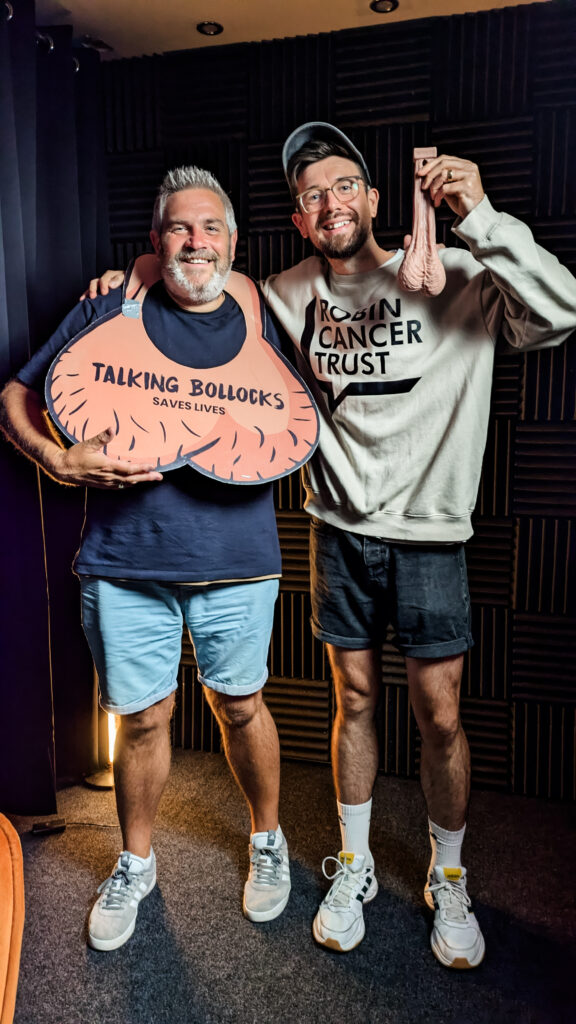
PodcaStars Magazine

Being a cover girl……or even a back cover girl….was never on my vision board. I’m actually laughing as I write this because I have a few girlfriends who were real, honest-to-goodness Cover Girls. You know, the kind with perfect hair, perfect lighting, and perfect poses. Meanwhile, I’m over here absolutely thrilled to be what I’m calling an “Actual Back Cover Girl.” Is that even a thing? Well, I guess it is now…
In full disclosure, discovering that I was featured on the back cover of this month’s PodcaStars Magazine was such an unexpected and truly lovely surprise. It’s one of those moments that makes you stop, smile, and think, Wow, how did I get here? I never set out to be on any kind of cover. I set out to tell stories that matter …. stories about people who give, who serve, who make our world a little better. But life has a funny way of surprising us when we’re busy doing what we love.

A few weeks ago, I received a note from my publisher, She Rises Studios, the same amazing team who published my book Change for Good. They asked if they could interview me about my podcasting journey for their October issue of PodcaStars Magazine. Of course, I said yes ….. I’m always happy to share how The Charity Matters Podcast began and why shining a light on everyday heroes has become one of the greatest joys of my life. What I didn’t expect was to end up on the back cover of the magazine.

Behind this beautiful surprise is a woman whose story inspires me deeply ….. Hanna Olivas, the founder of She Rises Studios. Hanna is a nonprofit founder on a mission to help women find their voice and use it. She’s built an incredible ecosystem of empowerment ……a streaming network, a powerhouse publishing team, and multiple magazines, including PodcaStars. Each one is designed to lift others, to amplify voices, and to encourage women to stand in their power.

But Hanna’s heart for service reaches far beyond media. She also founded The Brave and Beautiful Blood Cancer Foundation, a nonprofit that supports patients and families facing blood cancers. Her organization goes beyond awareness …. it builds personal connections, offers emotional and financial support, and brings hope to families in their darkest moments. Hanna is a mother, a grandmother, a multi-time author, and one of the most genuine, uplifting women I’ve ever met. She is a living, breathing example of what it means to use your gifts to serve others.

So, when someone like Hanna asks you to share your story, you say yes …..because she embodies everything Charity Matters stands for. She believes, as I do, that storytelling has the power to change lives. Every story of kindness, resilience, and compassion has a ripple effect. It reminds us that good still exists …..and that we can all be part of it.

I’ll admit, seeing myself in PodcaStars Magazine made me reflect a little …..  but because it reminded me how far this journey has come. What started as a small blog about philanthropy and purpose has grown into a podcast, a book, and now a movement…..all centered on one simple belief: that giving changes everything.

I know the print is tiny, so if you want to actually see the story, you can grab a digital copy of the magazine here. Or, if you’re like me, you’re probably reading this on your phone or iPad, squinting and pinching the screen to make it bigger. Either way, I’m just so grateful to share this message of service with a new audience.

And of course, I always share everything exciting with you. You’ve been on this journey with me for almost fifteen years …. through family milestones, loss, leadership, and endless stories of goodness. So thank you for being part of this community, for showing up week after week, and for believing in this mission of service.

I often say I don’t have a therapist… I have you. You tell me how you feel, what you love (and sometimes what you don’t!), and you keep me honest, grounded, and true to my mission of helping the helpers. Together, we’ve built something extraordinary …. a community that believes kindness still matters.

So yes, maybe I’m a Back Cover Girl now and I’m pretty sure that won’t make my headstone:) …but more importantly, I’m still right where I’ve always wanted to be: sharing stories that inspire, celebrating those who serve, and reminding us all that the secret to living is giving.

CHARITY MATTERS.


YOUR REFERRAL IS THE GREATEST COMPLIMENT,  IF YOU ARE SO MOVED OR INSPIRED, WE WOULD LOVE YOU TO SHARE AND INSPIRE ANOTHER. If you enjoyed today’s episode, please connect with us:

Copyright © 2025 Charity Matters. This article may not be reproduced without explicit written permission; if you are not reading this in your newsreader, the site you are viewing is illegally infringing our copyright. We would be grateful if you contact us.