Tag

Ripple Effects Artist

Browsing

Episode 110: What Season 10 Taught Me about Showing Up

Seven months ago, we launched Season 10 of the Charity Matters Podcast with our 100th episode. It was an incredible milestone. After more than one hundred conversations with remarkable humans, I thought I knew exactly what this season would bring: more inspiring stories of people who saw a need, stepped forward and decided to do something about it.

What I didn’t know was what was about to happen in my own life. Even more surprising, I didn’t realize that each person sitting across from me would give me a lesson I was going to need. Looking back, it feels as if these conversations were preparing me for what was coming.

When the Helper Needs Help

Season 10 began at an unusual moment. I had badly injured my leg skiing, torn my calf and developed a blood clot. Suddenly, I went from being someone who was always moving to someone who could barely walk. For anyone who knows me, sitting still is not exactly my superpower.

At the same time, I was preparing to walk the Camino de Santiago with girlfriends to celebrate my 60th birthday. Now, I wasn’t sure I would be able to go. Meanwhile, I was interviewing extraordinary people.

Our 100th episode featured Dave Anderson of Safe Families for Children. Dave built an organization around one powerful idea: What if a parent in crisis never had to say, “I have no one to call?”
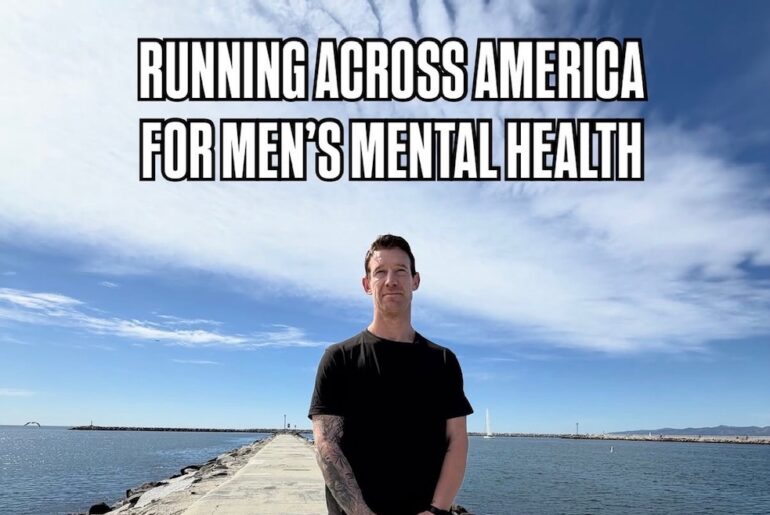
Then I spoke with Robb Pollard of Walk With Me Brother. Robb’s journey began when he finally said three words: “I need help.” Those words landed differently because suddenly, I needed help too. I’ve always been comfortable being the helper. Receiving help was another story. Yet, this season reminded me that sometimes the helper needs help. More importantly, allowing someone to help us may be an act of generosity too.

One Step at a Time

By May, I had worked incredibly hard to recover. Still, I had only started really walking again on May 1st. The farthest I had walked before leaving for the Camino was about three miles. Our first day was nine. Then came thirteen.

I was slow. My friends weren’t. Yet, they waited for me. They adjusted their pace and walked beside me. Somewhere along the Camino, my question changed. I stopped asking, Can I do this? Instead, I began realizing that I didn’t have to do it alone.
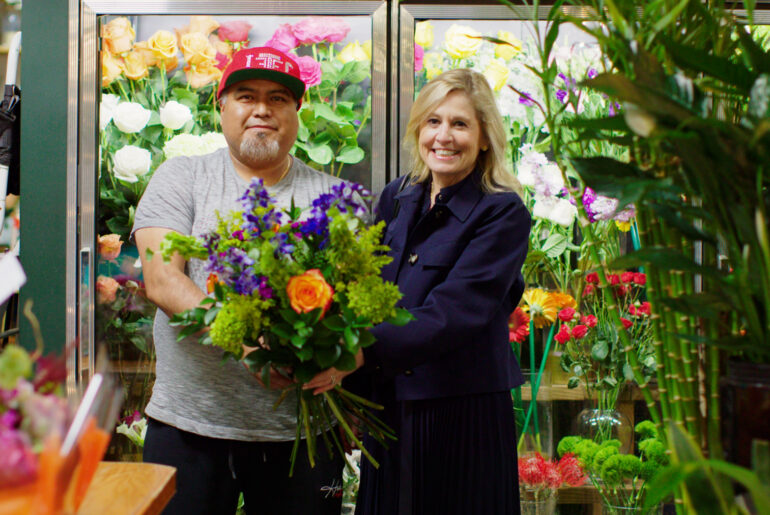
Another guest this season, Jane Veron of The Acceleration Project, talked about simply taking the first step. We don’t need to know exactly how we’ll get there. We don’t need every answer. We simply need to begin. So I kept walking. Then, while on the Camino, I learned that my beloved Aunt Sheila was very sick.

Suddenly, the walk changed.

What Is My Life For?

There are beautiful old churches and tiny chapels everywhere along the Camino. They became places for me to stop, light candles and pray for Aunt Sheila. One of this season’s guests, Jessie Fahay of Ripple Effects Artists, had asked herself a question that kept coming back to me: “What is my life actually for?”

Not, what do I do? Not, what have I accomplished? Not, how busy am I? What is my life for?

That question hits differently when you’re turning 60. It hits differently when you’re walking mile after mile. And it really hits differently when someone you love is dying. I returned home from the Camino stronger, but also changed. Then I began walking a very different road with Aunt Sheila.

Joy and Grief

As Aunt Sheila became sicker, lessons from other Season 10 guests continued to find me. Julie Coyne of Southeast Community Foundation talked about what children need most and said simply, “See them.”

Aunt Sheila did that better than almost anyone I knew. She saw people. She listened. She was present. She made people feel that they mattered. Then there was Tammy Krause of Bags of Fun, who lost her five-year-old daughter, Gabby. Tammy understands something about grief that I am still learning:

Joy and grief can exist together. There was tremendous sadness during those final weeks with Aunt Sheila. However, there was also laughter, family, stories, gratitude and so much love. Both were true.

How Do You Measure a Life?

Aunt Sheila died on August 13th at the age of 88. Then I was asked to give her eulogy. How do you take 88 years and put them into ten minutes? How do you measure a human life?

I’ve spent fifteen years asking nonprofit founders about impact. How do you know you’ve made a difference? What will your legacy be? Suddenly, those weren’t interview questions anymore. I thought about everything Aunt Sheila had done. She had been a Sister of the Holy Child Jesus for 67 years. She was an educator, principal, therapist, missionary, advocate, sister, aunt and friend. Surely, her legacy was service.

Except I had actually asked her that question before she died. I asked Aunt Sheila what she thought her legacy was. She didn’t give me a long answer. Instead, she simply put her hands together and made the shape of a heart. Love. Of course.

For fifteen years, I’ve talked about service. I’ve interviewed hundreds of people who have dedicated their lives to helping others. I even wrote a book about it. Yet, at 60 years old, Aunt Sheila gave me perhaps the simplest answer I’ve ever received.

I thought her legacy was service. I was wrong. Service was simply the vehicle she used to distribute her love to the world.

The Lessons Were There All Along

Suddenly, I saw Season 10 differently. My guests had been telling me all along: Open your door. Build the bed. Ask for help. Help someone see. Bring joy into grief. See people. Take the first step. Walk beside someone. Show up. Then our final guest, Steve Smith of Pacer Nation, brought the season full circle. Walking.

In March, I couldn’t walk. Then I learned to walk again. I walked the Camino. My friends walked beside me. I came home and walked beside Aunt Sheila as far as I could. Finally, I ended the season talking with someone who built a community around walking and running together.

Sometimes, we think we’re building communities when those communities are actually building us. Mine certainly built me.

What Season 10 Taught Me

On September 11th, I stood in church with ten minutes of words meant to represent Aunt Sheila’s 88 years. Since then, I haven’t been able to stop thinking about one question: If someone had ten minutes to tell the story of my life, what would they say?

I don’t think they would talk about how many emails I answered, how many meetings I attended or how many things I checked off my list. They would talk about who I loved. Who I helped. Whether I listened. If I saw people or whether I showed up?

When Season 10 began, I thought I was going to spend seven months bringing you extraordinary stories about people changing the world. I did. What I didn’t know was that those people were also preparing me for what was coming in my own life.

Perhaps that is what service has been all along. Love put into action. Somewhere along the Camino, I realized that we are all walking one another home. We don’t know how long anyone’s walk will be. So love the people God puts in your life. Give them your time. See them. Let them help you. Help them. Walk beside them.

And when it matters, show up. As we close Season 10, thank you for walking alongside me.

Season 11 is coming, and I cannot wait to introduce you to another group of extraordinary humans. But first, I’ll leave you with the question I’ve been asking myself: What are you doing with the time you’ve been given?

And perhaps an even simpler one: Who needs you to show up?

CHARITY MATTERS.


YOUR REFERRAL IS THE GREATEST COMPLIMENT,  IF YOU ARE SO MOVED OR INSPIRED, WE WOULD LOVE YOU TO SHARE AND INSPIRE ANOTHER. If you enjoyed today’s episode, please connect with us:

Copyright © 2026 Charity Matters. This article may not be reproduced without explicit written permission; if you are not reading this in your newsreader, the site you are viewing is illegally infringing our copyright. We would be grateful if you contact us.

Episode 105: Ripple Effects Artists

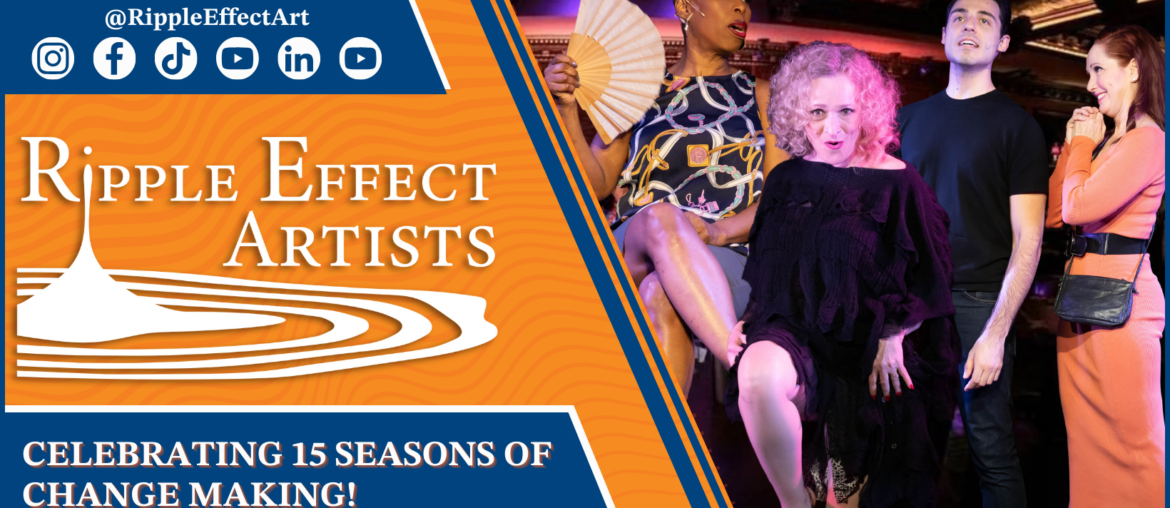
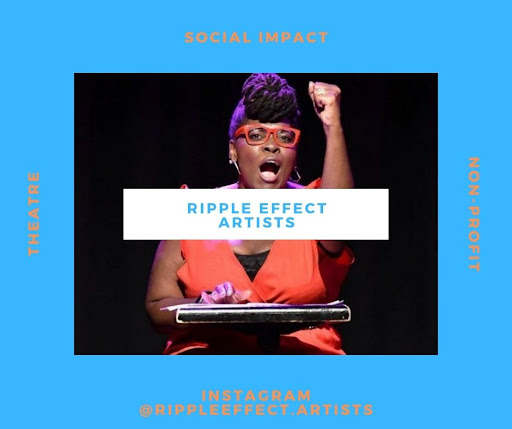
What if art wasn’t just something we experienced but something that moved us to act? This week’s Charity Matters episode introduces you to Jessie Fahay, a true “Ripple Effects Artist” who is transforming the way we think about theater, storytelling, and service. Jessie doesn’t just create powerful productions ….she creates experiences that spark conversations, challenge perspectives, and connect audiences directly to the people and causes working to change our world. Her work sits at the intersection of art and advocacy, reminding us that when we feel something deeply, we have a responsibility to do something with it.

Jessie’s journey is a beautiful example of what happens when passion meets purpose. From performing in meaningful productions like The Diary of Anne Frank to asking herself the life-changing question, “What is my life actually for?” She found a way to use her gifts to elevate others. In this inspiring conversation, Jessie shares how one idea turned into a 15-year movement, the lessons she’s learned along the way, and why even one small ripple of action can create lasting impact. This episode will leave you thinking differently about the power of creativity and your own ability to make a difference.


Here are a few highlights from our conversation:

Charity Matters: Tell us a little about what Ripple Effects ARTISTS does?

Jessie Fahay: We are predominantly a theatrical production company, but what makes us unique is that everything we produce is rooted in purpose. We create theater and sometimes film or radio plays, that raise both awareness and funds for human rights organizations and advocates.

After every production, we host talkback conversations which are panels that feature leaders whose work directly connects to the themes of the show. So it’s not just about experiencing art and walking away. It’s about engaging, asking questions, and creating a space where audiences can connect what they’ve just seen to real-world action.

Charity Matters: What experiences did you have as a child that influenced your work?

Jessie Fahay: There wasn’t just one moment….it was really a collection of experiences that shaped me.

One of the most impactful was touring as an actor with The Diary of Anne Frank. It was an educational production for students, and after every show we would have these deep, thoughtful conversations about prejudice, bigotry, and history. I saw firsthand how powerful theater could be not just as entertainment, but as a catalyst for dialogue and understanding.

Then there were experiences in high school, like when Columbine happened. We did a production called Bang Bang You’re Dead, which explored the root causes behind school violence. That was another moment where theater wasn’t just art but it was a way to process, question, and try to understand the world.

And living in New York, I’ve had the privilege of seeing incredible theater. Shows like The Normal Heart left me emotionally undone…..but more than that, they left me wanting more. I didn’t want the experience to end when I walked out of the theater. I wanted to keep talking, keep unpacking, and ask, “What now?” That feeling stayed with me.

Charity Matters: What was the moment you knew you needed to act and start Ripple Effects ARTISTS?

Jessie Fahay: It really came down to a question someone asked me: What is your life actually for? That question changed everything. It shifted me from thinking about what I wanted to do to thinking about what I was here to contribute.

I realized I understood powerful theater. I knew what meaningful storytelling looked like, and I also knew there were incredible nonprofit organizations doing important work that needed a platform. And it just clicked. I could bring those two worlds together.

All of my past experiences funneled into that moment. It wasn’t just one play or one experience, it was everything combined. But that question gave me clarity. It gave me direction. It made me see that this wasn’t just a career idea it was my contribution.

Charity Matters: What are your biggest challenges?

Jessie Fahay: In the beginning, the biggest challenges were simply figuring everything out. The logistics, the paperwork, how to even become a nonprofit….it’s a lot. We didn’t officially incorporate until 2013, even though we started in 2009. And beyond that, you have to be okay wearing a lot of hats. You’re an entrepreneur, a producer, a fundraiser, a marketer…..you’re everything.

You’re constantly pitching, not just a product, but a mission. You’re asking people to give their time, their money, their energy. You’re building something that depends on other people believing in it. And that’s both the challenge and the beauty of it. You’re constantly connecting people to something bigger than themselves. But it takes resilience, and it takes a willingness to keep going even when it’s hard.

Charity Matters: What fuels you to keep doing this work?

Jessie Fahay: It’s the moments when I see the model actually work. When we have a talkback after a show and the audience is engaged and when you can feel that something has landed, that something has sparked…..that’s everything.

It might be a small theater, it might be a modest audience, but when people get it, when they connect the dots, there’s nothing better than that. It’s similar to what teachers describe when a student finally understands something. That moment of clarity, that moment of connection….that’s what fuels me.

Charity Matters: When do you know you have made a difference?

Jessie Fahay: We’ve actually looked at some data, and about 5% of our audience takes immediate action during the show…..signing petitions, committing to volunteer, or deciding to donate. But beyond the numbers, it’s those connections that matter.

It’s when someone discovers an organization they’ve never heard of even though it’s right in their own city and decides to get involved. It’s when people from completely different worlds come together and realize they care about the same issue.

That’s when I know we’re making a difference…….when awareness turns into action, even in small ways.

Charity Matters: Tell us what success you have had and what your impact has been? 

Jessie Fahay: We’ve been doing this for over 15 years, and we’re heading into our 17th season. That alone is something I’m incredibly proud of. We’ve created a model where art and advocacy work together…..where theater becomes a platform for real-world impact.

We’ve helped bring visibility to organizations that people didn’t even know existed. We created spaces where audiences don’t just consume art, but engage with it and act on it. And while the numbers matter……the attendance, the funds raised, the actions taken…..it’s really about those moments of connection. Those are the true measure of success for me.


Charity Matters: If you could dream any dream for your organization, what would that be?

Jessie Fahay:  I would love to see Ripple Effect Artists on a Broadway stage…..creating work that is not only artistically excellent, but also deeply impactful. But beyond that, the bigger dream is that this model becomes something widely adopted—that the arts and advocacy become more deeply connected across all disciplines.

There is so much powerful art being created, and there is so much important advocacy work happening. Bringing those two together creates something even more meaningful. I truly believe that can elevate both the credibility of the arts and the reach of advocacy. That’s the vision.

Charity Matters: What life lessons have you learned from this experience?

Jessie Fahay: One of the biggest lessons is that this work isn’t for everyone…..and that’s okay. Not everyone wants to engage with heavy, thought-provoking theater. Not everyone wants to be involved in this kind of work. And I’ve learned not to try to convert people.

If I could go back and tell myself anything, it would be: don’t spend so much energy trying to make people fit. Let them find their own path, and focus on finding the people who align with yours. That shift would have saved me a lot of time and energy.

Charity Matters: How has this journey changed you?

Jessie Fahay: This journey has required me to grow in ways I didn’t expect. I’ve had to learn how to embody different energies…..to be compassionate and open-hearted, but also strong, clear, and sometimes firm.

Running a nonprofit means making tough decisions, setting boundaries, and leading with clarity. You can have a big heart and still be a strong leader. And I’ve also learned to meet people where they are and to accept what they can give, without expectation or judgment.

At the end of the day, this work has made me more resilient, more grounded, and more committed to the idea that we all have something to contribute. And when we find what that is, and give it away, that’s when real change happens.

CHARITY MATTERS.


YOUR REFERRAL IS THE GREATEST COMPLIMENT,  IF YOU ARE SO MOVED OR INSPIRED, WE WOULD LOVE YOU TO SHARE AND INSPIRE ANOTHER. If you enjoyed today’s episode, please connect with us:

Copyright © 2026 Charity Matters. This article may not be reproduced without explicit written permission; if you are not reading this in your newsreader, the site you are viewing is illegally infringing our copyright. We would be grateful if you contact us.