
Tag

Pacer Nation

Browsing

Episode 110: What Season 10 Taught Me about Showing Up

Seven months ago, we launched Season 10 of the Charity Matters Podcast with our 100th episode. It was an incredible milestone. After more than one hundred conversations with remarkable humans, I thought I knew exactly what this season would bring: more inspiring stories of people who saw a need, stepped forward and decided to do something about it.

What I didn’t know was what was about to happen in my own life. Even more surprising, I didn’t realize that each person sitting across from me would give me a lesson I was going to need. Looking back, it feels as if these conversations were preparing me for what was coming.

When the Helper Needs Help

Season 10 began at an unusual moment. I had badly injured my leg skiing, torn my calf and developed a blood clot. Suddenly, I went from being someone who was always moving to someone who could barely walk. For anyone who knows me, sitting still is not exactly my superpower.

At the same time, I was preparing to walk the Camino de Santiago with girlfriends to celebrate my 60th birthday. Now, I wasn’t sure I would be able to go. Meanwhile, I was interviewing extraordinary people.

Our 100th episode featured Dave Anderson of Safe Families for Children. Dave built an organization around one powerful idea: What if a parent in crisis never had to say, “I have no one to call?”
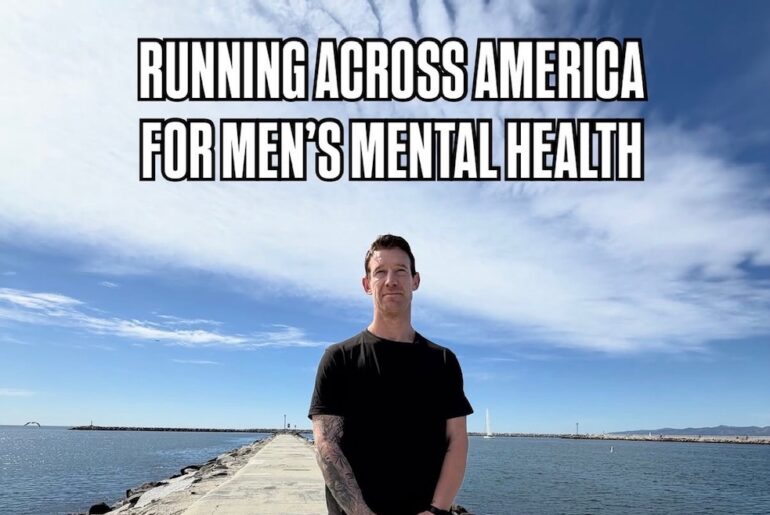
Then I spoke with Robb Pollard of Walk With Me Brother. Robb’s journey began when he finally said three words: “I need help.” Those words landed differently because suddenly, I needed help too. I’ve always been comfortable being the helper. Receiving help was another story. Yet, this season reminded me that sometimes the helper needs help. More importantly, allowing someone to help us may be an act of generosity too.

One Step at a Time

By May, I had worked incredibly hard to recover. Still, I had only started really walking again on May 1st. The farthest I had walked before leaving for the Camino was about three miles. Our first day was nine. Then came thirteen.

I was slow. My friends weren’t. Yet, they waited for me. They adjusted their pace and walked beside me. Somewhere along the Camino, my question changed. I stopped asking, Can I do this? Instead, I began realizing that I didn’t have to do it alone.
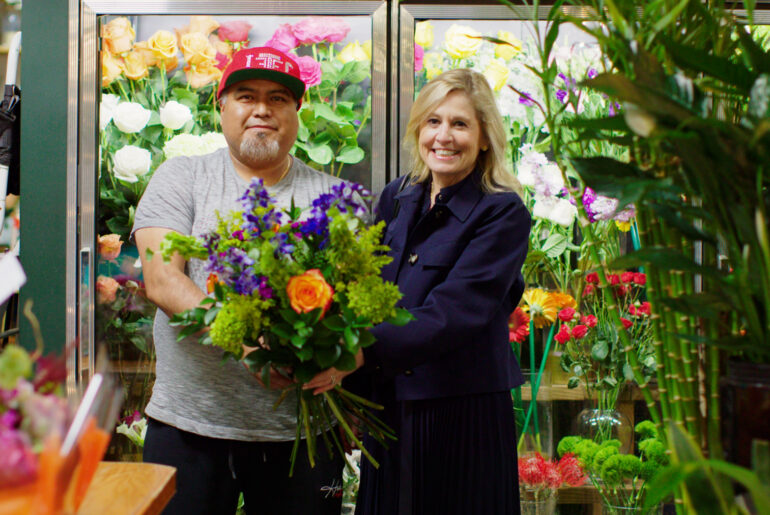
Another guest this season, Jane Veron of The Acceleration Project, talked about simply taking the first step. We don’t need to know exactly how we’ll get there. We don’t need every answer. We simply need to begin. So I kept walking. Then, while on the Camino, I learned that my beloved Aunt Sheila was very sick.

Suddenly, the walk changed.

What Is My Life For?

There are beautiful old churches and tiny chapels everywhere along the Camino. They became places for me to stop, light candles and pray for Aunt Sheila. One of this season’s guests, Jessie Fahay of Ripple Effects Artists, had asked herself a question that kept coming back to me: “What is my life actually for?”

Not, what do I do? Not, what have I accomplished? Not, how busy am I? What is my life for?

That question hits differently when you’re turning 60. It hits differently when you’re walking mile after mile. And it really hits differently when someone you love is dying. I returned home from the Camino stronger, but also changed. Then I began walking a very different road with Aunt Sheila.

Joy and Grief

As Aunt Sheila became sicker, lessons from other Season 10 guests continued to find me. Julie Coyne of Southeast Community Foundation talked about what children need most and said simply, “See them.”

Aunt Sheila did that better than almost anyone I knew. She saw people. She listened. She was present. She made people feel that they mattered. Then there was Tammy Krause of Bags of Fun, who lost her five-year-old daughter, Gabby. Tammy understands something about grief that I am still learning:

Joy and grief can exist together. There was tremendous sadness during those final weeks with Aunt Sheila. However, there was also laughter, family, stories, gratitude and so much love. Both were true.

How Do You Measure a Life?

Aunt Sheila died on August 13th at the age of 88. Then I was asked to give her eulogy. How do you take 88 years and put them into ten minutes? How do you measure a human life?

I’ve spent fifteen years asking nonprofit founders about impact. How do you know you’ve made a difference? What will your legacy be? Suddenly, those weren’t interview questions anymore. I thought about everything Aunt Sheila had done. She had been a Sister of the Holy Child Jesus for 67 years. She was an educator, principal, therapist, missionary, advocate, sister, aunt and friend. Surely, her legacy was service.

Except I had actually asked her that question before she died. I asked Aunt Sheila what she thought her legacy was. She didn’t give me a long answer. Instead, she simply put her hands together and made the shape of a heart. Love. Of course.

For fifteen years, I’ve talked about service. I’ve interviewed hundreds of people who have dedicated their lives to helping others. I even wrote a book about it. Yet, at 60 years old, Aunt Sheila gave me perhaps the simplest answer I’ve ever received.

I thought her legacy was service. I was wrong. Service was simply the vehicle she used to distribute her love to the world.

The Lessons Were There All Along

Suddenly, I saw Season 10 differently. My guests had been telling me all along: Open your door. Build the bed. Ask for help. Help someone see. Bring joy into grief. See people. Take the first step. Walk beside someone. Show up. Then our final guest, Steve Smith of Pacer Nation, brought the season full circle. Walking.

In March, I couldn’t walk. Then I learned to walk again. I walked the Camino. My friends walked beside me. I came home and walked beside Aunt Sheila as far as I could. Finally, I ended the season talking with someone who built a community around walking and running together.

Sometimes, we think we’re building communities when those communities are actually building us. Mine certainly built me.

What Season 10 Taught Me

On September 11th, I stood in church with ten minutes of words meant to represent Aunt Sheila’s 88 years. Since then, I haven’t been able to stop thinking about one question: If someone had ten minutes to tell the story of my life, what would they say?

I don’t think they would talk about how many emails I answered, how many meetings I attended or how many things I checked off my list. They would talk about who I loved. Who I helped. Whether I listened. If I saw people or whether I showed up?

When Season 10 began, I thought I was going to spend seven months bringing you extraordinary stories about people changing the world. I did. What I didn’t know was that those people were also preparing me for what was coming in my own life.

Perhaps that is what service has been all along. Love put into action. Somewhere along the Camino, I realized that we are all walking one another home. We don’t know how long anyone’s walk will be. So love the people God puts in your life. Give them your time. See them. Let them help you. Help them. Walk beside them.

And when it matters, show up. As we close Season 10, thank you for walking alongside me.

Season 11 is coming, and I cannot wait to introduce you to another group of extraordinary humans. But first, I’ll leave you with the question I’ve been asking myself: What are you doing with the time you’ve been given?

And perhaps an even simpler one: Who needs you to show up?

CHARITY MATTERS.


YOUR REFERRAL IS THE GREATEST COMPLIMENT,  IF YOU ARE SO MOVED OR INSPIRED, WE WOULD LOVE YOU TO SHARE AND INSPIRE ANOTHER. If you enjoyed today’s episode, please connect with us:

Copyright © 2026 Charity Matters. This article may not be reproduced without explicit written permission; if you are not reading this in your newsreader, the site you are viewing is illegally infringing our copyright. We would be grateful if you contact us.

Episode 109: Pacer Nation

Sometimes making a difference begins with something as simple as putting one foot in front of the other. More than three decades ago, chiropractor Steve Smith invited a group of patients to meet him at the Rose Bowl. His goal was simply to help people feel better through movement. However, something unexpected happened along the way. A running program became a community, strangers became friends, and the Pasadena Pacers grew into Pacer Nation.

What I love most about Steve’s story is that it really isn’t about running. Instead, it is about connection, kindness, service and the power of showing up for one another. His message is also beautifully simple: You don’t need to know every step before you begin. You simply need to take the first one. I think you will love this joyful and inspiring conversation.

CHARITY MATTERS: TELL US A LITTLE ABOUT WHAT THE PASADENA PACERS DOES?

Steve Smith:  The Pasadena Pacers started out as the Pasadena Pacers, now Pacer Nation. Our goal is to raise the health and spirits of communities by getting people together with social exercise programs.

It started as a program from my office as a chiropractor. We thought it was a marathon training program. It turned out to be a social program. People come for the training, and they stay for the social benefits. The programs are all free and volunteer-led. We have a team of probably 35 people that helps run the organization. We’re always looking for people to volunteer with coaching, putting out water stations and doing websites.

We did a great job with diabetes, cardiovascular disease, obesity, depression and the big one, loneliness.

CHARITY MATTERS: WHAT EXPERIENCES DID YOU HAVE AS A CHILD THAT INFLUENCED YOUR WORK?

Steve Smith:  Service started for me as a child. My mom was always the den mother, the person who helped out in the classroom. She did the Cub Scouts. She volunteered at Rancho Los Amigos, where we went as kids and saw people in iron lungs who had polio.

We would always help out the neighbors. We’d take out the old people’s trash cans or put the weeds away at Mrs. Irwin’s house up the street because she got too old to bend over. As a child, I think that was great training because it made me feel good.

Later, it became apparent to me that helping others is really its own reward. In some ways, I discovered early on that giving help is probably the reward in and of itself. The receiving of it is probably even less powerful than the giving of it.

My dad was a World War II vet. In those days, we considered it kind of our duty to serve in the military. So I joined the Army, served a couple of years and went to Vietnam.

It was eye-opening to go to a different country and see the kinds of hardships people have. However, in all that struggle and strife, they could still have family meals together. When a marriage happened in a village in Vietnam, the entire community would come to celebrate.

What you have, who you know or what your station in life is didn’t matter. What mattered was the community was a single thriving unit. In the middle of a war, people could find a way to be happy by getting together and supporting each other.

CHARITY MATTERS: WHAT WAS THE MOMENT YOU KNEW YOU NEEDED TO ACT AND START PACER NATION?

Steve Smith: The Pacers started out of my chiropractic office. In the ’90s, people went into offices, sat down in chairs and started looking at their computer stations. Neck and back problems were insolvable, which was great for business. However, it wasn’t great for my feeling that I was making a difference.

I had been a pretty fast runner when I was younger and had a terrible back injury. I was involved in an aviation incident where I broke my back. I didn’t run for almost a year and a half after that, and the back pain just wouldn’t go away.

I thought, “Well, I’ve settled into chronic back pain that’s not going to resolve. I’m going to start running again.” I started back slowly. Within just a few weeks, my back pain went away. I thought, “Wow, what is going on here?” Nobody ever said this could happen. In fact, the predominant wisdom of the day said that if you have any problem at all, don’t run. That turned out not to be true for me.

At the same time, I had all these patients with neck and back problems. I thought, “Well, it might work for them too.” So I invited people to meet my wife and me at the Rose Bowl. Most people said, “I’m not a runner. I’m not an athlete.” I said, “If I can get you to run very slowly for one minute, way below your ability level, could you do that?”

We had about 30 or 40 people show up. We ran for one minute and walked for five. Each week, we progressed. After ten weeks, people were starting to get fit. They were starting to have results, and they were looking forward to their Sunday morning workout.

CHARITY MATTERS: WHAT ARE YOUR BIGGEST CHALLENGES?

Steve Smith:  Probably 15 years passed before we became a nonprofit. By then, money started exchanging hands, and there were advantages you could get from having a nonprofit. We decided it was time. At that point, maybe three or four hundred people were meeting each week. Five or six run clubs had also started to sprout here and there.

Interestingly, fundraising wasn’t one of our big challenges because run clubs don’t need much money. We needed a little for a website and insurance, but not much else. For fundraising, we used a simple green can where people put money. Those donations bought bagels and water. At the end of the year, if there was money left over, we threw a party.

What fascinated me about the green can was that you got to be a philanthropist if you put three dollars into it. That’s a very different experience than having to spend two or three hundred dollars a year to participate and having an expectation of exchange.

Instead, the person making that contribution gets to be generous. With one dollar in a green can, they buy generosity, kindness and giving. I thought that was the most powerful thing.

CHARITY MATTERS: WHAT FUELS YOU TO KEEP DOING THIS WORK?

Steve Smith: Eventually, nonprofit founders discover that you don’t create the community as much as the community creates you. During a run, people share their stories. They talk about challenges, victories, families and how it is at work. It’s great to get all that stuff out and have a rapid exchange of ideas and real conversation.

On Saturday morning, you’re simply dressed in a way that you’re not identifiable by what you have, what you do, where you go or what your car is. All that social veneer dissolves through the experience of running. Because of that, people connect in a way they ordinarily wouldn’t be able to. Sometimes, just sharing the same space with a person for a few miles, even without words, can make you feel very connected.

Some of the best relationships we have are the ones where you can be together in silence. It’s great to be that way with your community too.

CHARITY MATTERS: WHEN DO YOU KNOW YOU HAVE MADE A DIFFERENCE?

Steve Smith:  For me, impact happens in two ways. The first is on a personal level. Completing a program, especially a marathon, is a long-term goal. You may train for a year, and there are obstacles. Your body doesn’t want to do a marathon. Mentally and emotionally, you feel like, “Wow, that’s a lot to confront.” Physically, you have to change.

At the finish line, something really quite extraordinary happens. People who finish their first marathon shatter barriers. After overcoming those extreme obstacles, they begin to look around and ask, “What else did I think was probably not achievable that I should reexamine? What more could I do?”

Suddenly, horizons open. A future becomes possible that, at least in their own minds, wouldn’t have been possible before.

CHARITY MATTERS: TELL US WHAT SUCCESS YOU HAVE HAD AND WHAT YOUR IMPACT HAS BEEN?

Steve Smith: The second kind of impact is a little more subtle. I think the Pacers has an impact on the community. When we talk to people about putting on that red shirt, we tell them to give somebody a smile, wave hello and say something positive. For goodness’ sake, get all dogs to greet you. If you can’t get a baby to smile, you need to work on your spirit.

Running through a community can be a little bit of a disruption. You’re going through neighborhoods early in the morning, and sometimes you impact traffic a little bit. Because of that, we try to get people to say hello, wave and smile.

Then, take that show on the road. Bring it into your daily workplace, your family and your friendships. Smile and create a reaction. Go out and raise the spirits of your community in some subtle way. Get a smile, give a smile and say something positive.

CHARITY MATTERS: IF YOU COULD DREAM ANY DREAM FOR YOUR ORGANIZATION, WHAT WOULD THAT BE?

Steve Smith:  Probably 20 years ago, I had a dream to see a Pacers Club in every community in the world.

I’d like to see Pacers in Palestine and Israel and have races together. Ultimately, I want to cause world peace to break out and people to love each other in a way that expands the consciousness of humankind and creates a glorious human race. I know that’s probably a little high-minded.

For a long time, I was a little disheartened by our progress. We only started maybe 12 clubs. Then, in the last five years, something happened. The era of run clubs emerged. Now, it’s a place where young people go to meet each other. Run clubs are replacing things like online dating apps. Instead of going to places, consuming alcohol and being drowned by loud music, people go out and run together.

They’re having real conversations and doing something meaningful. I’ve seen it happen in Pasadena, and it’s gone worldwide. It’s the emergence and birth of the run club. Who knew it?

CHARITY MATTERS: WHAT LIFE LESSONS HAVE YOU LEARNED FROM THIS EXPERIENCE?

Steve Smith:  Sometimes, when you have a concept or an idea, you won’t know what step two is until you do step one. For me, step one is to raise your hand, step forward and say three words: “I’ll do it.”

I can’t stress that enough because you have no idea what your future is going to be. The minute you start moving forward, a wind comes to your back. Doors begin to open, and a future opens before you that you couldn’t have thought of until you got started.

Once you know the first thing, do that one thing. Now you’re in motion. From there, the universe is going to help you go to a place where you probably couldn’t even have dreamt of.

Bring the skills you have to the table. They’re probably not going to be sufficient to do every job. However, people will line up behind you. They’ll start supporting you, they’ll help, and you’ll learn.

CHARITY MATTERS: HOW HAS THIS JOURNEY CHANGED YOU?

Steve Smith:  I’ve remained the same, and I didn’t know who I was. More than anything, this experience has taught me a lot about leadership. No two leaders are the same. They all do it differently.

Over the years, we’ve had, I think, 22 presidents of the Pasadena Pacers. As the founder, I’ve worked with all of them and learned from all of them. Watching these leaders has made me a much more successful businessman. I’ve also been more successful with my family and learned things about myself by watching others.

You should be happy with yourself, but I can also stand to be a little bit more like you. If I were to pick the best traits of each person and have that be a composite, wow, you’d be much better.

As a leader, you get to watch, observe and take the best pieces. Sometimes advice doesn’t equal watching somebody do something and seeing some amazing exchange that makes you think, “Wow, if I were to behave like that, look at what I could do.”

That’s why I think community service is so valuable. You learn from others. You discover pieces of yourself that are underdeveloped, and those pieces can expand and make you a better person.

CHARITY MATTERS.


YOUR REFERRAL IS THE GREATEST COMPLIMENT,  IF YOU ARE SO MOVED OR INSPIRED, WE WOULD LOVE YOU TO SHARE AND INSPIRE ANOTHER. If you enjoyed today’s episode, please connect with us:

Copyright © 2026 Charity Matters. This article may not be reproduced without explicit written permission; if you are not reading this in your newsreader, the site you are viewing is illegally infringing our copyright. We would be grateful if you contact us.