
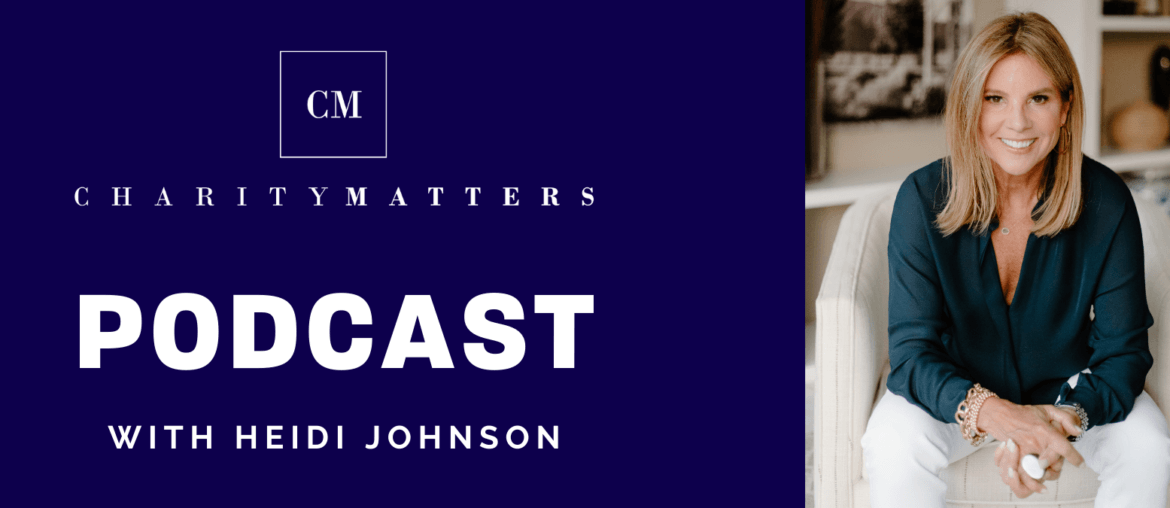
For our 100th episode of the Charity Matters Podcast, we are celebrating in the most meaningful way possible….by spotlighting a true innovator, a quiet disruptor, and a modern-day hero who dared to ask a simple but world-changing question: What if no parent ever had to say, “I have no one to call?” When psychologist Dave Anderson saw firsthand the devastating ripple effects of child abuse and foster care, he didn’t just shake his head at a broken system, he built something different. What started with one desperate mom, one brave “yes,” and one family opening their home has grown into a national movement that has helped over 100,000 children and counting.

In this powerful Episode 100 conversation, Dave shares how his bricklayer father’s words, “If I don’t help them, who will?” became the blueprint for Safe Families for Children, a revolutionary approach that mobilizes communities to step in before crisis becomes catastrophe. This episode is about courage, radical hospitality, and the extraordinary impact of ordinary people choosing to care. If you’ve ever wondered how one idea can spark a movement or how you can be part of changing the world? This conversation will leave you inspired, hopeful, and ready to say yes.

Here are a few highlights from our conversation:
Charity Matters: Tell us a little about what Safe Families For Children does?
Dave Anderson: Well, I’m a psychologist, and I started Safe Families really, to prevent what I was seeing in foster care. I also run a child welfare agency. What we do is we mobilize communities and engage volunteers to do really a couple different things.
One is to host children in their home for however long a parent needs in order to keep them safe and eventually be able to go back to their parent… and to come alongside and mentor parents and help them get back on their feet. So our goal is to really prevent child abuse, prevent the need to go into foster care, and ultimately, to keep families together. Because our belief is, in nearly all situations, the family is the best place for that child.
Charity Matters: What experiences did you have as a child that influenced your work?
Dave Anderson: I come from a blue collar family. My dad was a bricklayer, so my goal in life was to be a bricklayer… and I was what they call a laborer… and I noticed my dad would always bring on new bricklayers without really any warning. And as kind of a shy, quiet guy, I would talk to these guys that were hired by my dad… and they would say, ‘Oh, I’m from Joliet… Joliet prison.’ And another guy… ‘I just got out of this prison…’”
So one time… I said, ‘Hey, Dad, I think you need to do a better job of vetting your people… all these people you’re hiring are prisoners.’ And he said, ‘Oh, I know that.’ And I’m like, ‘Well, why in the world would you do that?’ And he said, ‘If I don’t help them, who will?’” And it was really those words that… got me thinking about… our role and responsibility in society… there are people in our society who have no one on their side, and I think we as a society have a responsibility to do that.
And what was interesting… my dad never had any of them steal from him… and I remember asking one of them… ‘Why would you risk it?’ And he said, ‘No one else would give us a chance. And your dad did, and I would do anything to support him.’ So that was really the initial model for me… the responsibility to give back.

Charity Matters: What was the moment you knew you needed to act and start Safe Families For children?
Dave Anderson: It’s interesting. I actually wanted to be a bricklayer. I didn’t want to be a psychologist. And my dad said, ‘Well, whatever you do, don’t be a bricklayer.’” I used to drive a city bus… people from the university would get on my bus and just sit there and talk to me for hours… and eventually someone said, ‘People like to talk to you… why don’t you become a psychologist?’”
And I got into the world of foster care and child abuse… I worked at a large medical center. My job was to assess children who had been horribly abused… determine what’s the psychological impact… find out who did it and put them in jail. And it was a very hard job. But… I met this girl… she happened to be the same age as my daughter at the time… her arm was broken, her retina was detached, and her brain was swelling.
And eventually I talked to her mom… and she said, ‘I grew up in foster care… when I turned 18, my foster parents didn’t want anything to do with me anymore… my bio parents’ rights were terminated… I turned 18 and there was really no one helping me out.’
And she said, ‘I got pregnant… I tried to work… my daughter got sick… if I were to miss one more day of work, my job… so I asked my ex-boyfriend to take care of her… I didn’t realize he went back to drugs, and he did this to her while I was at work.’ And she basically said, ‘I just had no one to call.’ And I couldn’t imagine, in a crisis situation, not having anyone to call.
And I began to look at… that’s why a lot of kids go into foster care because their parent has no one to call. And if they had extended family or a support system… they could tolerate most difficult situations. But if you have no one to call when things go wrong, then worse things are going to go wrong.
So I started to think… what if we could have had a network of people that this woman could call… someone could step up and say, ‘Oh, you need someone to watch your kid today. I’ll take them in.’ We could make a huge difference in preventing kids from going into foster care or from being abused.
And then there was another moment… I was running a nonprofit called Lydia, and this mom came… knocked on my door and said, ‘I’m in trouble. I need someone to take my kids.’ And I said, ‘I’m sorry. We can’t take them unless you abuse them… if it gets like that, then come back…’ And then I thought, What in the world did I just say?
She grabbed my arm and said, ‘I need someone to take my kids, and I want you to do it…’ And I said, ‘Okay, my wife and I will take your kids.’ And she was emotional. She said, ‘There’s no one in my life willing to help me out… it’s just shocking that a stranger… is willing to help me out.” She completed what she needed… got her kids back… and she called me a couple weeks ago—this was 20 years.
And then more moms would end up calling… and I was pastoring a church… and anyone could take them home… and I realized, we should vet people… and we should probably call it something. And this second mom said, ‘I don’t know you… I just have one question… Are you a safe family?’ And that’s kind of how I came up with the name.

Charity Matters: What are your biggest challenges?
Dave Anderson: One is, I didn’t know how to scale. I never actually even had a desire to scale… but I knew there was a couple problems. How do I convince people to do this? Because everyone’s busy… concerned about their own kids… and if we’re trying to build a safety net and mobilize communities, that means everybody has a role to play.
And what we were looking for was host families… who could take kids at the most critical time. Then… how do we find others who are willing to just befriend a mom or dad and say, ‘I’m a listening ear,’ or ‘I can help you find work,’ or ‘you need a ride… And then I needed someone who had things… because moms needed a mattress… dishes… whatever. So those were my three things.
My biggest issue is recruiting people not based on need, but based on shared values… how do I find people that have similar values… and then how do I unleash them and connect them with parents that are in difficult situations.

Charity Matters: What fuels you to keep doing this work?
Dave Anderson: There were times like I’d lay on the floor in my office and cry and think… if we don’t help, kids are going to be harmed. For me… I thought of my kids… If my wife and I weren’t available, I would hope somebody would help them. And I go back to this little girl at Mount Sinai… she’s suffering now the rest of her life… because of a simple problem that had a solution.
And foster care isn’t bad… but when I started Safe Families, if your kid went into foster care, you as a mom or dad would only have a 20% chance of getting them back again… and I just thought, that’s wrong. In the end, kids want to be with their mom and dad… and if we can come alongside mom and dad… help them become what their kids want them to be… that’s the issue.
Charity Matters: When do you know you have made a difference?
Dave Anderson: When you’re helping, it’s not just giving them something… the key thing that they need is relational connections. We call it transactions versus relationships. Everybody does transactions… ‘I’m going to give this kid a pencil or a backpack’… and not that it’s bad, but that’s really not what they need.
What they need is community. They need someone to call and they need a safety net. That happens when isolation is replaced by connection…..you see real change.
Charity Matters: Tell us what success you have had and what your impact has been?
Dave Anderson: I think… one is I had to figure out how to write laws… and so we wrote and passed 17 laws. And… we’ve hosted or placed over 100,000 kids in homes and have probably helped another 100,000 families.” I had to learn what is a movement… because we didn’t want to be a program… we wanted to be a movement.
We did research… in Illinois, they randomly assigned kids that were called into the hotline to Safe Families versus business as usual… and we were able to prove that we were more effective in keeping kids safe and out of care and ultimately with their parents… so that was a big deal for us—to be an evidence-based program.
Then it started growing internationally… helping kids in human trafficking situations and child labor… and the solution is really the same: how does the community take care of these kids, support their parents, in order to avoid these other situations?

Charity Matters: If you could dream any dream for your organization, what would that be?
Dave Anderson: I think we can not eliminate foster care, but we can substantially reduce it… cut it in half.And… the idea that if people had a network of people around… that’s how you survive.
How do we create this network… for any family, for any reason… and I don’t think people should have to prove that they’re worthy of that. It has nothing to do with government benefits… it’s, you’re a human… and we as humans… have a basic responsibility to be the safety net… to be this loving neighbor… particularly at times of need.
And it’s not about me anymore… it’s getting people who are doing it to believe in it… to realize, ‘I’m not necessarily part of a big national movement… I’m just helping these kids in my neighborhood.’ They’re the change agents.
Charity Matters: What life lessons have you learned from this experience?
Dave Anderson: With a new idea comes failures… and to really be good at something new, you have to be good at getting over your failures. I had failed… I kind of thought of giving up. But… the need is too great to not figure it out. And… you have to learn when something is ‘good enough.’ My dad would say, ‘It’s good enough,’ and I realized in order to do this, you can’t have things perfect. Try a bunch of things.
I’ve learned… people don’t need professionals necessarily. They need what you have to offer. No matter what you have, you have what they need. For me… how do you make it a way of life? I call that hospitality… love of strangers… welcoming people into your home.
I wrote a book, Unleashing Radical Hospitality because I think what we’re doing is bubbling up principles we all have… loving our neighbor… intentional compassion… resurrecting these ideas and values.

Charity Matters: How has this journey changed you?
Dave Anderson: I grew up with very low self-esteem and not a strong person. I’d always give up when something bad happens… Okay, I’m not going to push that issue. So I’ve become more confident, more comfortable with failure. And I’ve learned you can’t make it perfect. It has to be ‘good enough.
And the joy of doing something for somebody, not just giving them something….has changed me. We call it transactions versus relationships. Not that a backpack is bad. But what sustains people is connection. I think that changed me for the rest of my life.
CHARITY MATTERS.
YOUR REFERRAL IS THE GREATEST COMPLIMENT, IF YOU ARE SO MOVED OR INSPIRED, WE WOULD LOVE YOU TO SHARE AND INSPIRE ANOTHER. If you enjoyed today’s episode, please connect with us:
- www.Charity-Matters.com
- On IG @Charitymatters
- Post a screenshot & key takeaway on your IG story and tag me @heidijohnsonoffical and @Charitymatters so we can repost you.
- Leave a positive review on Apple Podcasts
- Subscribe to new episodes each week!
Copyright © 2026 Charity Matters. This article may not be reproduced without explicit written permission; if you are not reading this in your newsreader, the site you are viewing is illegally infringing our copyright. We would be grateful if you contact us.